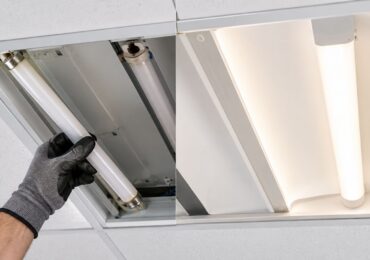
Most Southern California property managers don't start looking at parking lot lighting because they want a capital project. They start because tenants are complaining, a security vendor flagged dark areas, maintenance keeps changing lamps, or a night drive through the property reveals the same problem again. One fixture is out. Another is cycling. A third looks dim enough that the stripe layout disappears at the far edge of the lot.
That situation usually points to more than old lamps. It points to a system that's costing too much to run, too much to maintain, and too much to ignore. If you're managing retail, office, industrial, or multifamily property, your exterior lighting affects safety, curb appeal, inspection readiness, and operating cost every single night.
A proper parking lot lighting LED upgrade fixes those issues when the design, controls, procurement, and compliance work are handled together. In Southern California, that matters because a good result isn't just brighter light. It's better uniformity, cleaner fixture selection, code-compliant controls, documentation for Title 24, and a scope of work that doesn't leave you arguing over exclusions after the job starts.
Your Guide to Upgrading Parking Lot Lighting
A common call starts with a simple complaint. "Half the lot looks yellow, the other half looks dark, and we're replacing lamps constantly." When a site still runs metal halide or high-pressure sodium, that's normal. Light levels drift, restrike time becomes a problem after outages, and every burned lamp creates another dispatch, another lift, and another safety conversation.
For the property manager, the issue isn't only illumination. It's risk. Dark pockets near drive aisles, inconsistent lighting at pedestrian routes, and poor fixture condition raise questions from tenants, insurers, and ownership. If the lot serves customers at night, weak lighting also changes how the property feels before anyone even reaches the front door.
LED upgrades solve that, but only when the project is approached as a full lifecycle job. That means starting with an existing-condition survey, then verifying pole condition, fixture type, branch circuit capacity, mounting height, aiming, photometrics, controls strategy, and code pathway. Skipping those steps is how owners end up with bright hotspots under poles and shadowed areas everywhere else.
Good parking lot lighting doesn't come from buying the highest wattage fixture. It comes from matching fixture output, optics, spacing, and controls to the site you actually have.
In Southern California, the procurement side matters just as much as the design side. The contractor's proposal should tell you exactly what is being replaced, what is being reused, who handles controls programming, who provides Title 24 documentation, and how nighttime aiming and final verification will be performed. If that scope isn't clear up front, the savings on paper often disappear in change orders and callbacks.
Why Your Property Needs a Parking Lot LED Upgrade
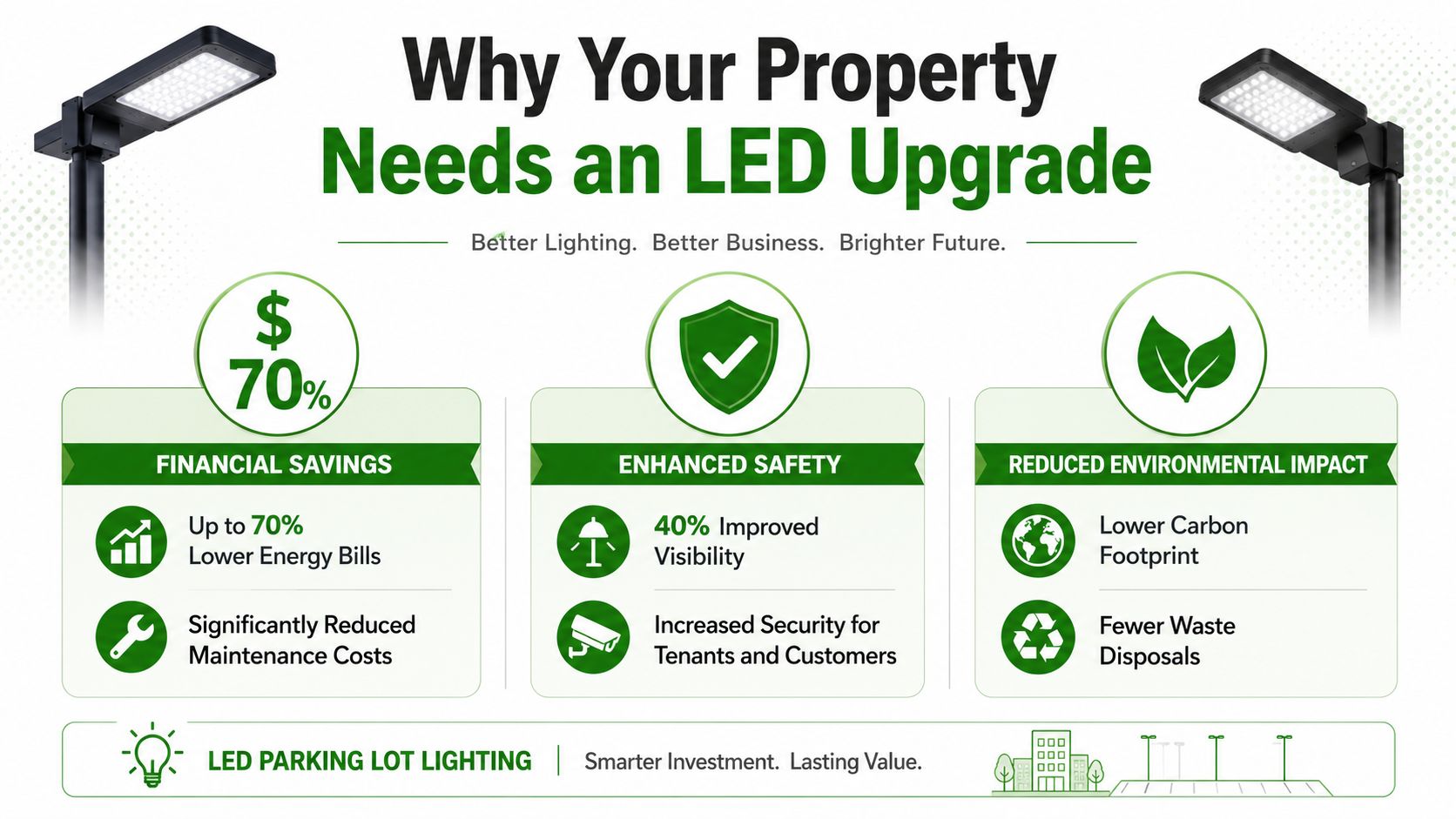
The business case for LED parking lot lighting is already strong before you get into aesthetics. Energy use drops, maintenance demand drops, and the site becomes easier to manage. For a facility manager, that's the difference between reacting to outages and running the property on a plan.
Energy savings show up quickly
The first lever is power consumption. LED parking lot lighting delivers energy savings of up to 52% compared to traditional metal halide fixtures, and one assessment of seven 250W metal halide fixtures retrofitted with LED luminaires showed an annual reduction of 18,396 kWh according to this LED parking lot lighting assessment. The same assessment also notes that high-quality LED lamps can use up to 75% less energy than comparable HID lamps to produce equivalent light output.
Those numbers matter more on larger sites than many owners expect. Parking fields, access roads, drive aisles, and detached structures can run lighting for long nighttime windows. Even a modest reduction in fixture load becomes meaningful when the system operates every day of the year.
Safety improves when visibility becomes consistent
The second lever is visual performance. Drivers need to see pedestrians, curbs, bollards, and turning movements. Security staff need to identify activity quickly. Cameras need stable white light, not aging lamps that shift color and output over time.
Older HID systems often fail gradually. A lot can still look "lit" from a distance while performing poorly at ground level. LED systems usually produce a cleaner, more usable light pattern when the optics are right. That makes entrances, payment areas, stall rows, and pedestrian paths easier to read.
A better-lit lot also changes user behavior. People walk with more confidence, they spot obstructions earlier, and they don't hesitate at dark edges of the property.
Maintenance becomes predictable
The third lever is labor. Lamp and ballast failures don't just cost parts. They require dispatching a technician, coordinating access, using lift equipment on taller poles, and dealing with outages until the repair gets scheduled. With exterior site lighting, every delay is visible.
A properly specified LED system reduces those service cycles and cuts down on nuisance calls. That's especially valuable at sites with multiple poles, limited after-hours access, or properties where night appearance affects leasing and tenant retention.
What usually works best
- Replace recurring maintenance with planned maintenance: LEDs reduce the frequency of routine lamp replacement compared with older technologies.
- Standardize fixture families: Keeping consistent drivers, optics, and mounting hardware makes future service simpler.
- Use lighting as a site operations tool: A well-designed lot supports safety, appearance, and nighttime usability at the same time.
If your team keeps discussing parking lot lights as a maintenance issue, you're probably missing the larger operating-cost issue.
Decoding LED Lighting Technology
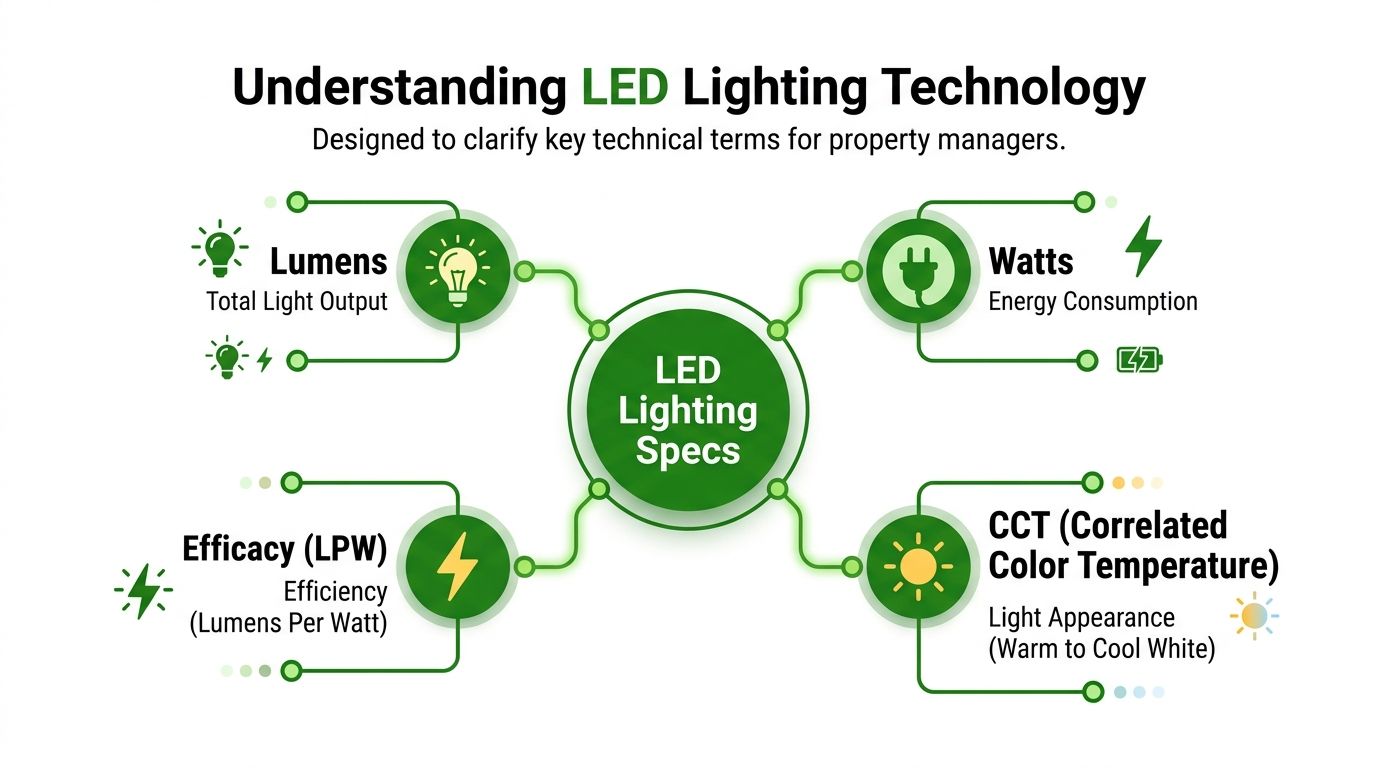
Most proposals for parking lot lighting LED work contain the same set of terms. Lumens, watts, efficacy, CCT, CRI, optics, BUG rating, cutoff, IP rating. If you're not in lighting every day, that can read like product catalog language. The useful question is simpler. Which specifications change performance on your site?
Start with lumens and efficacy
Lumens are the light output. Watts are the power draw. Efficacy, usually shown as lumens per watt, tells you how efficiently a fixture turns electrical input into usable light.
For commercial parking lots, fixture output needs to match pole height and layout. Commercial-grade LED parking lot fixtures typically deliver 10,000 to 30,000 lumens per unit with efficiency exceeding 140 lm/W, and an 8-meter pole generally requires 14,000 to 18,000 lumens using 100W to 150W fixtures to achieve required illuminance levels such as at least 20 lx for lanes, according to this commercial LED parking lot lighting guide for engineers.
That tells you two things. First, fixture selection isn't guesswork. Second, the right answer depends on mounting height, spacing, and the area being lit. A lower-output fixture on the right optic can outperform a higher-output fixture with the wrong distribution.
CCT and CRI affect what people actually see
CCT, or correlated color temperature, describes whether the light appears warmer or cooler. In practical terms, this affects how the lot feels and how clearly surfaces and people appear at night. Many property managers prefer a cooler white appearance for parking areas because it tends to support clearer nighttime visibility.
CRI, or color rendering index, matters when color distinction is important. Good color rendering helps staff and cameras distinguish vehicle colors, clothing, signage, and pavement markings more accurately. You don't need to become a lighting designer to use CRI well. You just need to avoid treating all white light as equal.
Optics matter more than raw brightness
A common purchasing mistake is comparing fixtures by wattage alone. Outdoor lots need distribution, not brute force. Type II and Type III optics are often used because they push light into lanes and parking rows rather than wasting output off-property. Beam shape also matters. Medium beam patterns usually suit lanes, while wider distributions are better for open parking areas.
The same engineering guide notes that medium beam angles around 60° to 90° suit lanes, while wide beam patterns around 120° suit parking areas, and that strictly cut-off Type II to III distributions help minimize spill light and support dark-sky compliance in markets such as Southern California.
Quick translation for proposal reviews
| Term | What it means on your site |
|---|---|
| Lumens | How much light the fixture produces |
| Watts | How much power it uses |
| Efficacy | How efficiently it produces that light |
| CCT | Whether the light looks warm or cool |
| CRI | How accurately colors appear |
| Optic type | Where the light is directed |
| IP rating | How well the fixture resists weather and dust |
Field check: If a proposal lists wattage and fixture count but doesn't show optics or a photometric layout, you still don't know how the lot will perform.
Weather resistance and fixture construction
Southern California isn't dealing with snow load in most parking lots, but weatherproofing still matters. Outdoor fixtures sit in heat, dust, moisture, irrigation overspray, and marine air in some markets. Driver quality, housing construction, lens material, and fixture sealing all affect whether the system still looks good after years in service.
The lowest-price fixture often becomes the most expensive one to own. If the housing chalks, the lens discolors, or the driver fails early, the paper savings vanish fast.
Planning Your LED Upgrade Project
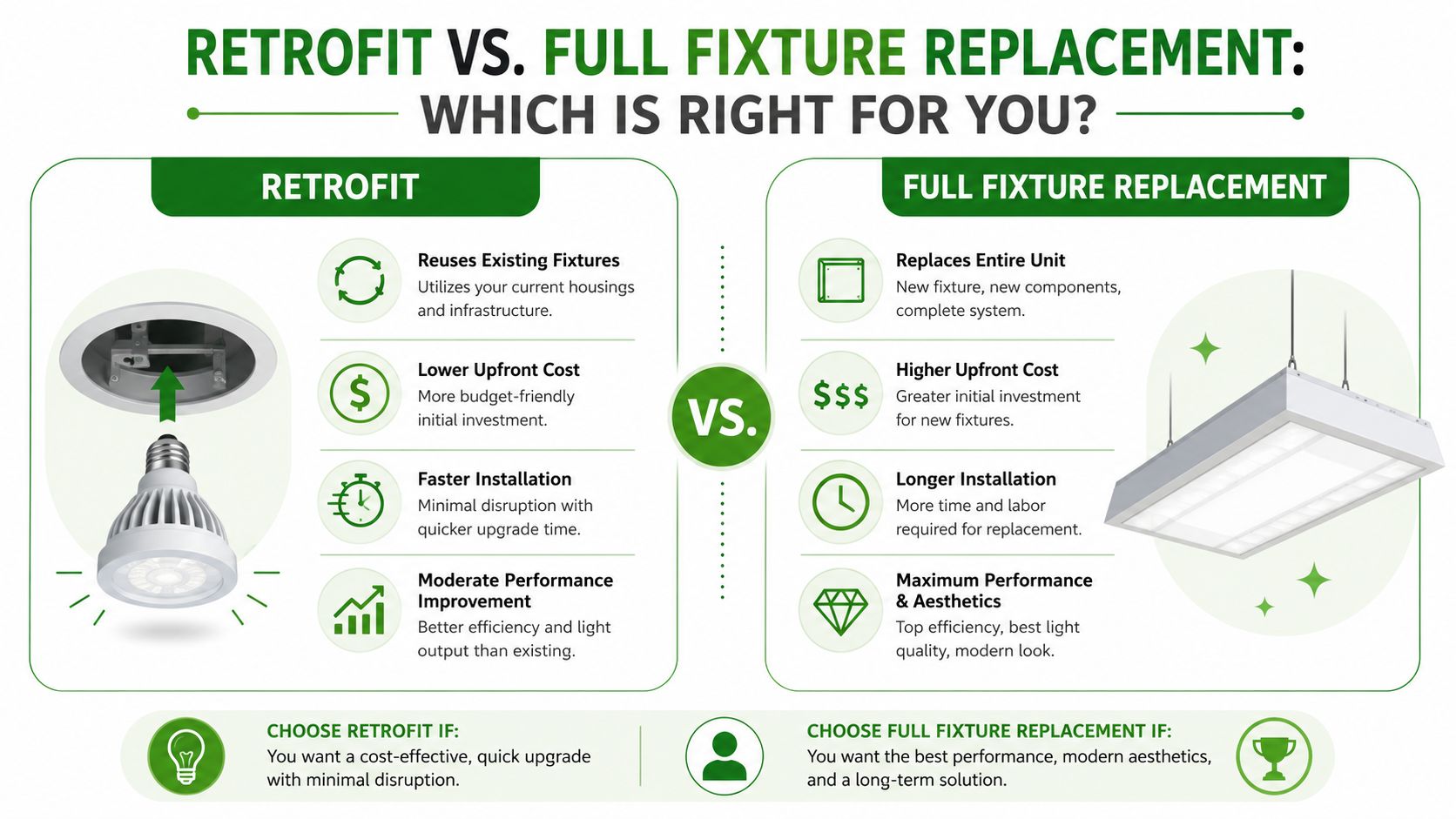
Most parking lot LED projects come down to one early decision. Do you retrofit existing fixtures, or do you replace the complete fixture and possibly the pole hardware with a new system? Both approaches can work. The right one depends on fixture condition, desired performance, warranty expectations, and how much of the old assembly you want to keep in service.
Retrofit or full replacement
A retrofit keeps part of the existing fixture body and updates internal components. This can make sense when housings are in good condition, mounting hardware is sound, and the goal is to improve efficiency without fully changing the site appearance. Retrofit scopes can also reduce disruption on active properties.
A full fixture replacement gives you more control over optics, thermal performance, driver compatibility, finish condition, and warranty alignment. If the old fixture is corroded, poorly sealed, visually dated, or not worth keeping, replacement is usually the cleaner long-term move.
A practical comparison
| Approach | Usually works best when | Trade-off |
|---|---|---|
| Retrofit | Existing housings are solid and appearance isn't the main issue | Less flexibility on full fixture performance |
| Full replacement | You want clean optics, new warranty coverage, and better visual consistency | Higher upfront scope and more installation labor |
Controls need to be part of the design
Lighting controls shouldn't be an afterthought. In California, they are often part of compliance and operating strategy. Photocells handle dusk-to-dawn operation. Time scheduling can trim burn hours where appropriate. Occupancy or motion-based control may apply in some exterior zones depending on layout and use.
What matters is coordination. If the controls package isn't matched to the fixture drivers and the code path, you can end up with dimming features that are never commissioned correctly, nuisance behavior that annoys tenants, or documentation gaps during final inspection.
For facility teams managing multiple buildings, centralized control can also help with troubleshooting. It gives you a cleaner record of what the system is doing and whether the site is operating as intended.
Title 24 affects fixture choice and documentation
Southern California property managers can't treat exterior lighting as a simple swap job. Title 24 affects controls, performance, and documentation. In plain terms, the system has to be designed and installed in a way that aligns with California's energy code requirements for outdoor lighting.
That means you need a contractor who can handle more than fixture installation. The scope should address controls compatibility, commissioning steps, and required paperwork. Many low-bid proposals often fall apart concerning these aspects. They price equipment but leave the compliance burden sitting with the owner, the electrician of record, or the project manager after installation.
A useful starting point is reviewing current parking lot lighting standards and compliance considerations before bid packages go out. It helps you compare proposals on something more meaningful than fixture wattage and unit price.
The cleanest LED project is the one that closes with approved documentation, working controls, and no argument about who was supposed to provide what.
Scope decisions to lock down before bidding
- Existing asset review: Confirm pole heights, mounting styles, branch circuits, and fixture condition before pricing.
- Photometric basis: Require a lighting layout tied to actual site dimensions, not a generic template.
- Controls sequence: Spell out photocells, scheduling, dimming behavior, and who programs the system.
- Closeout requirements: Include as-builts, aiming, testing, and compliance documents in the proposal.
One practical note. If your site has mixed-use conditions, such as storefront frontage, service alleys, and residential edges, don't accept one fixture type for every location unless the photometrics support it. Parking lots are rarely uniform in real life.
Calculating Your LED Lighting ROI
The fastest way to lose support for an LED project is to make the ROI sound mysterious. It isn't. The inputs are straightforward. You compare what the current system costs to operate and maintain against what the proposed system should cost after installation.
Start with the savings side
Use two buckets. The first is energy savings. Pull recent utility data, identify fixture counts and operating hours, and compare existing fixture load to the proposed LED load. If your contractor is doing the job correctly, that comparison should come from an actual fixture schedule, not assumptions.
The second bucket is maintenance avoidance. Count what you're spending on lamps, ballasts, drivers, labor, boom or lift access, after-hours service calls, and tenant-response time. Exterior lighting failures rarely happen on a convenient schedule, so your maintenance cost is usually higher than the material invoice alone suggests.
A strong local contractor should be able to help frame those operating assumptions during budgeting. For owners comparing options, this commercial lighting installation and LED retrofit overview in Orange County gives a useful picture of the types of scopes that typically affect cost and lifecycle planning.
Then look at lifecycle value
The long-term case gets stronger when you account for service life. LED parking lot lights can last up to 100,000 hours, compared with average HID lamp life of 10,000 to 25,000 hours, according to this overview of LED parking lot light advantages. That gap is why maintenance-heavy properties often see value beyond the utility bill.
If your lot includes tall poles, limited access windows, or multiple properties on one maintenance contract, longer fixture life matters even more. Fewer changeouts mean fewer site disruptions and less deferred work piling up between budget cycles.
A practical ROI worksheet
Use a simple checklist when building your internal case:
- Current annual energy cost: Based on existing lighting load and operating hours.
- Projected annual energy cost after upgrade: Based on proposed fixture schedule and controls sequence.
- Current annual maintenance cost: Include labor, access equipment, and repeat dispatches.
- Projected annual maintenance cost after upgrade: Don't assume zero. Include cleaning, inspections, and occasional component replacement.
- Project cost: Materials, installation, disposal, controls, permitting if required, testing, and closeout.
- Rebates or incentives: Apply any verified utility or program incentives that the project qualifies for.
- Payback view: Compare net project cost against annual operating savings.
Owners usually approve lighting faster when the proposal shows both operating savings and reduction in maintenance risk.
The biggest mistake is understating the investment side or overstating the maintenance savings. Keep the model conservative. If the project still works under conservative assumptions, it's usually a sound upgrade.
Maintenance Testing and Hidden Issues
Most LED sales language focuses on efficiency and long life. That's real, but it leaves out the problems that show up after the ribbon cutting. On exterior projects, the details that hurt owners later are usually the ones no one discussed during procurement.
Pole condition can undermine a good lighting plan
A new fixture on a compromised pole doesn't reduce liability. Before a major parking lot lighting LED upgrade, check the structural and electrical condition of the poles, bases, handholes, anchors, and above-grade hardware. Rust, base damage, impact history, and failed wiring compartments can turn a lighting project into a safety issue fast.
That's one reason many property teams combine fixture work with light pole repair and retrofit services rather than treating them as separate problems. It keeps the project grounded in actual field conditions instead of assuming every existing pole is fit for another service cycle.
The purple light problem is real
One issue that gets missed in standard ROI spreadsheets is the purple light failure mode. The hidden cause is diode coating degradation, a manufacturing defect that can produce a visible violet hue and force premature replacement, as discussed in this industry conversation about violet LED street and parking lot lights.
For property managers, the lesson isn't to distrust all LEDs. It's to tighten procurement. Ask exactly what fixture family is being supplied, what qualifications it carries, and what the warranty covers when color shift or visible coating failure appears. If the contractor can't answer that clearly, the owner inherits the ambiguity later.
Procurement questions worth asking
- Fixture lineage: Is this a current commercial fixture family with a traceable manufacturer and documented warranty process?
- Color stability coverage: Does the warranty address visible color failure, not just total outage?
- Replacement logistics: If a batch issue shows up, who pays for access equipment and labor?
- Submittal quality: Are photometrics, IES files, and product data complete before approval?
Uniformity matters as much as brightness
Another expensive mistake is assuming brighter always means safer. It doesn't. A parking lot can have very bright areas directly under poles and still perform poorly overall. The issue is uniformity. The hidden problem is that violating the 3:1 uniformity ratio can create liability exposure and lead municipalities to reject photometric layouts, based on the verified issue summary provided in the project brief.
That matters because people don't move through parking lots by standing under poles. They move through transitions, across drive aisles, and between parked vehicles. When lighting drops off too hard between fixtures, shadows feel deeper, obstacles are harder to see, and the lot looks less secure even if the average light level appears acceptable on paper.
A lot with even light usually feels safer than a lot with isolated bright spots and dark gaps.
Testing shouldn't stop at energization
A clean closeout includes more than turning the lights on at dusk. At minimum, the contractor should verify control operation, nighttime aiming where applicable, fixture orientation, photocell response, and any owner-requested punch list tied to visible shadows or spill light. If a municipality or owner requires photometric confirmation, that should be addressed before final acceptance, not after complaints come in.
For larger portfolios, it's smart to treat parking lot lighting as a maintained asset. That means periodic night inspections, cleaning where needed, spot-checking damaged lenses and housings, and tracking fixture failures by product family. You learn quickly which products hold up and which ones create repeat service calls.
Hiring a SoCal Lighting Contractor
A parking lot lighting project usually looks simple from the outside. Replace fixtures, add controls, finish paperwork. In practice, the quality gap between contractors shows up in preconstruction, submittals, photometrics, and closeout. That's where property managers in Southern California need to be selective.
What to verify before you award
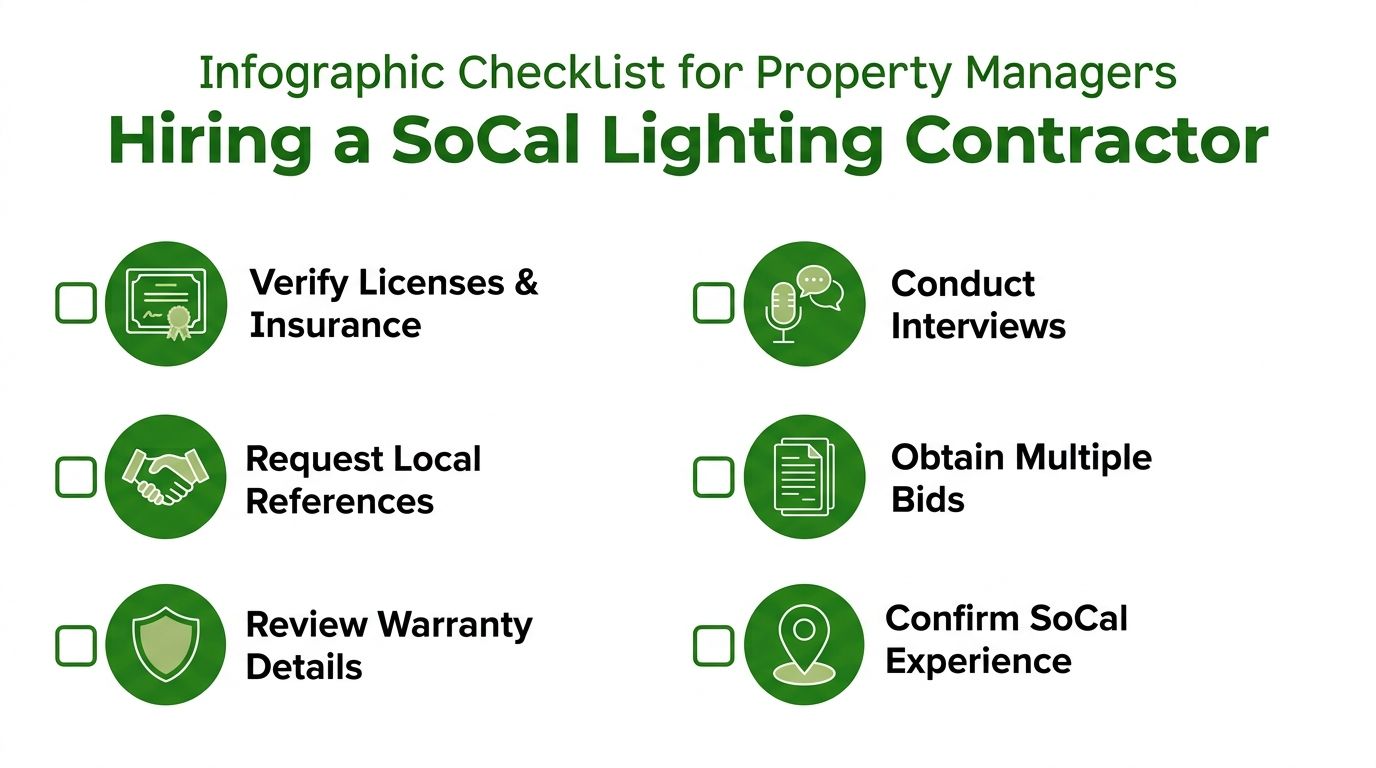
Start with licensing, insurance, and commercial experience. The contractor should hold the proper California electrical license, carry current insurance, and have real experience with exterior commercial lighting rather than only interior tenant work. Parking lot projects involve lift access, nighttime adjustments, controls coordination, and site safety planning that not every electrician handles well.
Then look at project fit. A contractor who does small one-off service calls may not be the right fit for a multi-building upgrade with Title 24 documentation, pole evaluation, and tenant coordination. The proposal should show who handles submittals, who performs startup, and who owns punch-list completion.
One Southern California option property managers may evaluate is Access Electrical and Lighting, a commercial electrical and lighting contractor serving Orange County and the wider region with LED retrofits, Title 24 support, lighting controls, high-reach work, and light pole services.
Ask for a real scope of work
The easiest way to compare bids is to force scope clarity. If one proposal is cheap because it excludes photometrics, controls startup, disposal, or documentation, it isn't cheaper. It's incomplete.
Scope-of-work checklist
- Existing conditions survey: Fixture count, pole count, mounting heights, control zones, and circuit review.
- Fixture schedule: Manufacturer, model, lumen package, optic type, CCT, mounting hardware, and finish.
- Photometric layout: Site-specific layout tied to the actual property plan.
- Controls package: Photocells, time scheduling, dimming components, and commissioning responsibilities.
- Structural and field items: Pole inspection assumptions, hardware replacement, and any repair exclusions.
- Installation logistics: Lift access, traffic control if needed, tenant coordination, and work-hour assumptions.
- Closeout package: As-builts, warranty documents, testing results, programming records, and compliance paperwork.
Questions that separate strong bidders from risky ones
Some questions are more useful than "What's your price per fixture?"
Ask these instead:
- Show a sample photometric plan from a comparable site.
- Who handles Title 24 testing and documentation?
- What warranty applies to fixture, driver, and color-related issues?
- How do you handle discovered field conditions such as damaged poles or corroded tenons?
- What happens if the owner wants nighttime adjustments after initial energization?
Owner-side rule: If a contractor can't explain the closeout process before the job starts, expect problems after installation.
The best proposals read like a project plan, not a parts list. That's what lets a facility manager hand the job to ownership, accounting, and operations with confidence.
Secure Your Property and Savings with a Professional Upgrade
A parking lot LED upgrade isn't just a fixture replacement. It's a property operations project. The right system lowers energy use, reduces maintenance pressure, improves nighttime visibility, and helps you avoid compliance and liability problems that older lots often create.
For Southern California properties, the best results come from treating design, Title 24, controls, procurement, pole condition, and closeout as one coordinated scope. That's what keeps the project from turning into a low-bid install followed by months of corrections.
If your lot has aging HID fixtures, recurring outages, uneven light, or unclear compliance status, now is the time to evaluate the full system instead of replacing parts one failure at a time.
If you're planning a parking lot lighting LED upgrade in Southern California, talk with Access Electrical and Lighting about a site review, photometric-driven scope, controls strategy, and Title 24-ready project documentation before you put the work out to bid.