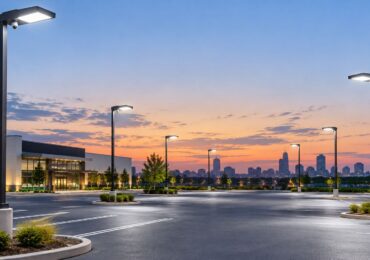
A property manager can have a parking lot light out, an exit-light inspection coming up, and a tenant improvement waiting for approval in the same week. Those jobs may land on different work orders, but they touch one electrical environment. A lighting fault may trace back to a control setting; a remodel may affect a panel schedule, cabling, and emergency circuits.
That's why electrical commercial work is best managed as an operating program, not a string of unrelated service calls. The useful questions are practical: what needs attention, what can safely wait, what must be tested or documented, and how can work proceed without creating unnecessary downtime for tenants?
What Property Managers Need from Commercial Electrical Work
A multifamily owner may be planning common-area lighting while responding to a failed exit sign. A retail operator may need a quick repair before opening, while a general contractor is coordinating electrical work around an active tenant space. Office and hospitality teams face the same underlying challenge: electrical systems must support daily operations while remaining safe, maintainable, and ready for inspection.
The person searching for commercial electrical help might be a property manager, facility director, owner, retail operations lead, or general contractor. Their immediate problem can differ, but they all need a contractor who understands occupied buildings, access restrictions, operating hours, and the consequences of interrupting power.
The job is bigger than the work order
A service call fixes a symptom. An operations-minded approach also asks whether the fault is recurring, whether the repair affects another system, and what records the next technician will need. For example, replacing a failed parking fixture is straightforward only if the crew can access it safely, identify the correct circuit, confirm the control response, and leave the site operating as expected.
The same discipline applies to tenant improvements. Work that appears limited to new outlets or lighting can affect panel capacity, circuit labeling, low-voltage pathways, and emergency lighting. Coordinating these details early helps avoid rework and reduces surprises during inspections or turnover.
What a useful contractor relationship covers
Property teams benefit from a clear plan for routine maintenance and urgent calls alike. That plan should identify who authorizes work, how shutdowns are coordinated, what testing happens before equipment is returned to service, and which documents are delivered afterward. It should also make ownership clear when a project involves both electrical distribution and systems such as controls or data cabling.
This guide is a working roadmap for those decisions. It covers the scopes that commonly appear in proposals, code and safety considerations, contractor vetting, budget drivers, recurring failures, and a practical way to organize electrical work across a property or portfolio.
Defining Electrical Commercial Work and Its Core Scopes
Commercial electrical work includes installation, maintenance, testing, troubleshooting, and repair of the systems that distribute power and support a building's daily functions. In a proposal, the work usually falls into three connected families: line-voltage systems, lighting, and low-voltage infrastructure.
Think of them as parts of a building's nervous system. Distribution is the central network that carries power. Lighting is a visible building function shaped by fixtures and controls. Low-voltage infrastructure carries signals and communications for systems such as networking, audio, and digital signage. A change in one scope can affect the others, especially during a remodel.
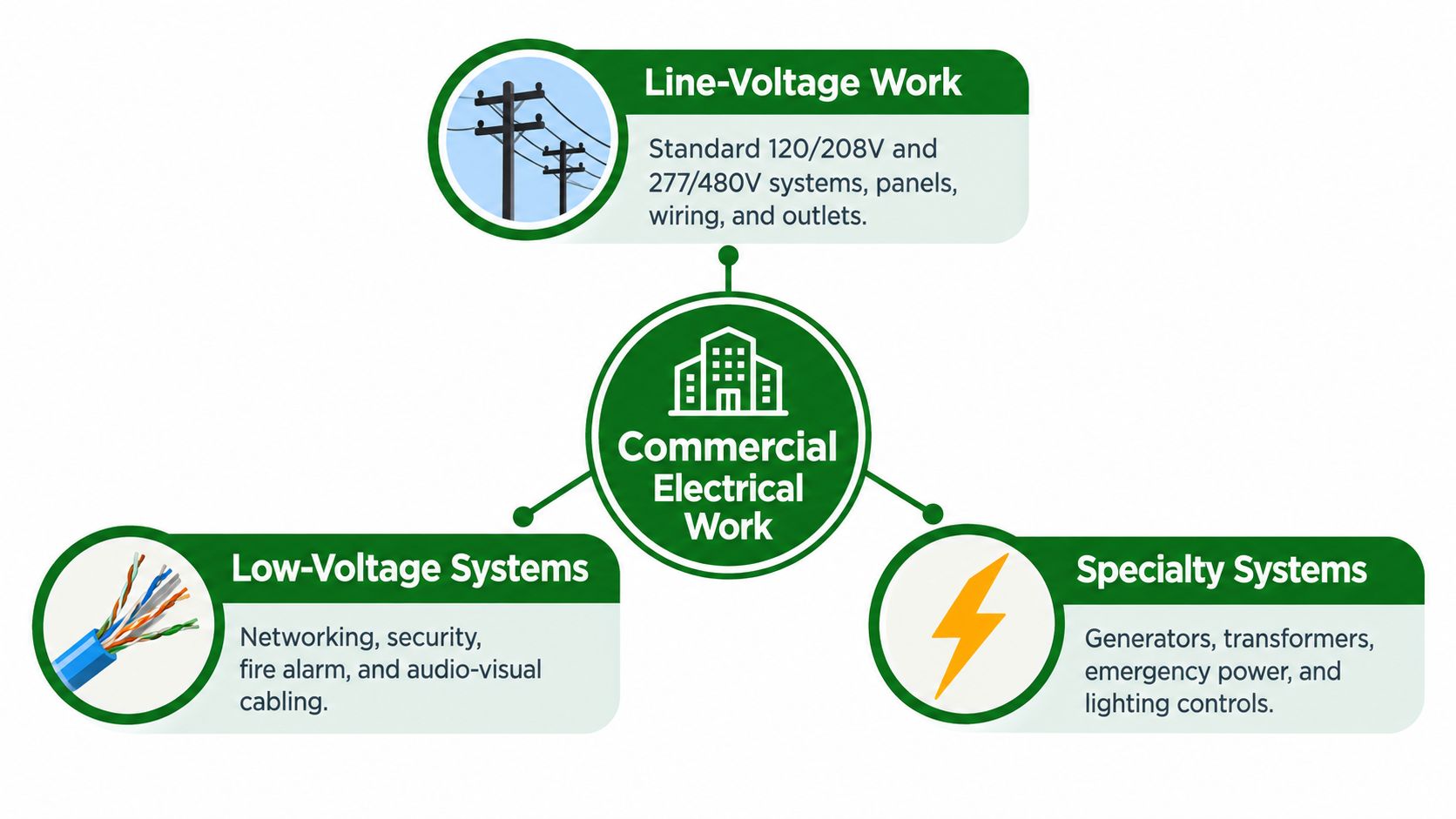
Three scopes, one operating environment
Line-voltage work covers the infrastructure that delivers power: panels, switchgear, transformers, branch circuits, outlets, and troubleshooting. Understanding how those components fit together helps property teams plan capacity changes and maintenance. For a closer look at that infrastructure, see this guide to commercial electrical distribution systems.
Lighting work includes design, installation, maintenance, retrofits, controls, and emergency or exit lighting. Low-voltage work covers infrastructure and devices that communicate rather than deliver building power, such as structured cabling, distributed audio, digital signage, video walls, mass notification, and automated controls.
| Scope | Typical Work Included | Where It Shows Up |
|---|---|---|
| Line-voltage | Panels, switchgear, transformers, circuits, outlets, troubleshooting | Offices, retail, multifamily, hospitality, construction |
| Lighting | Fixtures, LED retrofits, controls, emergency and exit lighting | Parking areas, common spaces, offices, stores, hotels |
| Low-voltage | Copper and fiber cabling, audio, signage, video, controls | Offices, retail centers, hospitality, multifamily |
Why coordination matters
During a tenant improvement, a lighting layout may depend on available circuits, while cabling routes need to avoid conflicts with other building systems. When different contractors handle related scopes without clear coordination, property teams may face duplicate site visits, unclear responsibility, or incomplete turnover records.
In California, a licensed C-10 electrical contractor can coordinate electrical scopes within its license and project qualifications. A unified contractor relationship can reduce handoff friction, but it doesn't remove the need to confirm who owns each task, permit, test, and closeout document.
Code, Safety, and Compliance Considerations
Code compliance is an ongoing property responsibility, not a box checked when a project closes. The National Electrical Code informs electrical installation requirements, OSHA rules shape workplace safety practices, and California's energy code affects lighting and controls in nonresidential buildings. The exact obligations depend on the work, building, jurisdiction, and applicable code edition, so confirm project requirements with the authority having jurisdiction and the design team.
Safety deserves the same operational attention. A CDC/NIOSH review reported that 77% of 325 contract-worker electrocutions recorded from 2012 through 2016 involved workers employed in construction, and direct contact with electricity caused nearly 60% of those deaths (CDC/NIOSH review of electrocution in construction). Those findings reinforce why energized equipment, changing site conditions, and temporary power require disciplined procedures rather than assumptions.
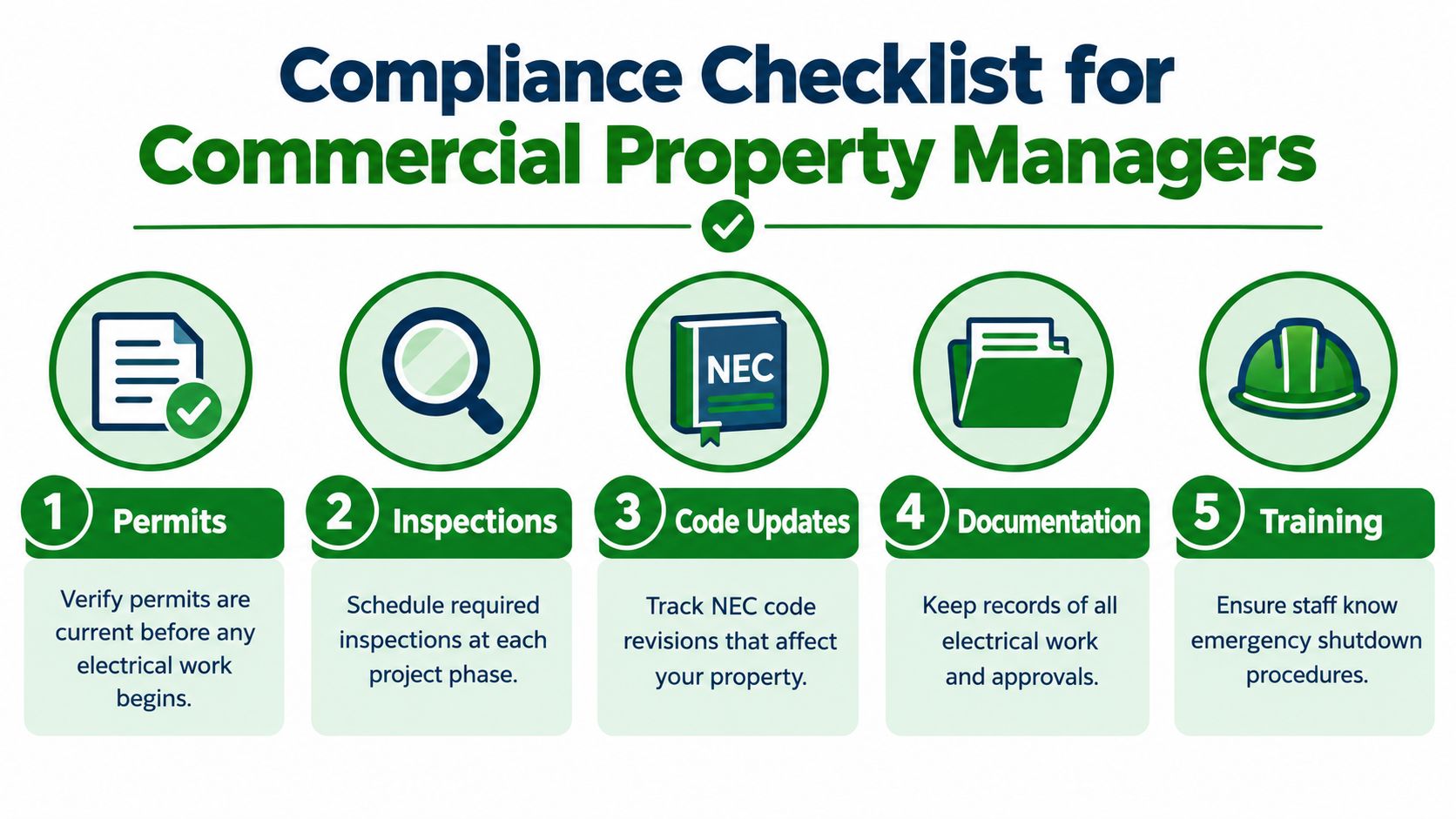
Verify performance, not just installation
For lighting projects, California's 2025 Energy Code includes requirements involving daylighting, demand-responsive controls, time-switch backup, outdoor setback functions, and testing. For certain nonresidential lighting systems of at least 4,000 watts, controls must be capable of automatically reducing lighting power in response to a demand-response signal, and compliance testing must demonstrate at least a 15% lighting-power reduction (California Energy Commission's 2025 Energy Code overview).
That makes commissioning and recordkeeping part of the work, not optional polish. A system may be installed correctly but still fail to perform as intended if sensors don't cover the right areas, schedules aren't retained, or settings change after a tenant move. Document the tested sequences, results, approvals, and any required corrections. For broader guidance on commercial electrical code compliance, align the project team on the applicable rules before work begins.
For the maintenance team: Code compliance is verified, not assumed. Keep inspection records, test results, approvals, and current system information together.
How to Choose the Right Commercial Electrical Contractor
Choosing a contractor shouldn't come down to the lowest line on a bid. A low price can omit access equipment, testing, permit coordination, after-hours work, or closeout documents that the property will need. Compare what each proposal includes, how work will be performed, and what the team will deliver when the job is complete.
Start with credentials and capability
In California, verify the contractor's C-10 license and bonding, and request proof of insurance appropriate to the project. Ask who will supervise the work, what safety training applies to the crew, and how the contractor handles lockout/tagout, energized-work restrictions, and site-specific hazards.
Then test whether the company can manage the conditions at your property. A contractor working on elevated parking lights may need high-reach equipment and a plan for access control. Troubleshooting suspected overheating may call for infrared thermography, followed by qualified evaluation and corrective work. A project combining power circuits, lighting controls, and data cabling also benefits from clear coordination across those scopes.
Ask questions that expose the work plan
During bidding, ask who pulls permits, who schedules inspections, how shutdowns are approved, and how change orders are priced. Clarify whether the proposal includes testing and commissioning, updated panel schedules or as-built records, and a documented handoff to facilities staff.
For recurring service, ask how after-hours emergencies are handled and how preventive maintenance fits into the relationship. The answer should tell you whether the contractor can support the building after installation, not only during a project.
Compare proposals using four lenses:
- Scope clarity: Are equipment, labor, access, testing, and exclusions spelled out?
- Safety and compliance: Does the bid describe procedures, permits, inspections, and records?
- Response and coordination: Can the team work around tenants and explain the shutdown plan?
- Ownership cost: Does the price account for maintainability and reliable turnover, not just installation?
Treat vague scopes, missing references, unverifiable licensing, or refusal to provide insurance documents as reasons to pause. A qualified bidder should be able to explain its assumptions in plain language.
Typical Timelines, Costs, and Budget Drivers
A commercial electrical project's duration depends on more than the amount of wire or number of fixtures. The team must define the scope, confirm access, coordinate around occupants, secure approvals where required, obtain materials, complete the installation, and arrange inspections or testing. A small repair can move quickly when access and parts are ready; a panel upgrade or occupied-building retrofit can take longer because each phase depends on coordination.
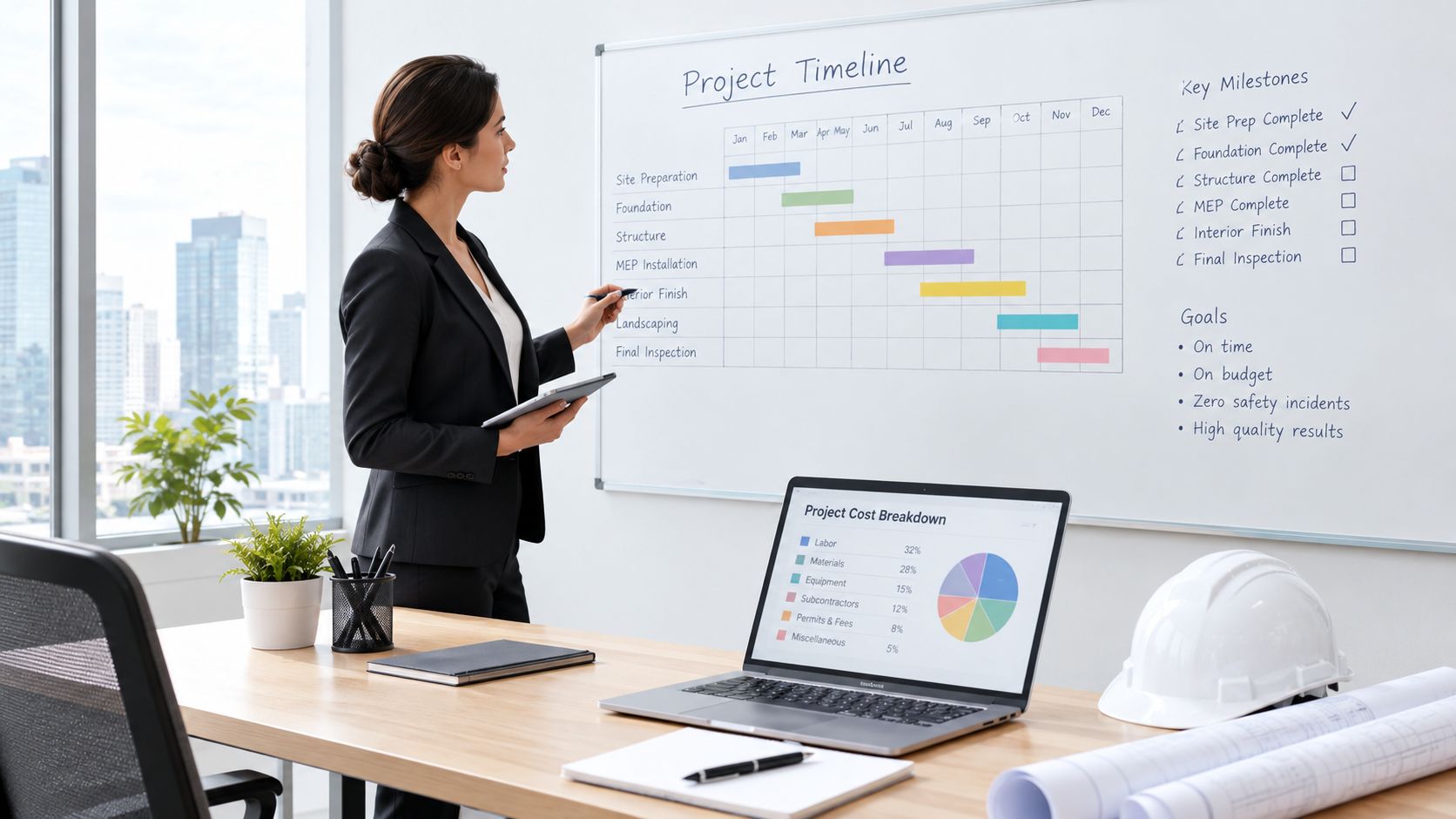
What changes the schedule
An LED retrofit may be staged by floor or area to keep a building operating. Panel work may require planned shutdowns, tenant notices, and inspection coordination. Low-voltage cabling can be delayed by ceiling access, pathway conflicts, or incomplete plans. Tenant improvements often shift as the build-out design changes, so an early field review helps expose missing information before crews arrive.
Ask the contractor to separate the schedule into preparation, installation, testing, and closeout. That makes it easier to see whether a delay comes from equipment procurement, building access, permit review, or a change in scope.
Build the budget around the actual job
Common cost drivers include labor, materials, permit fees, lift or boom-truck rental, testing, and the extra coordination required in an occupied property. Night work can reduce disruption during business hours, but it can increase labor and planning demands. Work in a parking structure or on light poles may need traffic control and access measures that don't apply to an interior project.
For lighting, calculate potential savings from measured operating hours, fixture wattage, controls, and required light levels. The U.S. Department of Energy's lighting-market characterization estimated that lighting consumed approximately 244 terawatt-hours across U.S. buildings, with commercial buildings representing about 69% of that total (GSA lighting technology evaluation). The scale of that end use makes lighting a sensible budget priority, but a property-specific estimate still needs actual site conditions.
Set a portfolio budget by separating urgent safety repairs, asset condition work, planned upgrades, and verification. Include commissioning and documentation rather than treating them as optional extras. A retrofit that isn't tested can leave the owner paying for a system that doesn't deliver the intended operating performance.
Common Problems, Recurring Failures, and Practical Solutions
The parking lights fail again after a repair. An exit sign is dark before an inspection. A tenant reports nuisance tripping after bringing new equipment into a space. These problems often arrive as separate complaints, but recurring symptoms call for a broader look at circuits, controls, loading, installation history, and maintenance records.
Lighting failures are especially visible. A fixture can be out because of a failed driver, damaged wiring, a control issue, or a problem upstream. Replacing the component without checking the cause may restore light temporarily while leaving the same fault in place. After tenant changes, control settings can also drift from the way the space is being used.
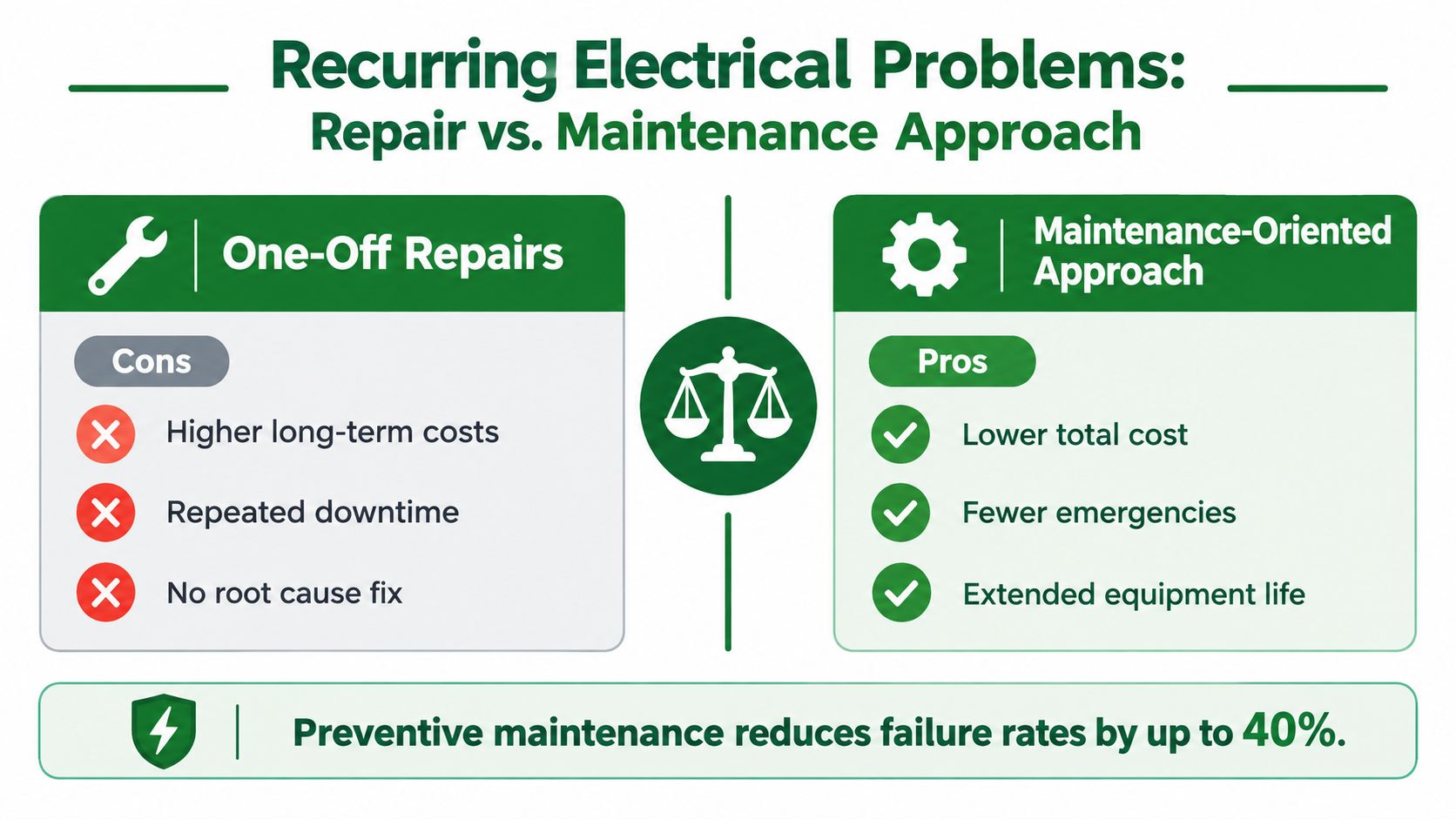
Find the cause before scheduling the fix
A panel that runs hot, a switchgear component that trips repeatedly, or a circuit that becomes unreliable deserves timely evaluation by qualified electrical personnel. Infrared thermography can help identify abnormal heat patterns without opening equipment for invasive testing, but it doesn't replace an electrical inspection or establish a diagnosis by itself. The contractor should interpret findings, document them, and recommend the next safe action.
Low-voltage issues deserve the same recordkeeping. Cabling damaged during a tenant improvement, intermittent signage, or failed audio can take longer to diagnose when pathway maps and as-built records are missing. Documenting changes at turnover makes future troubleshooting more direct.
When a fault appears, record where and when it occurs, what equipment is affected, and whether recent work or schedule changes may be relevant. Then have the contractor assess the cause, verify the repair, and update the property records. For persistent or intermittent faults, commercial electrical troubleshooting services can help distinguish a failed component from a wider system issue.
A better operating habit: Replace repeated emergency visits with documented inspections, scheduled testing, and repairs planned around the property's operating needs.
Planning a Multi-Year Electrical Program for 2026 and Beyond
A useful electrical plan connects lighting, distribution, low-voltage systems, and new loads such as EV charging. Each project should leave the building easier to maintain: current records, tested settings, clear ownership, and a way to identify problems before they disrupt tenants. That's more practical than treating every upgrade as a standalone purchase.
California's 2025 Energy Code brings specific attention to controls, testing, and documentation. For property teams, the work doesn't stop at installation. Controls need commissioning, schedules can change as tenants come and go, and records should make it possible to check whether the system still operates as intended. Networked lighting may also provide useful operational information, provided the property has a plan for reviewing it and acting on faults.
EV charging belongs in the same maintenance conversation. Installation is the start of service, not the end. A 2025 North American EV infrastructure summit report cited J.D. Power data showing that 20% of EV drivers couldn't charge at public stations in Q4 2024, up from 18% the year before (summit report on EV charging infrastructure). For a property owner, that makes charger uptime, payment troubleshooting, network communication, load management, and responsibility for service calls important operating questions.
Put the maintenance cycle in writing
A practical program can be organized around recurring records and checks:
- Distribution: Schedule qualified inspections, track reported heat or trip issues, and retain findings and corrective actions.
- Lighting: Test emergency and exit systems, commission controls, and document changes to fixtures, zones, and schedules.
- Low voltage: Update pathway and device records after tenant improvements, repairs, or system changes.
- EV charging: Agree on how uptime and faults will be recorded, who responds, what parts or warranty boundaries apply, and how charging loads interact with the building's electrical service.
- Project turnover: Collect permits, approvals, test results, operating sequences, and as-built documents whenever work closes.
Operational FAQs
How often must emergency lighting be tested?
The required testing schedule depends on the applicable code, system type, and local authority requirements. Confirm the interval with your contractor and the authority having jurisdiction, then maintain dated test records and address failures promptly.
When should a property consider a panel upgrade?
Consider an evaluation when planned loads exceed available capacity, equipment is aging or unreliable, recurring trips disrupt operations, or a new project changes the electrical demand. A qualified contractor should assess the existing service, distribution equipment, load information, and project requirements before recommending an upgrade.
What should property managers ask after EV charger commissioning?
Ask who monitors faults, how users report failed charging sessions, what response and escalation process applies, how payment and network issues are handled, and who is responsible for warranty work. Request commissioning records and clear instructions for reporting recurring problems.
Electrical commercial work is facility stewardship. The aim is not to restore a failed light or close a service ticket. It's to keep systems safe, documented, compliant, and dependable as the building and its tenants change.
For planned upgrades, troubleshooting, lighting maintenance, electrical distribution, and low-voltage work, Access Electrical and Lighting serves commercial properties across Southern California. Contact the team to discuss a maintenance or project plan that fits your building's operating requirements.