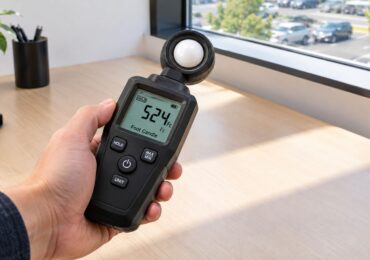
The call comes in late, right when the building is full and everyone wants a fast answer. A parking lot has a row of flickering lights, a panel feels warmer than it should, and then an after-hours outage hits a tenant space that was supposed to be quiet for the weekend. That's the kind of mess where electrical troubleshooting services stop being a repair task and become a downtime-management discipline.
Commercial operators don't just need someone to swap a breaker or replace a fixture. They need fault isolation, a safe path to re-energize, and a contractor who can tell the difference between a nuisance symptom and a problem that's about to spread. That's why electrical troubleshooting belongs inside the larger reliability program, not at the edge of it.
The market reflects that reality. One global estimate places the electrical repair services market at USD 61.2 billion in 2024, rising to USD 85.0 billion by 2035 in the source's projection, which underscores that this work covers ongoing maintenance, diagnostics, and repair, not just emergency calls (Wise Guy Reports). In the U.S. alone, electrical services sit inside a very large contractor ecosystem, with one market study valuing the market at USD 163.9 billion in 2024 and projecting USD 294.6 billion by 2034 at a 6.3% CAGR from 2025 to 2034 (GMI Insights). Those numbers matter because they show how central troubleshooting is to keeping buildings running.
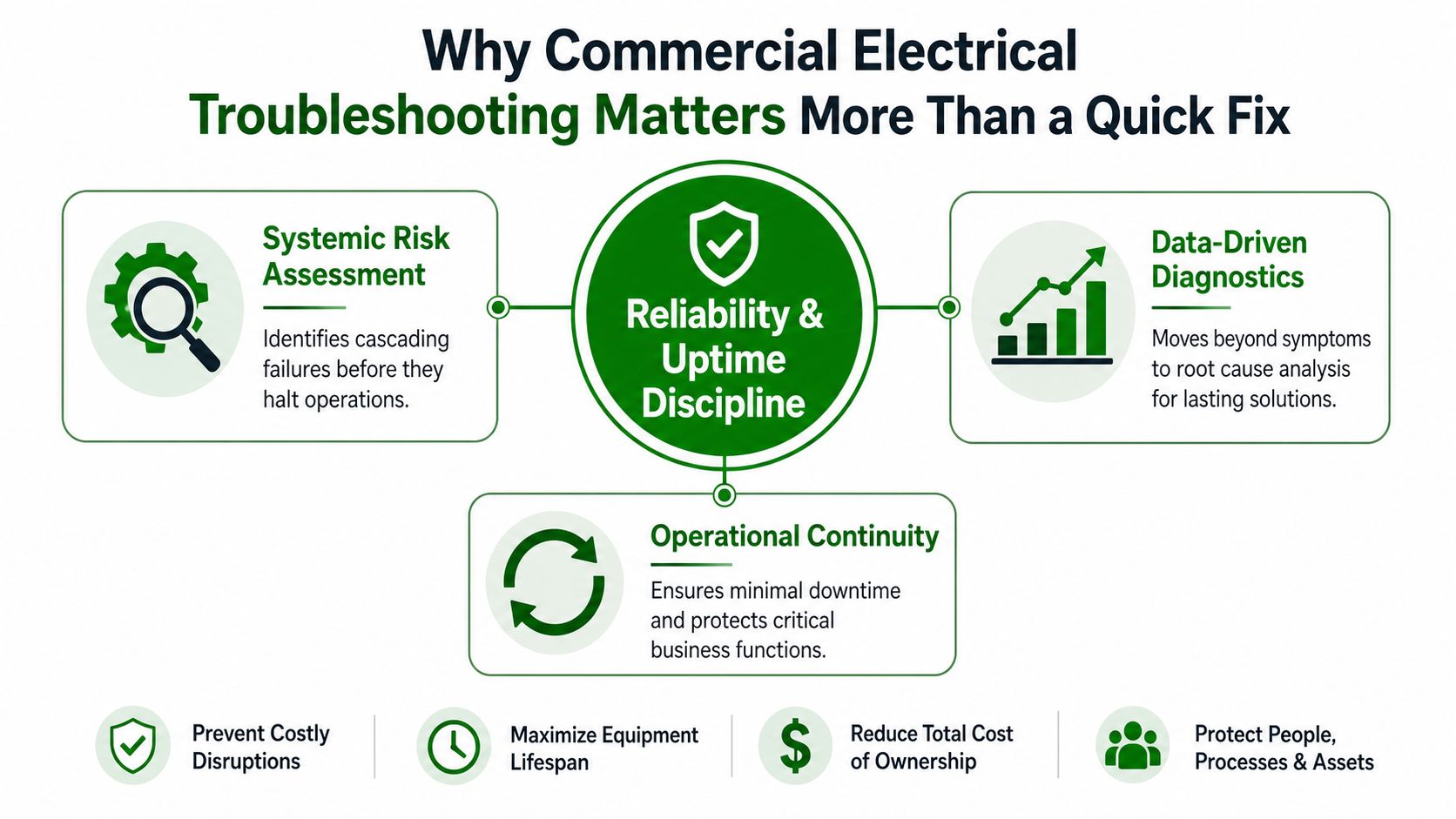
Why Commercial Electrical Troubleshooting Matters More Than a Quick Fix
A property manager sees the same pattern over and over. A few parking-lot heads start flickering after dusk, a panel door feels warmer during rounds, and then a tenant reports that half the suite went dark after a weekend load change. None of those symptoms is unusual by itself, but together they tell you the building is drifting toward an avoidable outage.
The wrong response is to treat each symptom as a separate inconvenience. The right response is to ask what's common across them, because commercial electrical systems fail in ways that compound. A loose connection can show up as heat, intermittent lighting, nuisance tripping, or a dead circuit later on.
Practical rule: if the symptom is intermittent, don't guess at the part first. Find the fault path first.
That approach protects more than uptime. It also reduces liability, because a documented troubleshooting process gives you a record that the issue was isolated, reviewed, and addressed by a qualified contractor rather than patched in the dark. In a commercial building, that matters for tenants, visitors, insurers, and inspectors alike.
There's also a bigger operational reason to think this way. The public-facing promise of “we fix outages” is thin compared with what facility teams need, which is a service that can move from symptom to root cause without turning the building into a test bench. Independent technical guidance emphasizes structured visual inspection, lockout/tagout, and multimeter-based fault isolation as distinct steps in safe troubleshooting, which is the kind of process clarity buyers usually don't get from generic service pages (technical guidance).
When a contractor treats troubleshooting as a reliability tool, the building gets a different outcome. Tenants see fewer disruptions. Maintenance teams spend less time firefighting. And the next issue is easier to diagnose because the first one was documented properly.
Common Failure Modes in Commercial Electrical Systems
Commercial electrical failures usually announce themselves through systems, not parts. Lighting starts acting up, a panel runs hot, or a control sequence becomes erratic, and the visible symptom tells you where to begin. The trick is matching the symptom to the likely cause before anyone starts replacing hardware that may still be good.
Lighting circuits that misbehave
Flickering LEDs, dead rows, and random dimming often point to driver failures, bad ballasts in older systems, or loose terminations upstream. If the problem changes when the load changes, don't assume the fixture is the only issue. The circuit may be overloaded, the connection may be weak, or the control gear may be breaking down under heat.
Panels and switchgear that run hot or trip often
A breaker that trips once may be doing its job. A breaker that keeps tripping, or a panel that's warm at the same point every time it's inspected, usually points to a deeper issue like loose lugs, overloaded circuits, or deteriorated components. Burning odor, visible discoloration, or buzzing near a panel warrants immediate attention and a qualified electrician, not a maintenance workaround.
Distribution feeders and low-voltage controls
Feeder issues tend to show up as broader downstream instability, not a single failed fixture. Low-voltage controls are different, because the hardware may be fine while the logic, sensor, communication path, or power supply is the actual problem. That's why mixed environments, especially buildings with automation, signage, or EV charging, need a wider diagnostic lens than basic wiring repair.
A dead lamp is a parts problem. A repeated outage is a system problem.
General maintenance teams can document symptoms, note when and where they occur, and isolate obvious hazards. They shouldn't be doing invasive panel work or chasing live faults beyond their training. If the issue involves energized gear, heat, smoke, repeated breaker operation, or unclear upstream causes, it belongs with a licensed commercial contractor who can test safely and trace the failure without creating a second one.
Diagnostic Methods That Pinpoint the Real Problem
Good troubleshooting starts before any meter comes out. A structured visual inspection catches a lot of what creates repeat service calls, loose hardware, damaged insulation, corrosion, water intrusion, overheated terminations, and signs of prior patchwork that never got cleaned up. Safety comes first, which is why lockout/tagout isn't a formality. It's the line between controlled diagnostics and an unnecessary incident.
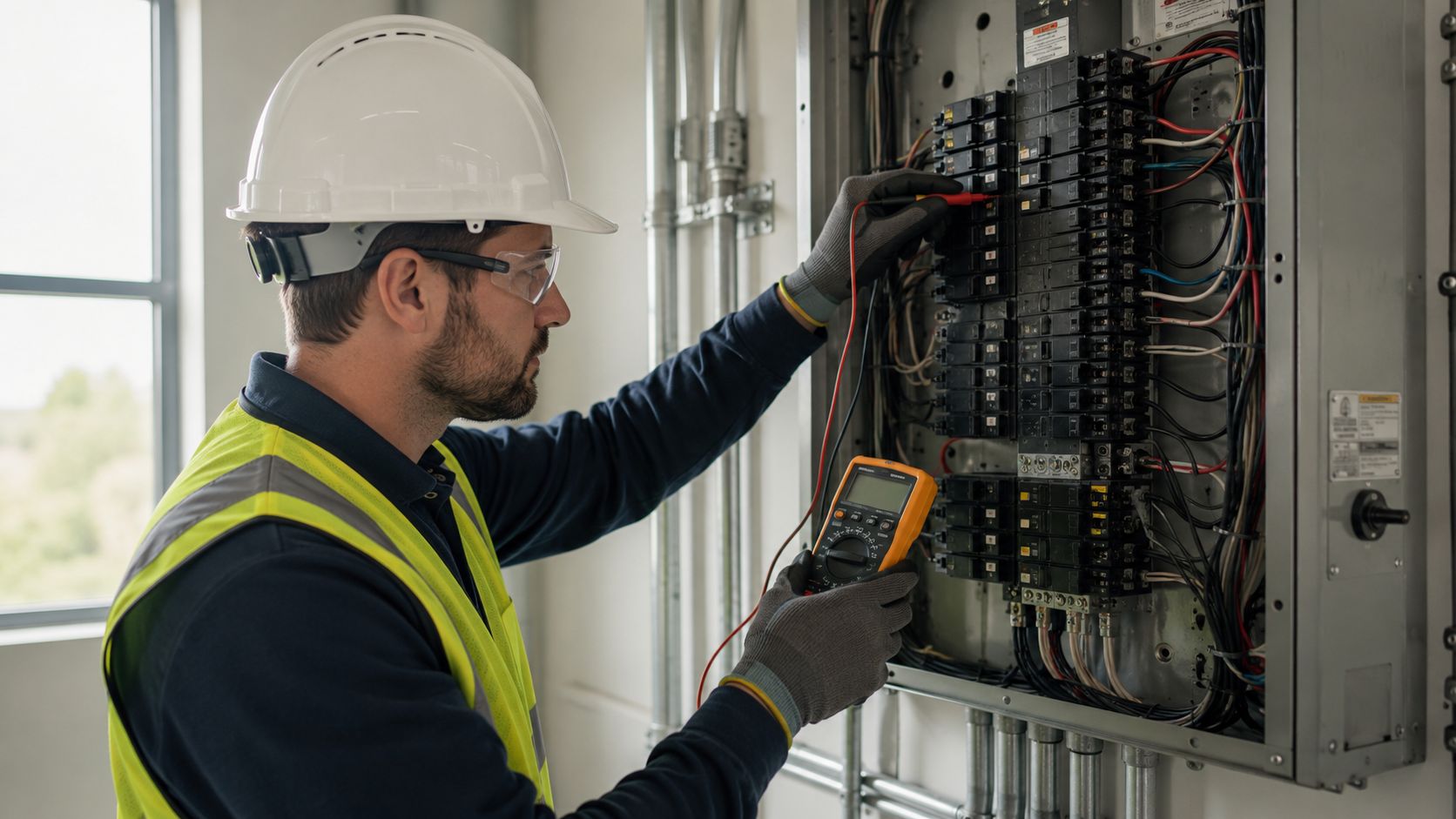
From there, the tools need to match the symptom. A multimeter verifies voltage, continuity, and resistance. A clamp meter helps show whether current draw matches what the circuit should be carrying. Insulation resistance testing is useful when wiring degradation or hidden breakdown is suspected, especially where intermittent faults keep hiding from simple visual checks.
Where thermography earns its keep
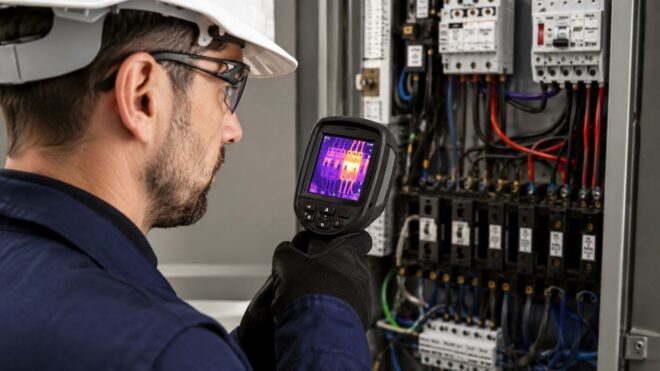
Infrared thermography is valuable because it shows temperature differences before a component fails outright. A hotspot on a lug, breaker, or bus connection often means resistance is rising somewhere that should be stable. The scan only matters if it gets documented with location, load conditions, and follow-up action, otherwise it's just a photo.
That's why thermography is most useful as a repeatable inspection, not an emergency gimmick. Facilities with recurring load changes, summer heat, or heavily used distribution gear get more value from scheduled scans than from one-off emergency looks. If you want a deeper explanation of how infrared testing fits into safety and maintenance planning, this overview of infrared testing for electrical safety and efficiency is worth reading.
When power-quality analysis matters
Some failures aren't failed parts at all. Intermittent problems in lighting controls, EV charging, digital signage, and other sensitive loads can come from power-quality issues, harmonics, or voltage fluctuation rather than a dead fixture. In those buildings, breaker checks and component swaps won't solve the root cause unless the contractor also looks at the electrical environment feeding the load.
The best troubleshooting scopes get narrower and broader at the same time. Narrow enough to isolate the fault. Broad enough to explain why it happened in the first place.
Reactive Repairs Versus Preventive and Predictive Programs
A building that waits for failures will always pay more for them. A breaker trips, a panel goes dark, a tenant complains, and the contractor restores service or swaps the part. That gets the lights back on, but it also means the site is learning about a loose connection, an overloaded circuit, or a degrading component only after downtime has already started.
Preventive maintenance changes that rhythm. The contractor inspects equipment on a schedule, checks condition, and catches wear before tenants notice flicker, heat, nuisance trips, or control problems. Predictive work goes a step further by using inspection data, thermal findings, and repeat symptom patterns to decide what needs repair now and what can be monitored for a little longer.
| Comparing Maintenance Approaches for Commercial Electrical Systems | |||
|---|---|---|---|
| Approach | Trigger | Typical Cost Profile | Best Fit |
| Reactive troubleshooting | Failure, outage, alarm, or complaint | Lower upfront, higher interruption risk | Small sites with limited critical load |
| Scheduled preventive maintenance | Calendar-based inspection cycle | More predictable and easier to budget | Multifamily, hospitality, retail centers, offices |
| Predictive inspections | Findings from prior scans, logs, and condition data | Front-loaded planning, fewer surprises | Properties with repeat issues or sensitive systems |
A small retail site can sometimes do well with a hybrid model, especially if the loads stay stable and only a few circuits really matter. Multifamily communities, hospitality properties, and sites with shared systems usually benefit more from a structured preventive program, because tenant disruption becomes a service problem fast.
For a deeper look at how scheduled service reduces downtime and cost, see our guide to commercial electrical maintenance.
Good question to ask a contractor: what findings will make you schedule a repair now instead of waiting for the next visit?
That question gets to the standard. A solid maintenance partner should explain how findings are prioritized, how they are documented, and which symptoms trigger escalation from monitoring to repair or replacement. Access Electrical and Lighting offers commercial electrical maintenance, testing, and repair services with infrared inspections and documented reports, which fits that kind of ongoing model without turning every issue into an emergency call.
Emergency Response, Repairs, and System Upgrades
Not every outage is an emergency, but some absolutely are. Arcing panels, smoking gear, a burning smell that persists, or loss of power to occupied units call for immediate response. In those moments, the goal is not elegance, it's safety first, partial restoration second, and permanent correction as soon as the site is stable.
A real 24/7 response has to look operational, not promotional. Someone has to answer the call, assess the severity, send a stocked truck, and know how to make the area safe while restoring limited service if that's possible. The next day, the contractor should come back ready to complete the repair instead of improvising a second visit because parts, test gear, or documentation were missing.
Panels and switchgear deserve special attention because failure there changes the whole building's risk profile. Repeated overheating, nuisance tripping, corrosion, brittle insulation, or visible wear at terminations are signs the equipment needs more than a reset. At that point, the decision isn't only repair versus replacement, it's whether the existing distribution gear still supports safe operation and future load growth.
Lighting systems have their own decision tree. A repeated one-for-one lamp swap can make sense when the rest of the fixture is sound. If the same run keeps failing, though, the better move is often a broader retrofit or control update so the building stops paying for the same problem over and over.
Replace the part when the part is bad. Replace the system when the same fault keeps coming back.
That distinction saves time and money because it stops the cycle of temporary fixes. It also keeps properties from carrying hidden risk in equipment that looks usable but is already telling you it's tired.
Code Compliance and Documentation You Cannot Afford to Skip
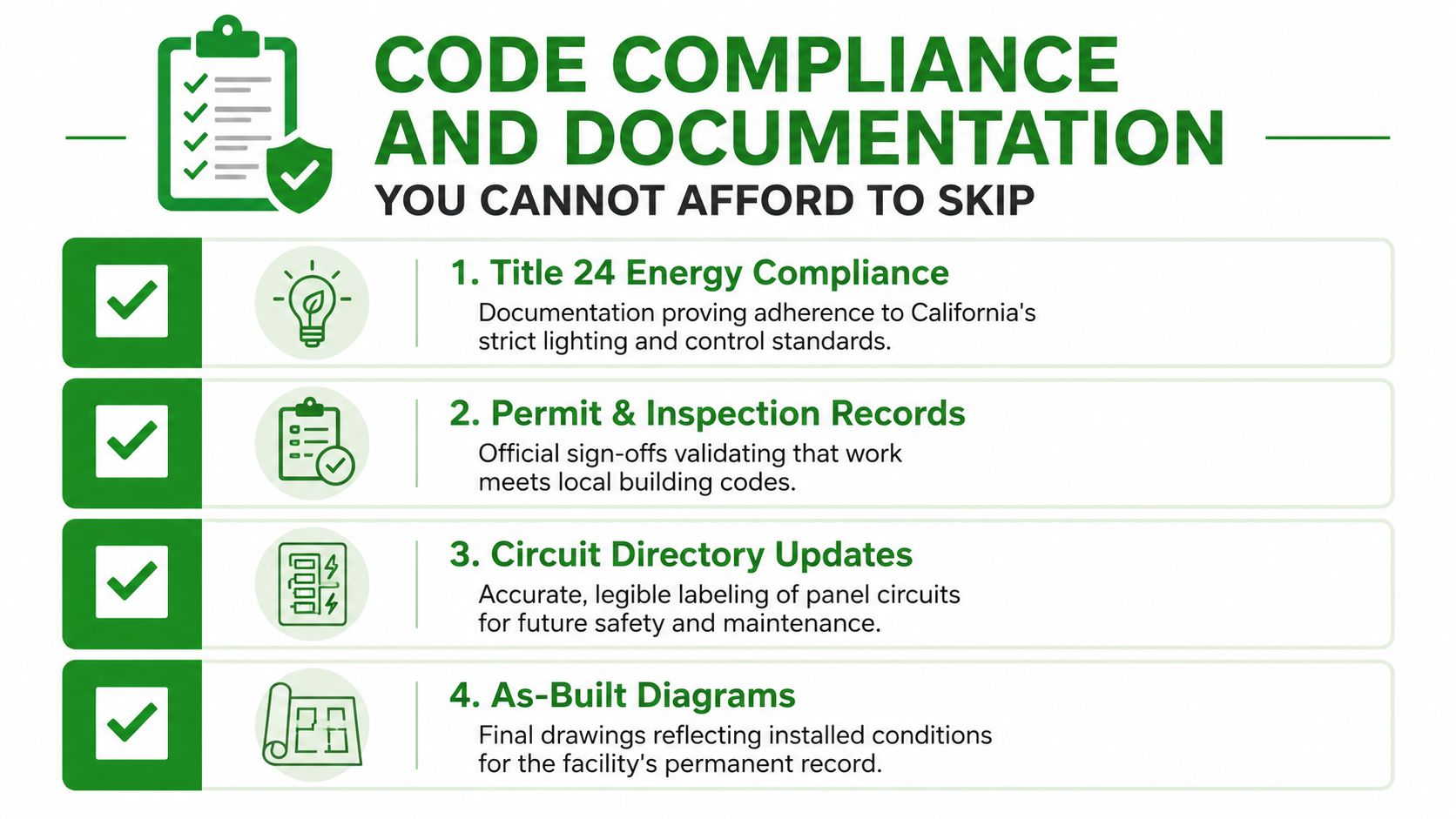
A clean repair without paperwork leaves the building exposed. Compliance records matter because inspectors, owners, and insurers all want the same thing, evidence that the work was completed correctly and the system was left in a known state. For California commercial properties, that includes Title 24 lighting and control compliance, along with the testing and certification documentation that proves the work matches the installed conditions.
Exit signs and emergency lighting need their own routine. The practical standard is straightforward, monthly visual checks, annual 90-minute battery tests, and logs that show the date, condition, and corrective action when a unit fails. If a light or sign is corrected during a maintenance visit, the record should say what was found, what was repaired, and who verified it afterward.
Records that actually help later
The paperwork that matters most is the paperwork someone can use in six months. Circuit directories should be legible and current. As-built diagrams should reflect what was installed, not what the original permit set once promised. Permit and inspection sign-offs should live with the maintenance file so a future technician isn't guessing in the panel room.
That's where good troubleshooting pays twice. It solves the immediate issue, and it leaves behind a defensible record if the property ever has to explain what happened. If you want a deeper rundown of documentation and compliance requirements, this page on electrical code compliance is a useful reference point.
The liability angle is simple. If the building has a documented inspection trail, it's easier to show that problems were found, prioritized, and handled with care. If the records are missing, the building has to defend itself with memory, and memory is a weak system.
How to Choose a Qualified Southern California Contractor
A good commercial electrician is easy to spot once you know what to ask. Start with the basics: a valid California C-10 license, current insurance certificates, and bonding that matches the scope of work. If the contractor can't provide those documents promptly, keep looking.
Then ask about response capability and coverage. A firm that handles Orange County, the Inland Empire, and San Diego may be a better fit for multi-site owners than someone who only works a narrow local radius. If your property needs after-hours support, ask how the dispatch process works, who answers the call, and what stock they keep on service vehicles.
Scope matters more than slogans
Commercial electrical work gets messy when one contractor handles line-voltage while another handles low-voltage, controls, and signage. A unified scope reduces finger-pointing when a lighting control issue turns out to involve both power and communication. That's especially useful in buildings with digital signage, automation, or EV charging, where the symptom isn't always where the fault lives.
Ask to see examples of documented infrared reports, Title 24 certification experience, and maintenance logs. A contractor who can explain their diagnostic method in plain language is usually a safer bet than one who only talks about speed. If they can't tell you how they isolate faults, what they test first, or how they decide between repair and replacement, they're asking you to trust the outcome without understanding the process.
Here's the short checklist I'd use on a walkthrough:
- License and insurance: verify the C-10 classification, not just a business name.
- Emergency readiness: confirm 24/7 capability and the actual response path.
- Documentation: ask for sample reports, logs, and photos from previous troubleshooting work.
- Scope integration: make sure line-voltage and low-voltage work can be handled without splitting the job.
- Local familiarity: confirm they understand the compliance expectations in your area.
Access Electrical and Lighting fits the kind of contractor profile many facility teams need because it covers troubleshooting, repairs, panel and switchgear work, infrared inspections, Title 24 support, and low-voltage scopes under one roof. That kind of consolidation matters when the issue spans multiple systems and no one wants a relay problem handed off to three different vendors.
A 30-Day Plan to Reduce Electrical Downtime
The fastest way to reduce electrical downtime is to stop treating every issue as isolated. Start with an asset list that includes panels, switchgear, emergency lighting, exit signs, parking-lot circuits, lighting controls, and any low-voltage systems that affect operations. You can't prioritize what you haven't mapped.
Next, commission a baseline infrared inspection and ask for findings in plain language, not just pictures. The point is to identify hotspots, loose connections, overloaded circuits, and equipment that's already trending the wrong way. Once the report is in hand, resolve the top three findings before they turn into the next outage.
A good 30-day sequence looks like this:
- Inventory the critical electrical assets. Include location, use, and what each asset supports.
- Review the recent trouble history. Repeated complaints usually point to the same weak point.
- Order a baseline thermographic scan. Use it to find hidden heat and condition issues.
- Close out the highest-risk findings first. Focus on anything that threatens uptime or safety.
- Set a recurring maintenance cadence. Make the contractor document what was inspected, what changed, and what still needs watching.
The payoff isn't only fewer service calls. It's a cleaner operating rhythm, because the building stops waiting for failures to announce themselves. Electrical troubleshooting services deliver the most value when they're tied to a reliability program, documented properly, and used to make repair or replacement decisions before tenants feel the disruption.
If you want a practical partner for troubleshooting, infrared inspections, panel work, compliance documentation, and ongoing maintenance in Southern California, contact Access Electrical and Lighting and ask for a commercial walkthrough that starts with your highest-risk circuits.