You're probably looking at a calendar full of tenant improvements, a panel upgrade that keeps slipping, and an inspection date that's suddenly a lot closer than it looked last week. Then the inspector flags emergency lighting, a panel directory, or a clearance issue, and a small punch list turns into a scramble for parts, labor, and reinspection time.
That's the critical pressure point behind electrical code compliance. For property managers and general contractors, it isn't just about passing one visit, it's about keeping a building safe, keeping work moving, and avoiding last-minute redesigns when a local authority asks for documentation that nobody thought would matter.
Introduction to Commercial Electrical Compliance
Commercial electrical compliance starts with a simple idea, the system has to be safe and documented in a way an inspector can verify. If a building's emergency lights work during a walkthrough but there's no test record, the job can still fail. If a panel is energized and functional but access is blocked, the issue is still real because the code cares about both performance and safe serviceability.
The tricky part is that compliance isn't frozen in time. The National Electrical Code is published by the National Fire Protection Association and updated on a 3-year cycle, with recent editions including 2017, 2020, 2023, and 2026 legacy-electric.org. That means a space that was acceptable when it was built may need updates later, especially after tenant changes, equipment upgrades, or a shift in local enforcement.
Practical rule: treat compliance like a living record, not a framed certificate on a wall.
For commercial operators, that distinction matters because the building department, the plan checker, and the field inspector may all care about slightly different things. In California, Title 24 adds another layer because energy and lighting requirements can affect how systems are designed, tested, and documented, not just how they're wired. If you're managing multiple sites, a significant risk is assuming one rule set applies everywhere when local adoption and amendments can change the answer.
Understanding Key Concepts in Electrical Code Compliance
Think of electrical rules the way individuals generally think about traffic laws. The road doesn't stop changing just because you've driven it for years, and the same is true for a facility. Speed limits, signals, and lane markings evolve, and electrical rules do too, through the NEC update cycle and state-specific requirements like California's Title 24.
The first concept to get right is which code edition applies. The NEC's 3-year revision cycle means the standard itself keeps moving, and recent editions include 2017, 2020, 2023, and 2026 legacy-electric.org. But the version that matters on your project is the one your jurisdiction has adopted, plus any local amendments. For California work, that can mean checking both the NEC adoption status and the applicable Title 24 requirements before plans are finalized.
A simple way to avoid confusion is to think in layers. The NEC sets the baseline electrical safety framework. Local code enforcement can add amendments. Title 24 can affect lighting and energy-related requirements in California. A project team that checks only one of those layers can end up redesigning work after permits are already underway.
The cleanest next step is confirming the adopted rules with the authority having jurisdiction before a tenant improvement starts. If you're trying to sort out California-specific requirements, a practical starting point is this guide on Title 24 compliance basics. That kind of early check keeps scope creep from showing up after rough-in, when changes cost more and delay closeout.
If the code edition is wrong, the rest of the job can be technically correct and still fail the review.
Legal Responsibilities and Commercial Requirements
Responsibility for compliance doesn't sit with one person in a commercial building. Owners carry the duty to maintain the property, facility managers handle day-to-day oversight, and general contractors are responsible for executing permitted work to the approved standard. When a space is altered, each party can affect whether the finished system passes inspection.
The simplest way to think about it is this, ownership sets the standard, management keeps it from slipping, and the contractor has to build what was approved. In practice, that means permits, field inspections, and as-built documentation matter just as much as equipment selection. Owners should also confirm the adopted NEC edition with local building departments because jurisdictions may operate under different code versions and amendments homeregulationsauthority.com.
Commercial requirements often come up in predictable places. Emergency lighting and exit signs need to be installed, tested, and documented. Switchgear and panel directories have to be legible. EV charging stations can trigger new electrical and permitting questions. Low-voltage controls can also fall into the project scope once lighting controls, monitoring, or integrated systems are involved.
A retail center that adds EV chargers mid-lease usually discovers this the hard way. The landlord may need a permit amendment, a revised load review, and inspection coordination before the chargers can be energized. If the work touches common-area lighting or controls, the documentation stack gets bigger, not smaller.
- Permit trail: Keep approved plans, revisions, and inspection sign-offs together.
- Field changes: Recheck labels, access, and equipment ratings whenever scope shifts.
- Tenant coordination: Make sure lease improvements don't create hidden code conflicts in shared electrical infrastructure.
Inspection and Testing Procedures for Compliance
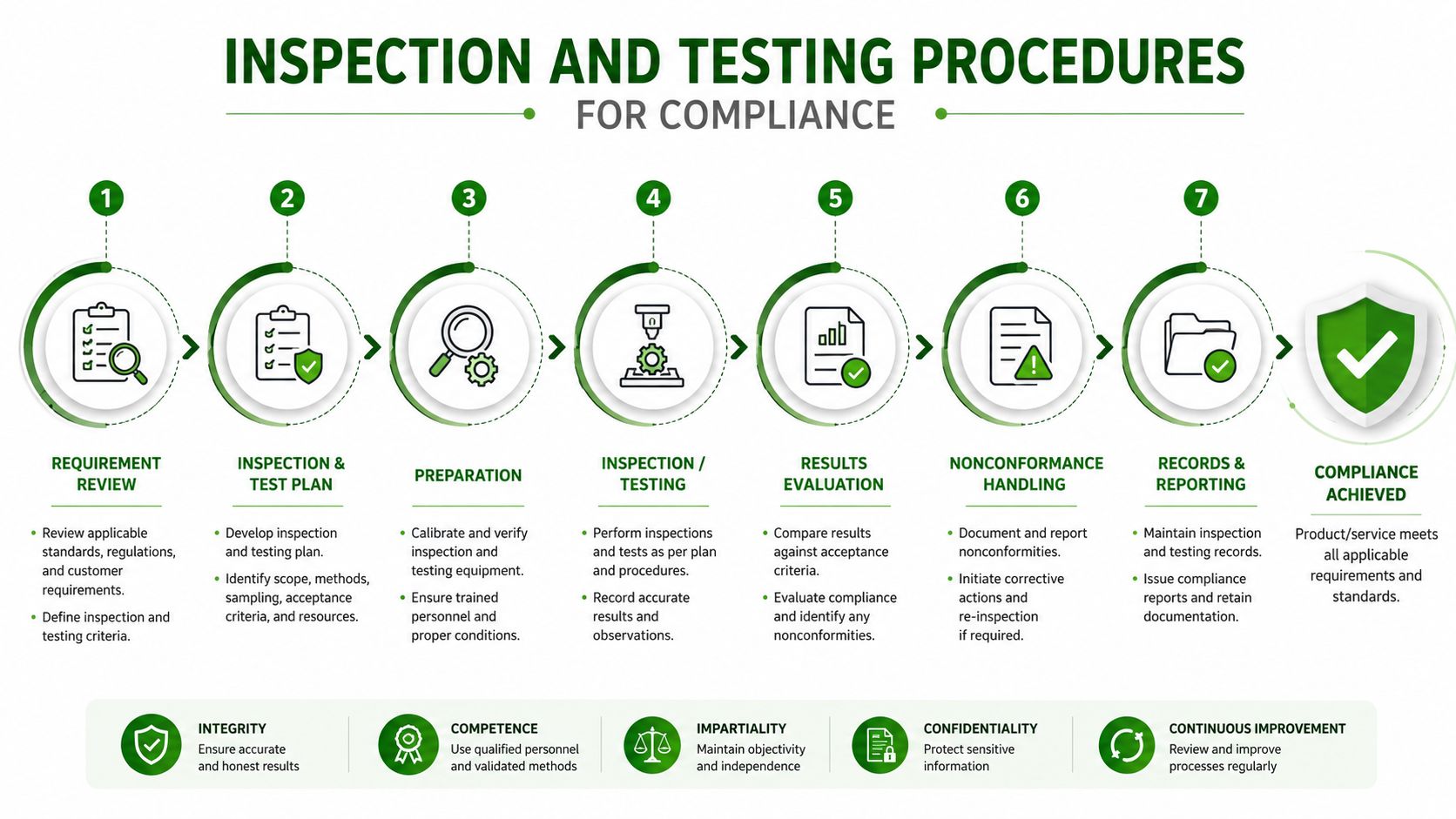
A building can look fine and still hide a problem that only shows up under testing. That's why inspection routines matter, especially in occupied commercial properties where shutdowns are disruptive and safety risk is shared by tenants, staff, and visitors. One useful example is a multifamily building where an infrared scan found an overheating feeder before it turned into a downtime event, which is exactly the kind of issue a walk-through would miss.
What to test and why
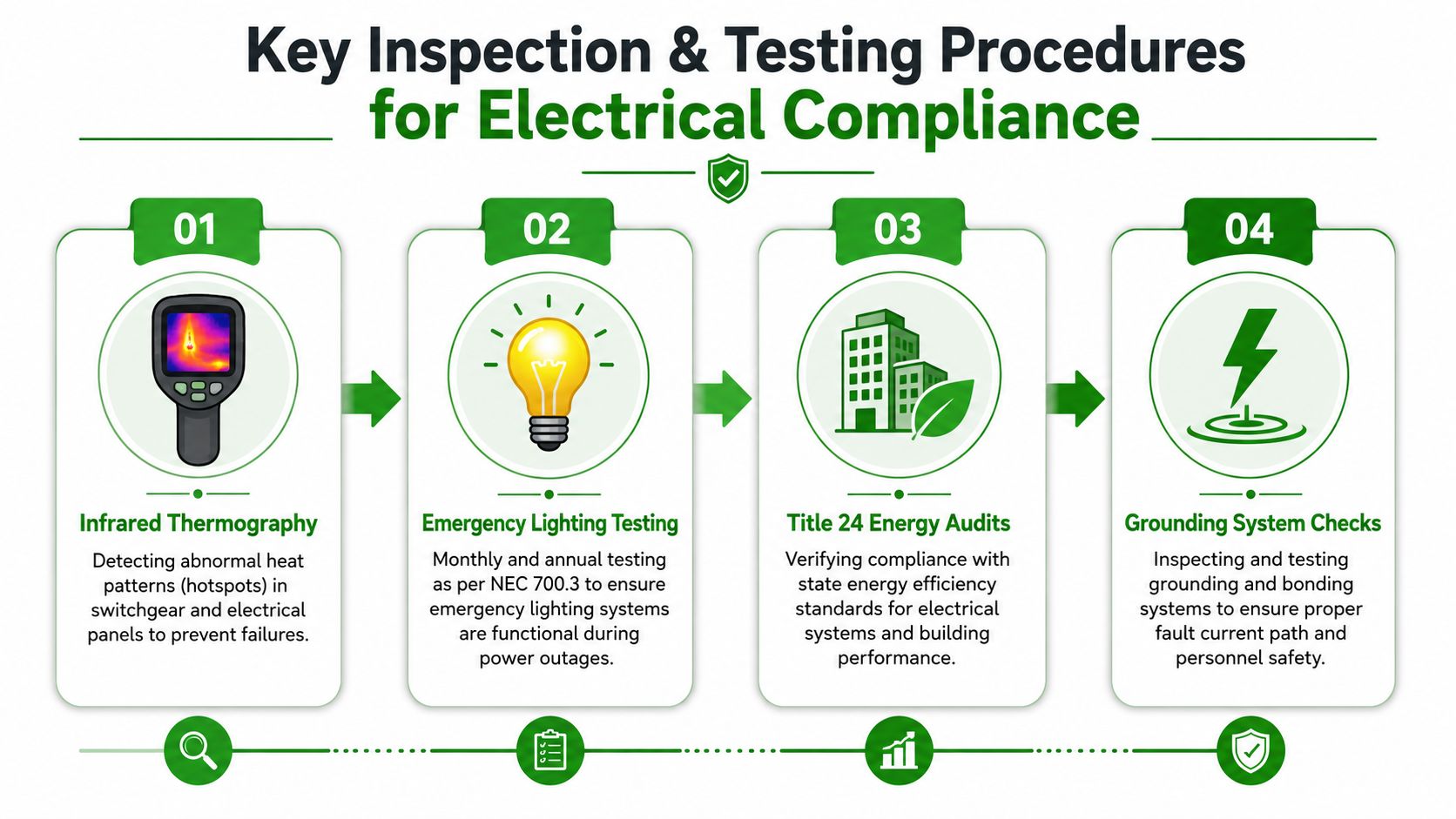
Infrared thermography spots abnormal heat in switchgear, feeders, and panels before the failure becomes obvious. That matters because a connection can be loose long before it arcs or trips. Emergency lighting testing has to be documented on a recurring basis, and one commercial compliance guide states that emergency systems must activate within 10 seconds of power loss, supply emergency loads for at least 90 minutes, and keep monthly documentation under NEC 700.3 deltawye.com. If the log is missing, the system may still be treated as noncompliant.
Title 24 lighting verification is where California projects often get caught on details. The equipment may work, but the installed system still has to match the energy and control intent approved for the building. Low-voltage cabling certification matters for signaling, controls, and integrated systems because bad terminations or untested runs create troubleshooting headaches later.
What to keep in the file
Keep the test result, the date, the technician, and the corrective action in the same record set.
The most common mistake is half-documentation. Teams test the equipment, but they don't keep a clean log or as-built record. That becomes a problem during reinspection or tenant turnover, especially when access to ceiling spaces, panels, or remote fixtures is limited.
For a practical service option, some owners use electrical safety inspection support to centralize infrared scans, testing, and reporting. The value isn't the scan alone, it's the paper trail that shows the issue was found and corrected before it turned into a complaint or outage.
Common Violations and Remediation Steps
The recurring failures are often boring, which is exactly why they keep showing up. A major 2019 survey of code enforcement officials by the National Association of Home Builders found grounding and bonding issues in 37% of noncompliance responses, labeling errors in 31%, and working clearance problems in 30% NAHB survey. That pattern says a lot. Most failures aren't exotic engineering problems, they're repeatable installation and maintenance misses.
| Violation | Occurrence Rate | Remediation |
|---|---|---|
| Grounding and bonding | 37% | Verify bonding jumpers, continuity, and fault-current path, then correct loose or missing connections. |
| Labeling errors | 31% | Update panel directories, circuit IDs, and equipment labels so they match the installed system. |
| Working clearance problems | 30% | Clear access around electrical equipment and keep storage, furnishings, and obstructions out of service space. |
Grounding and bonding problems usually happen when work is modified over time and the original connection path gets interrupted. The fix is straightforward but has to be done carefully, verify the bonding path, inspect the jumpers, and correct any missing links before the next inspection. Labeling failures are less dramatic, but they still cause delays because an inspector wants to see that the directory matches reality, not old paperwork.
Working clearance issues are often a property management problem as much as an electrical one. Storage creep, tenant furniture, or new displays can block access to equipment that needs service space. If your team needs a reportable snapshot of what's wrong, electrical inspection report guidance can help translate the field findings into a fix list that maintenance can execute.
Practical Compliance Checklist and Timeline
A compliance plan works best when it's tied to the calendar instead of a vague “sometime soon.” If you wait until the inspector is on site, you're already late. If you build the work into monthly, quarterly, and annual tasks, the property team can correct issues before they become project blockers.
Month 1 to 2
Start with the governing rules, permit path, and load review. Confirm the applicable NEC edition, check Title 24 obligations where California energy controls are involved, and verify whether the scope affects feeders, panels, emergency lighting, or EV charging. Then collect as-builts, panel schedules, and prior test logs so you're not rebuilding the paper trail from scratch.
Quarterly and before tenant changes
Inspect panel directories, access clearances, lighting controls, and emergency equipment. Run infrared scans on critical gear where practical, especially in occupied buildings with heavy load changes. If tenant work is coming, recheck the permit scope before demolition starts so the new layout doesn't outgrow the approved plans.
Annual closeout
Document emergency lighting tests, review any Title 24 certification items, and reconcile field changes against as-builts. A clean record set makes the next inspection easier because the team can show what was tested, what was corrected, and what remains in service.
- Pre-installation planning: confirm code edition, permit scope, and responsible parties.
- Field verification: check labels, access, grounding, and tested operation.
- Recordkeeping: store logs, certificates, and corrective actions together.
How Licensed Contractors Support Ongoing Compliance
A licensed C-10 contractor can keep compliance from turning into a file cabinet problem. A key advantage is coordination, one team can handle line-voltage work, low-voltage systems, infrared thermography, and documentation without forcing you to manage separate vendors for every task. That matters when a project needs testing, corrections, and reinspection support in a short window.
Access Electrical and Lighting is one option in that category, since it combines commercial electrical work, lighting systems, low-voltage scope, infrared inspections, and Title 24 support under one contractor. In Southern California, that kind of unified service is useful for office parks, retail centers, and multifamily properties that need recurring inspections and fast corrective work. Beyond basic compliance, contractors should assess safety performance with modern breakers, panel upgrades, and preventive maintenance because code checks alone can miss risks blog.se.com.
A practical example is a Southern California office park that relies on annual testing and documented repairs to stay ahead of inspection cycles. The value isn't flashy, it's fewer surprises, cleaner records, and less time spent chasing missing logs when someone asks for proof.
Conclusion and Next Steps
Electrical code compliance gets easier when you treat it as a system, not a one-time inspection event. Start with the correct code edition, account for local amendments and Title 24 where applicable, then keep testing, documenting, and correcting issues before they become violations. The biggest wins usually come from the basics, clear labeling, accessible equipment, tested emergency systems, and a maintenance calendar people follow.
If you manage a building or run a job, audit your current files against the checklist above, schedule the next round of testing, and fix the items that tend to fail first. A licensed contractor can help you close gaps faster, especially when the work involves permits, documentation, and ongoing service.
A CTA for Access Electrical and Lighting to review your current compliance status, test emergency systems, verify labels and clearances, and help you prepare for your next inspection before small issues turn into expensive delays.