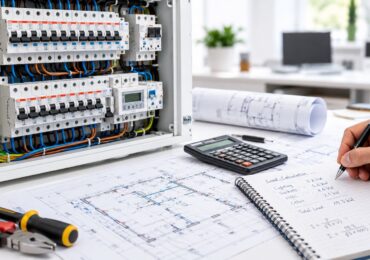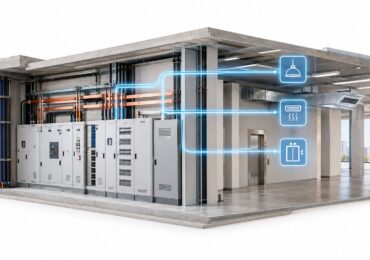
A tenant move-in is scheduled for tomorrow, but the building's main breaker has tripped twice before lunch. Across town, an Orange County facility manager is preparing for a Title 24 inspection while an EV charging request sits on the desk, waiting for an answer. In Los Angeles, an insurance carrier has asked for a load study on a multifamily property with original switchgear.
These situations look different, but they create the same pressure. A reactive repair may restore power today, yet it won't tell you whether the service can support future HVAC electrification, solar interconnection, EV charging, or changing tenant loads. Electrical system upgrades work best when they begin with measured capacity, documented risks, and a sequence that matches the property's actual use.
Why Commercial Electrical System Upgrades Demand a Strategy
A full service replacement can look like the safest answer when a breaker trips or equipment shows heat damage. On an occupied commercial property, however, that decision may consume funds needed for a failed feeder, deficient grounding, inadequate fault protection, or another risk with greater operational impact. The right starting point is the building's measured demand and the condition of each part of the distribution system.
Utility investment reflects the same underlying pressure. Annual spending by major utilities to produce and deliver electricity increased 12% in real terms, from $287 billion in 2003 to $320 billion in 2023, according to FERC-reported utility financial data. Distribution capital investment rose by $31.4 billion, or 160%, reaching $50.9 billion in 2023, as utilities replaced aging equipment, strengthened local grids, and accommodated changing generation patterns.
Southern California properties face comparable constraints at the building level. A system designed for older tenant uses may now serve higher cooling demand, electric cooking, chargers, solar equipment, or battery systems. Floor area does not establish usable capacity. A restaurant, medical office, warehouse, and apartment building with the same square footage can produce very different load profiles.
Start with the building's actual demand
Before approving replacement, separate symptoms from the capacity problem.
- Recurring trips: Confirm whether the breaker is overloaded, failing, poorly coordinated, or responding to a downstream fault.
- New electrical loads: Model EV charging, HVAC replacement, kitchen equipment, battery systems, and tenant improvements together, not as isolated requests.
- Aging equipment: Inspect switchgear, bus connections, breakers, feeders, and transformers. Age alone does not prove that every component requires replacement.
- Code and operational constraints: Review available fault current, grounding and bonding, working clearances, arc-flash requirements, shutdown windows, occupied units, elevators, life-safety systems, and utility coordination.
A phased upgrade may address a hazardous panel, rebalance loads, correct feeder issues, and add monitoring before a larger service project becomes necessary. The trade-off is that phasing requires accurate documentation, careful coordination, and a plan that prevents temporary work from blocking later improvements.
Practical rule: Full replacement is justified when equipment cannot safely support the measured load, lacks required protection, has reached an unsafe condition, or cannot be modified compliantly. Age should trigger an assessment, not automatic demolition.
A defensible sequence protects people and continuity first, then schedules capacity, efficiency, and future-readiness work around funding, access, tenant operations, and utility requirements.
Core Upgrade Types Every Property Manager Should Know
Property managers usually encounter five overlapping upgrade categories. The right scope depends on the trigger, not on a contractor's preferred package.
Service and panel capacity
A service upgrade becomes relevant when demand has outgrown the available service, the main equipment has inadequate condition or interrupting capacity, or new loads cannot be added without violating design limits. The work may involve a larger service, new switchgear, bus duct replacement, feeder work, fused disconnects, or coordination with the serving utility.
A larger panel doesn't automatically create usable capacity. The service, transformer, feeders, disconnects, and distribution equipment must work as a system. A new 400 A service in the Inland Empire won't solve a constraint upstream if the utility transformer or service connection can't support the proposed demand.
Branch circuits and switchgear
Frequent trips, heat discoloration, buzzing, obsolete breakers, missing labeling, or poor fault protection point toward branch-circuit or switchgear modernization. The scope may include breaker replacement, selective feeder repair, arc-flash labeling, equipment cleaning, torque verification, and updated one-line documentation.
This category often supports a phased approach. A contractor can address the dangerous or overloaded section first rather than replacing every panel in the property.
Lighting and controls
LED retrofits fit properties with high maintenance demand, poor light quality, failed controls, or an upcoming energy-code review. A fixture swap alone doesn't capture the full opportunity. Dimming, timers, occupancy sensors, and daylight harvesting determine how much of the available reduction becomes real operating savings.
DOE-linked commercial case studies report that LED retrofits alone commonly reduce lighting energy use by more than 50%, while controls can push savings up to 80% in suitable applications, as documented in this DOE-recognized commercial lighting project. Controls also create acceptance-testing and commissioning obligations, so the proposal should include programming, testing, and documentation.
EV-ready infrastructure
EV charging requests should prompt a load review before anyone orders chargers. The design may require feeder upgrades, distribution equipment, load management, parking-lot trenching, bollards, communications, and future conduit pathways. NEC Article 625 governs EV supply equipment, while California parking and energy requirements can affect the broader installation.
The practical question isn't how many chargers fit in the parking area. It's how charging demand will interact with HVAC, domestic hot water, elevators, lighting, and tenant loads during the same operating period.
Low-voltage and backup systems
Structured cabling, fire alarm interfaces, access control, emergency lighting, battery backup, mass notification, and building controls can become upgrade drivers during a tenant improvement or remodel. These systems may not increase line-voltage demand significantly, but they affect pathways, separation, testing, commissioning, and emergency operation.
| Symptom or Trigger | Upgrade Type | Typical Scope |
|---|---|---|
| Repeated main-breaker trips | Service or switchgear upgrade | Load review, protective-device testing, feeder and main-equipment evaluation |
| Flickering lights or hot breakers | Branch-circuit modernization | Visual inspection, infrared scan, connection repair, breaker or feeder replacement |
| Failed lighting acceptance test | Lighting and controls retrofit | LED fixtures, controls, programming, acceptance testing, documentation |
| New EV charging request | EV-ready infrastructure | Load calculation, feeder capacity review, charging equipment, conduit, controls |
| Tenant security or life-safety changes | Low-voltage and backup work | Cabling, interfaces, emergency lighting, access control, testing |
Calculating ROI and Real Cost Drivers
A 50 kW EV charging bank can fit within a property's service capacity on paper and still create a costly demand spike when chargers run alongside HVAC, elevators, domestic hot water, lighting, and tenant loads. Before approving new equipment, compare the added peak demand with the utility tariff, available capacity, and the cost of controls or phased installation. A smaller initial deployment with load management may cost less than replacing service equipment immediately, while preserving room for later expansion.
Return on investment depends on the problem the work solves. A lighting retrofit may earn its return through energy and maintenance savings. Switchgear work may justify its cost through safer operation, fewer outages, insurance requirements, or the ability to lease previously constrained space. Treating every project as an energy-payback exercise produces bad decisions.
Lighting provides the clearest facility-level calculation when the baseline is reliable. Compare current lighting energy, maintenance labor, relamping, access equipment, controls, and operating schedules with the proposed system. LED projects can reduce lighting energy use substantially, and controls can increase savings in suitable spaces. The actual building schedule, occupancy pattern, and control performance determine the result, not the fixture count alone.
Four cost levers shape the bid
Scope includes equipment ratings, feeders, controls, trenching, structural supports, temporary power, testing, and documentation. A quote that omits one-line updates or acceptance testing may be incomplete rather than inexpensive.
Labor access changes pricing when crews work after hours, isolate occupied tenant spaces, coordinate with residents, use lifts, or complete shutdowns during narrow operating windows. Multifamily work adds communication and access logistics that a vacant warehouse does not.
Compliance includes permits, inspections, Title 24 documentation, emergency-system testing, arc-flash requirements, and commissioning. Public or multifamily work may also involve prevailing-wage requirements, depending on the project and funding structure. Older buildings can require hazardous-material investigations and abatement before demolition or wall access.
Utility coordination affects service changes, meter work, outage scheduling, design review, and field coordination with LADWP, Southern California Edison, or San Diego Gas & Electric. Utility requirements can change equipment selection and schedule after the building-side design is complete.
Use this order when prioritizing capital:
- Correct immediate hazards and unstable equipment.
- Verify measured capacity before buying larger gear.
- Capture efficiency savings where the baseline supports them.
- Install infrastructure that makes future tenant and EV work easier.
A capacity upgrade can support revenue and electrification, while a controls project may reduce operating costs sooner. The soundest program often combines both, using measured demand and code-driven work to determine which improvements happen first.
Compliance Essentials for Southern California Properties
Code compliance isn't a paperwork exercise added at the end. It shapes the equipment, wiring methods, controls, testing, shutdown plan, and closeout documents from the beginning.
California's energy requirements under Title 24, Part 6 can affect lighting replacements and control systems, especially where a project changes fixtures, operating zones, or installed controls. Property teams should ask for a defined acceptance-testing scope, certification responsibilities, and a closeout package that includes the records the authority having jurisdiction may require. This plain-language guide to Title 24 compliance can help non-electricians identify the questions to raise before work begins.
Continuous loads need usable headroom
The NEC continuous-load rule is a common source of confusion. Loads expected to run for three hours or more should not exceed 80% of breaker rating, so an 80 A continuous load requires at least a 100 A breaker under the sizing example documented in this commercial electrical load calculator.
That rule doesn't mean a 100 A breaker automatically makes the installation acceptable. Conductors, terminals, raceways, equipment ratings, voltage drop, overcurrent protection, and the service calculation still need review. EV charging, expanded HVAC, and certain lighting or process loads can push a project beyond a simple circuit addition.
Life-safety testing needs ownership
Emergency lighting and exit signs require more than installation. The responsible team needs a testing and recordkeeping process that matches the applicable building and fire requirements. Existing tenant improvements may be evaluated differently from new construction, so the contractor and authority having jurisdiction should confirm the project-specific requirements, including emergency duration, testing, and documentation.
Common job-walk findings include:
- Unpermitted sub-panels: Equipment added without permits may lack proper grounding, labeling, or inspection records.
- Missing protection: AFCI and GFCI requirements can apply based on location, circuit use, and applicable code provisions.
- Dead emergency batteries: A fixture that looks complete can fail when the power goes out if testing and battery replacement were neglected.
- Incomplete records: Missing panel schedules, circuit identification, or acceptance documents makes future work slower and riskier.
| Code / Standard | What It Covers | Common Upgrade Trigger | Who Signs Off |
|---|---|---|---|
| NEC continuous-load rules | Breaker and load sizing | EV charging, HVAC, process equipment | Design professional, licensed electrical contractor, AHJ |
| California Title 24, Part 6 | Energy use and lighting controls | LED retrofit, controls change, tenant improvement | Qualified contractor or responsible testing professional, AHJ |
| Emergency-lighting requirements | Egress illumination and backup operation | Failed tests, remodel, battery replacement | Contractor, fire or building official as applicable |
| Local permitting requirements | Installation approval and inspection | Service, panel, feeder, or sub-panel work | Building department and responsible contractor |
Assessment Methods That Catch Problems Early
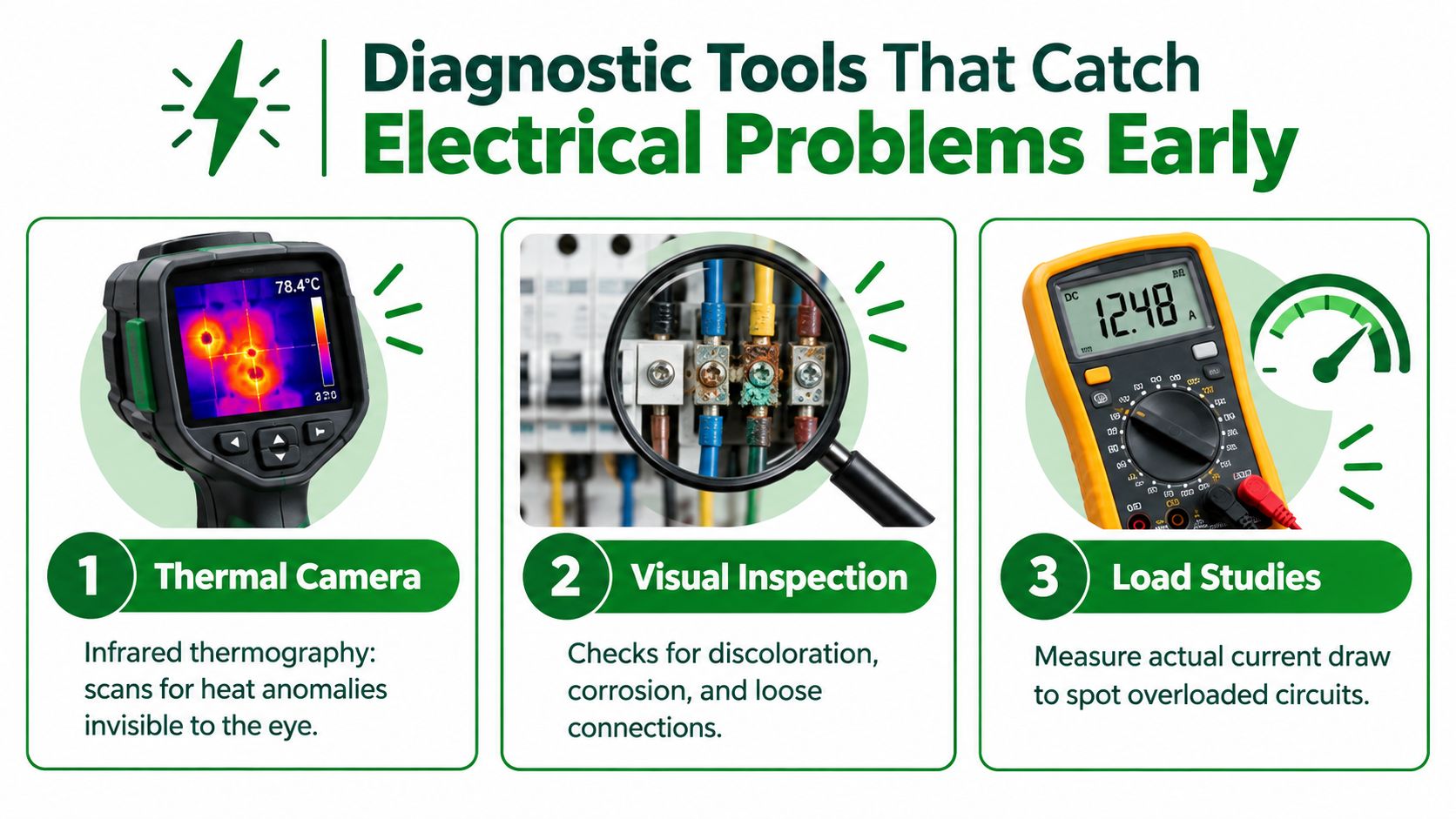
A property owner shouldn't choose between visual inspection, infrared thermography, and a load study as though one replaces the others. Each answers a different question, and the order matters when the budget is tight.
Infrared finds heat that inspection misses
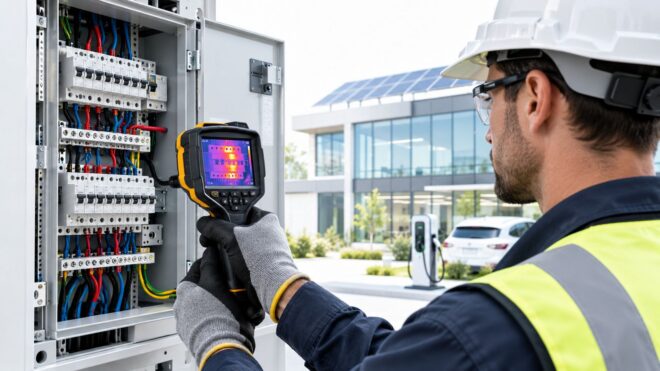
An infrared scan shows temperature patterns at energized equipment. A hot lug, uneven phase loading, overloaded breaker, failing connection, or deteriorating component may appear as a heat anomaly before visible damage develops. The scan doesn't prove the cause by itself, but it helps rank which equipment deserves immediate investigation.
A 1970s switchgear lineup can look acceptable from the outside while one phase runs materially hotter than the others. That finding supports targeted corrective work instead of an automatic property-wide replacement. Infrared thermography inspection services can produce documented images and reports for maintenance planning.
Visual inspection exposes workmanship and code gaps
Thermography can't identify every problem. A visual inspection catches double-lugged breakers, missing labels, corroded enclosures, damaged insulation, blocked working clearances, poor housekeeping, and incorrect equipment identification. It also confirms whether the panel schedule matches the circuits that serve the building.
Load studies prove the operating condition
A load study uses measured current over an operating period to show how the service behaves under real conditions. It can distinguish an overloaded service from a nuisance trip, phase imbalance, or equipment fault. For a tenant improvement that trips only when EV charging and air conditioning operate together, logged data is more useful than a snapshot taken during a quiet afternoon.
An insurance carrier may request an arc-flash study, but that study isn't a substitute for a load study or physical inspection. The safest sequence is usually a visual review and infrared scan to identify immediate concerns, followed by measured loading when capacity decisions remain uncertain.
Use the cheapest diagnostic that can answer the next decision. If a scan identifies a failing termination, repair it and rescan before commissioning a full replacement design.
Choosing the Right Contractor for the Job
A commercial electrical bid is only comparable when each contractor prices the same technical scope. Send out a vague request for “panel replacement” and the proposals may differ in breaker interrupting ratings, conductor assumptions, utility work, permits, shutdown planning, testing, and as-built documentation.
Start with a written scope prepared by a qualified C-10 contractor or electrical engineer. It should identify the existing and proposed service, equipment ratings, available fault current information, feeder and conductor requirements, protective-device coordination, arc-flash labeling, Title 24 testing, emergency-system work, and closeout documents.
Verify capability before comparing price
Ask each bidder to show how the proposal addresses:
- License and insurance: Verify the California C-10 license and request current liability and workers' compensation documentation.
- Comparable work: Ask for commercial, retail, office, or multifamily projects with similar shutdown and tenant-access conditions in Southern California.
- One-line clarity: Confirm that the proposal includes a readable one-line diagram or clearly defined equipment sequence.
- Utility responsibility: Identify who handles LADWP, SCE, or SDG&E coordination, meter work, outage scheduling, and utility comments.
- Testing and closeout: Require permits, inspection support, acceptance testing, panel schedules, torque records, labels, and as-builts where applicable.
A low bid often excludes the work that becomes expensive after award. Missing permits, temporary power, hazardous-material coordination, night work, utility requirements, or commissioning can turn a supposedly fixed price into a stream of change orders.
Put protection in the contract
Use fixed-price language when the scope is sufficiently defined, and identify the assumptions that justify time-and-material work. Set a change-order process, require written authorization before extra work, and establish a clear method for documenting concealed conditions.
The contract should also state the workmanship warranty, equipment warranty responsibilities, shutdown and restoration procedures, cleanup obligations, and insurance requirements. Name the property owner as an additional insured when appropriate, and don't accept a certificate of insurance as a substitute for verifying coverage and licensing.
Access Electrical and Lighting is one Southern California option for scopes that combine commercial distribution, lighting, infrared inspection, emergency systems, EV charging, and low-voltage work under a California C-10 contractor.
A Phased Upgrade Case Study From the Field
A Riverside County apartment property built in the 1980s looked like a candidate for full electrical replacement. Recurring heat at the main distribution equipment raised an immediate safety concern, while ownership was also planning for additional capacity. Replacing everything would have required a larger capital commitment and a difficult outage schedule.
The project team started with infrared thermography and a load study. Diagnostics identified a 400 A switchgear bus running hot during evening peak operation, narrowing the urgent scope to the main equipment instead of every panel in the property. That distinction allowed ownership to prioritize capacity and risk rather than treat building age as the replacement plan.
Three phases kept the work controlled
Phase one established the facts. Thermal scanning ranked the overheated equipment, and the load study showed when the condition occurred and whether the service was overloaded. The results gave the owner a defensible basis for separating immediate repairs from later capacity work.
Phase two addressed the critical failure. The switchgear and main breaker were replaced during a coordinated 48-hour shutdown with the utility. Tenant communication, temporary operating procedures, testing, and restoration checks were built into the outage plan.
Phase three improved operating efficiency. Common-area lighting was converted to LED over two weekends. Scheduling kept the work away from occupied spaces and avoided tenant displacement while reducing disruption.
The phased project finished 38% under the original replacement estimate and had no tenant displacement, as documented in the project brief. Combined demand-charge reductions and maintenance savings produced a projected six-year payback, according to the same project documentation.
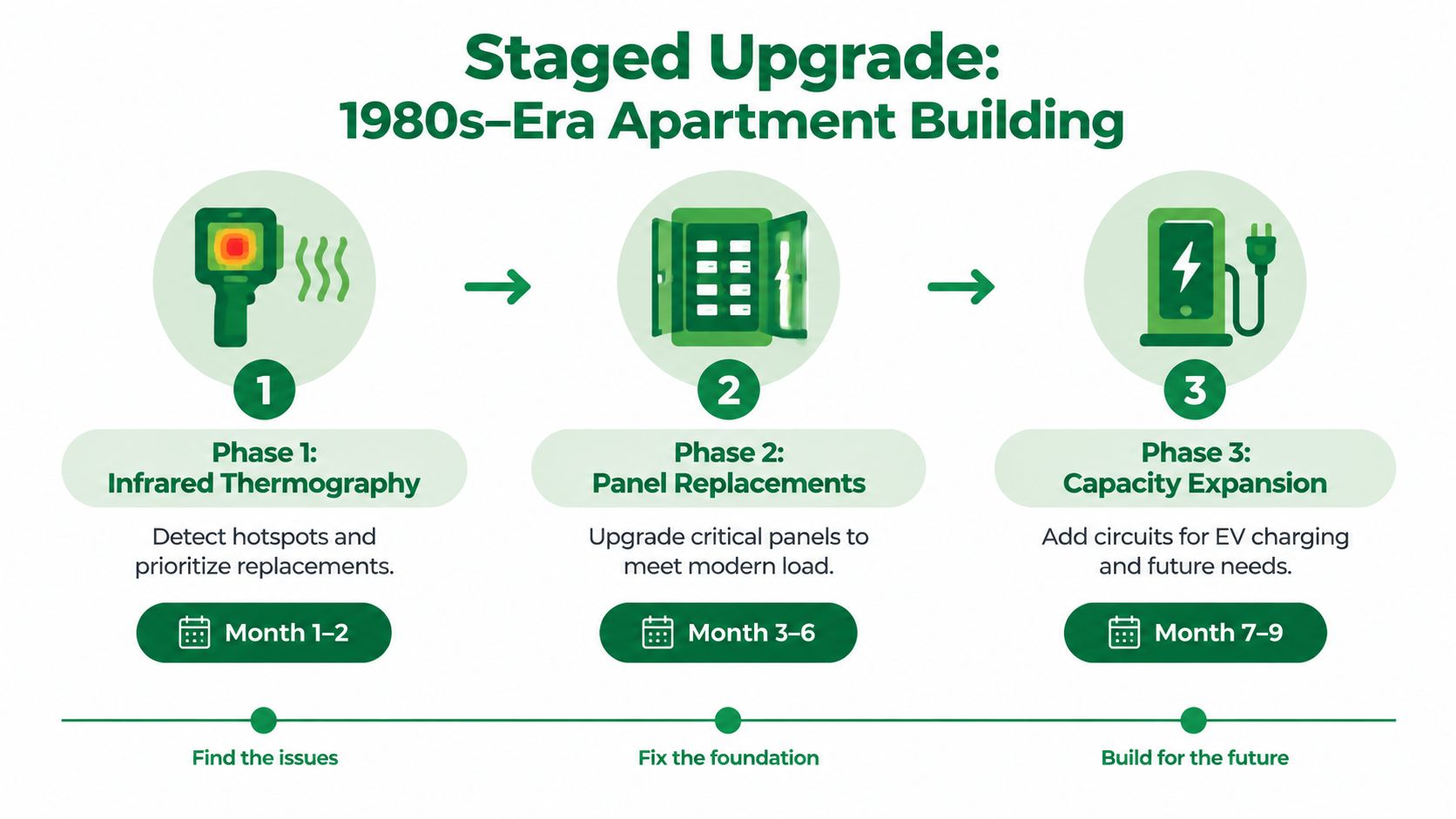
Phased work costs less when diagnostics isolate the urgent equipment, ownership can schedule shutdowns, and each phase has a defined purpose. It also carries planning risk. Early testing may reveal conditions that alter later scopes, so owners should hold contingency funds and avoid treating preliminary estimates as fixed future costs.
Maintenance and Testing for Long-Term Reliability
An upgrade only creates lasting value when the property team preserves the information and condition that justified the investment. New switchgear can develop loose connections, controls can drift out of sequence, and emergency batteries can fail if nobody assigns responsibility for testing.
Schedule inspections around the building's operating risk. An annual infrared scan before the summer peak can establish a comparison with the post-upgrade baseline and reveal new heat anomalies. Torque checks on terminations should follow the equipment manufacturer's requirements and the maintenance program. Breaker exercising and testing should follow the applicable NFPA 70B approach, equipment instructions, and the site's criticality.
Build a usable maintenance binder
The binder should be a working record, not a folder created only for closeout.
- Single-line diagrams: Keep current diagrams that show service equipment, feeders, disconnects, transformers, generators, and major distribution paths.
- Panel schedules: Update circuit descriptions after tenant improvements, equipment removals, and circuit transfers.
- Torque records: Preserve termination checks with dates, equipment identifiers, and technician details.
- Thermal baselines: Store labeled infrared images so future scans can identify changes rather than relying on memory.
- Test reports: Include emergency lighting, protective devices, controls, backup power, and acceptance-testing records relevant to the property.
- Warranty information: Record equipment models, serial numbers, service contacts, and warranty limits.
Preventive commercial electrical maintenance protects the original upgrade decision by finding emerging issues while scheduled access is still available. It also gives insurers, buyers, facility staff, and future contractors evidence of what was installed and how it has performed.
The maintenance budget should connect directly to the original business case. If the project was approved to reduce demand, verify operating schedules and controls. If it was approved to prevent outages, review trip history and thermal findings. If it was approved for compliance, keep testing and certification records current. That discipline turns electrical system upgrades into an operating asset instead of another deferred liability.
Access Electrical and Lighting provides commercial electrical system upgrades, switchgear and panel work, lighting retrofits, Title 24 support, infrared inspections, EV charging installation, emergency-lighting services, and low-voltage infrastructure across Southern California. Visit Access Electrical and Lighting to request an assessment that separates urgent repairs from phased capacity, efficiency, and compliance work.