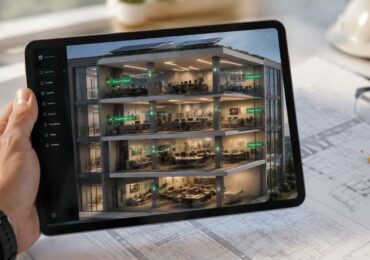
A tenant improvement starts out looking simple. New layout, updated fixtures, maybe a lighting refresh before the next tenant moves in. Then the plans hit permit review, and someone flags Title 24 compliance. Suddenly the job has controls, forms, testing, and questions nobody budgeted for early enough.
That's where a lot of commercial property teams get burned. They assume Title 24 only matters for ground-up construction, or they treat it like a box to check after the electrical scope is already decided. In practice, it affects remodels, office reconfigurations, lighting retrofits, and common-area upgrades in ways that can change the schedule and the final invoice.
The good news is that Title 24 isn't mysterious once you strip away the engineering language. For a property manager, the key issue is simple. You need to know when a project triggers compliance, what lighting and control decisions create risk, and when it makes sense to follow the standard checklist versus using a whole-building compliance strategy.
Introduction Navigating California's Energy Code
If you're managing a commercial property in California, you've probably heard some version of this: “We're just swapping lights.” Then a few days later the contractor, plans examiner, or consultant says the project needs new controls, compliance documentation, and testing before final sign-off.
That disconnect is why so many tenant improvements get delayed. The field work may look minor, but the code trigger often isn't minor at all. A lighting update in an office suite can become an alteration under Title 24, which means the new work has to meet current energy standards, not old assumptions.
For business decision-makers, the hard part isn't memorizing code sections. It's understanding the operational consequences early enough to make good choices. If the compliance path is wrong, you can end up redesigning control zones, replacing devices that were already installed, or waiting on testing after the tenant's move-in date is already on the calendar.
The projects that go smoothly usually aren't the simplest ones. They're the ones where the compliance path gets decided before the fixtures and controls are ordered.
The other issue is timing. Projects with permit applications submitted on or after January 1, 2026 must comply with the 2025 Title 24 cycle, while permits submitted before that stay under the earlier cycle, as outlined in this 2025 Title 24 permit timing overview. That permit date matters because the compliance rules attached to the job can shift even if the actual construction starts later.
For a busy property manager, the practical question isn't whether Title 24 exists. It's how to get through it without unnecessary redesign, failed inspections, or avoidable change orders.
What Is Title 24 and Why It Matters for Your Building
A property manager approves what looks like a routine tenant improvement. New lighting, a few layout changes, fast turnover for the next occupant. Then plan check comes back with energy comments, the controls package has to change, and the schedule slips because the work qualifies as an alteration under Title 24.
That is why Title 24 matters in existing commercial buildings.
Title 24, Part 6 is California's statewide Building Energy Efficiency Standards. The California Energy Commission updates it on a regular code cycle, and it applies to new construction, additions, and alterations. For owners and managers, the word that causes the most trouble is alterations, because that is where ordinary tenant improvement work starts carrying current energy code requirements.
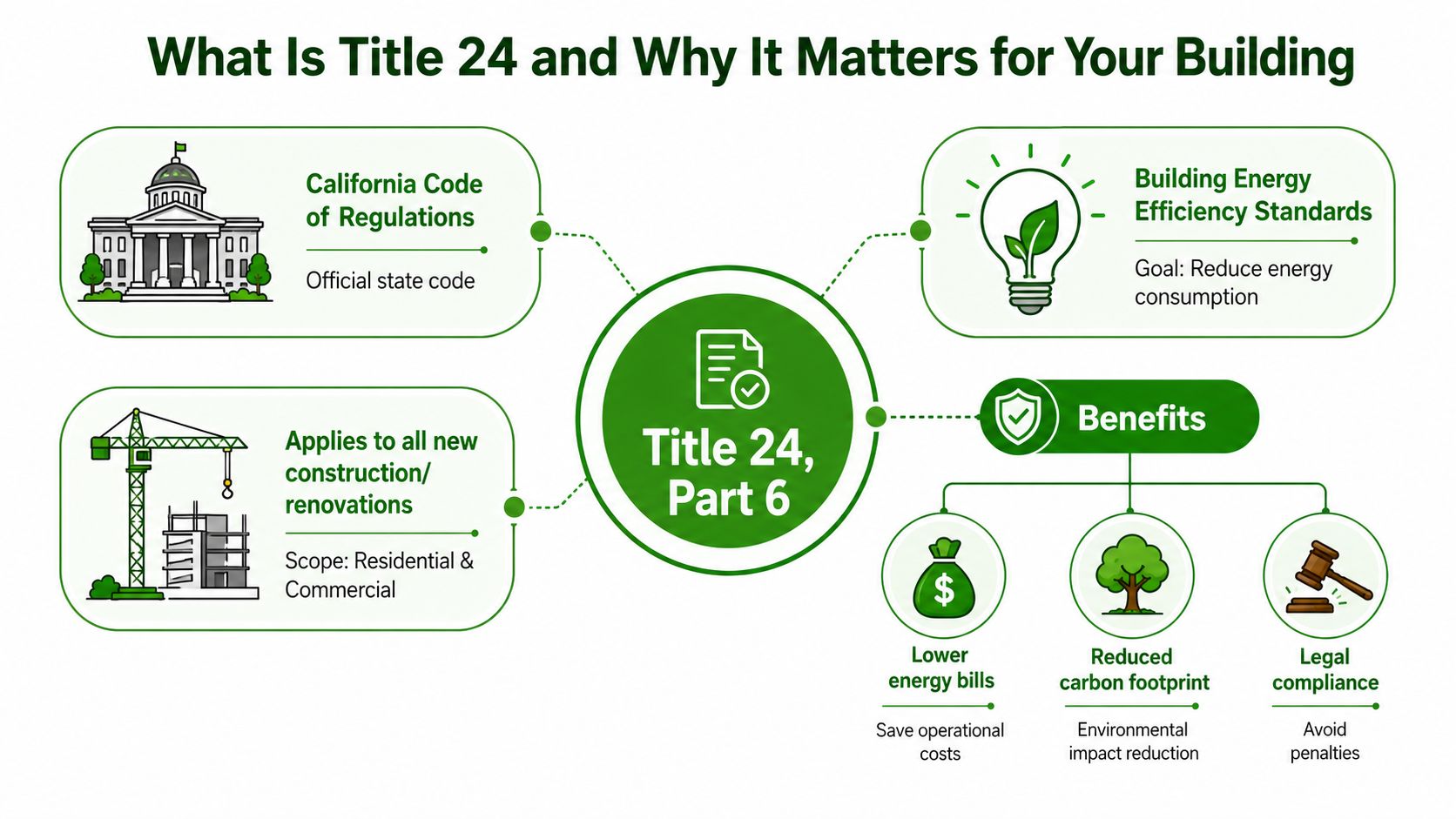
Title 24 functions for buildings much like emissions standards do for vehicles
Many building owners do not pay attention to Title 24 until a permit, renovation, or inspection puts it in front of them. By that point, the costly decisions may already be made.
Title 24 sets the rules the building department uses to review the energy side of a project. If the plans do not line up with the code path selected for the job, permit review slows down. If the installed fixtures, controls, or sequences do not match the approved documents, final inspection slows down too. Those delays turn into real costs fast: change orders, return trips, retesting, and missed turnover dates.
Why alteration work catches existing properties off guard
A lot of managers assume Title 24 is mainly a new-construction issue. In practice, existing office, retail, hospitality, and multifamily properties run into it during remodels, suite turnovers, and system upgrades.
The trigger is often more practical than technical. If the work alters covered building systems, the project may need current Title 24 compliance for that scope, even if the rest of the building is older. Lighting work is a common example. What starts as a fixture replacement can turn into a controls and documentation issue once the permit scope is defined a certain way.
That is where business decisions matter. If a tenant improvement triggers alteration requirements, the team usually has to choose between a prescriptive path and a performance path. One may be faster and simpler but less flexible. The other may allow trade-offs across systems, but it can add modeling, coordination, and review time. Making that choice late is how straightforward jobs become expensive ones.
| Project type | Common assumption | What often happens |
|---|---|---|
| Fixture replacement | “Like-for-like swap” | Controls, acceptance testing, or documentation may be required |
| Tenant improvement | “Interior work only” | Permit review may classify it as an alteration |
| Major renovation | “Contractor can sort it out during construction” | The compliance path can affect design, procurement, and schedule before rough-in |
Why it matters even if your building is older
Older buildings do not get a free pass on new permitted work. What matters is the scope of the project and the code cycle tied to the permit, not just the age of the property.
For property managers, Title 24 compliance affects more than engineering drawings. It changes equipment selections, submittals, inspection requirements, and the amount of coordination needed between the electrician, lighting supplier, controls vendor, and permit team. It also affects liability. If the wrong devices get installed or the approved compliance approach does not match the field conditions, someone pays to correct it.
A practical rule works better than a code lecture: ask whether the planned work alters a system covered by Title 24, and ask which compliance path makes the most sense before material is ordered.
That is the plain answer to what is Title 24 compliance. It is the set of energy code requirements that can change your project scope, cost, and schedule the moment a tenant improvement crosses the alteration line.
The Heart of Compliance Lighting and Controls Requirements
In commercial work, lighting and controls are where Title 24 becomes tangible. This is the part property managers see in bids, submittals, and punch lists. The fixtures matter, but the controls usually decide whether a project feels straightforward or turns into a permit and inspection headache.
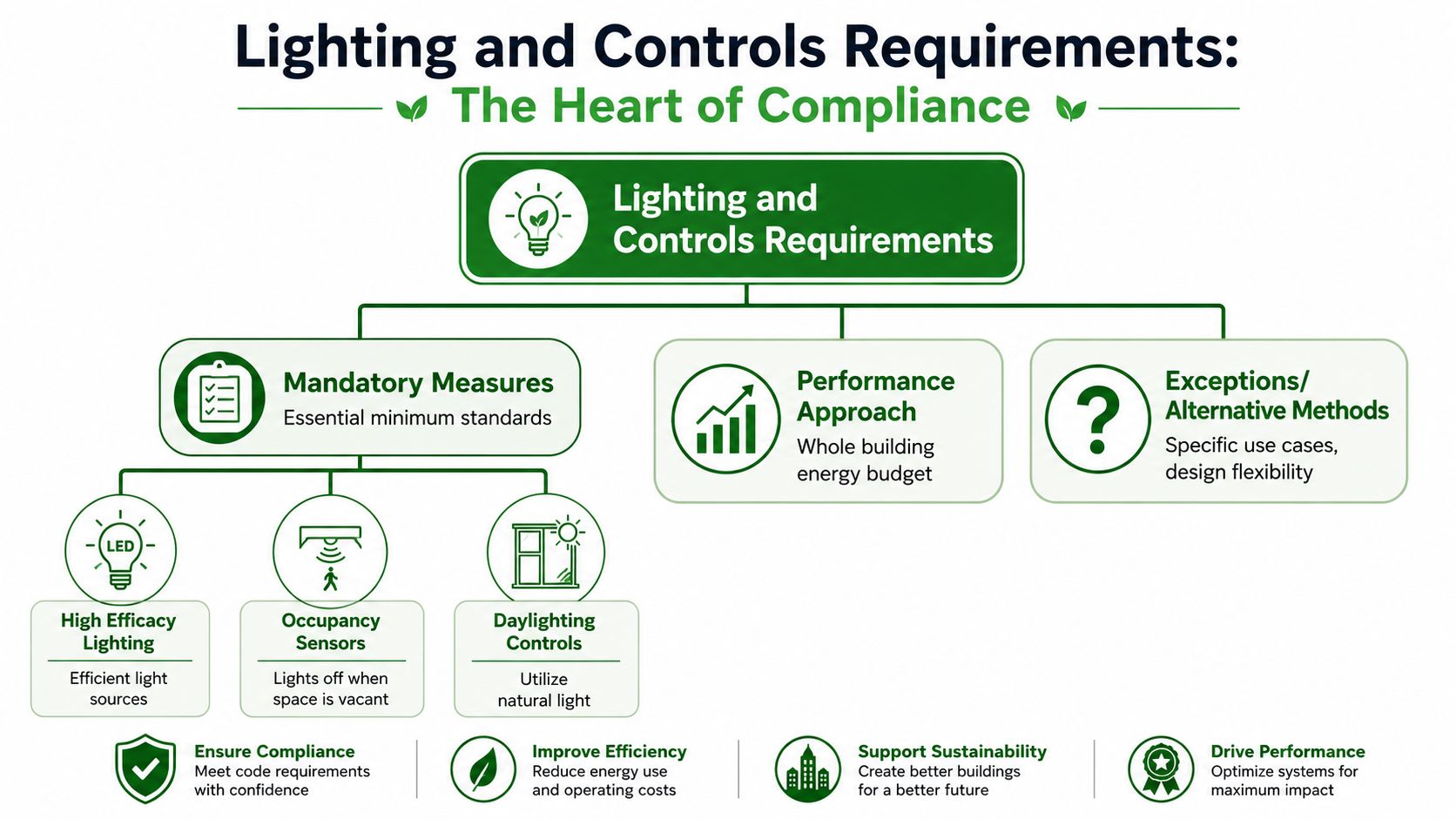
The code cares about more than efficient fixtures
A lot of owners think Title 24 lighting compliance means installing LED fixtures and moving on. That's not enough in many commercial spaces. The code also focuses on how lighting is controlled, because lights that stay on in empty rooms or fight against daylight still waste energy even when the lamps are efficient.
In practical terms, that often means looking at:
- Occupancy-based shutoff so lights don't remain on when rooms are vacant
- Daylighting controls near windows or daylight zones so electric light output can respond to available natural light
- Multi-level switching or dimming so occupants don't have only one all-on option
- Scheduling or centralized control logic in larger commercial applications
These aren't abstract design preferences. They affect wiring, device placement, commissioning, and how users interact with the space every day.
Where larger projects get more complicated
For commercial buildings with installed lighting power of 4,000W or greater, Title 24 requires Demand Responsive Lighting controls, and those systems must undergo acceptance testing under Section 130.4 by a Certified Acceptance Test Technician, as summarized in this commercial Title 24 lighting controls presentation.
That requirement changes the conversation fast.
A property team may start with “replace the lights” and end up needing a controls sequence that can respond properly, documentation that matches the field installation, and testing that proves the system operates as required. If the control architecture isn't thought through early, the project can pass rough electrical work and still fail at the functional stage.
A lighting package can look clean on paper and still fail if the sensors, schedules, and control responses don't operate the way the approved design says they should.
What works in the field and what usually doesn't
Some control strategies hold up well in real commercial settings. Others create callbacks because they were selected for price, not usability.
What tends to work:
- Private offices and enclosed rooms usually perform well with properly placed occupancy or vacancy sensing.
- Daylit perimeter spaces benefit from controls that are commissioned for the actual layout, furniture plan, and glazing conditions.
- Common areas usually need a coordinated strategy so time scheduling, local overrides, and after-hours use don't conflict.
What tends to fail:
- Generic one-size-fits-all sensor layouts that ignore partitions, shelving, or room geometry
- Control zones that are too large for real occupant behavior
- Last-minute substitutions where the replacement device doesn't match the approved sequence
- Install-first, program-later thinking, which often leaves the job exposed at testing
That same logic shows up outdoors. Site and parking upgrades often look simple, but controls, power density, and operating schedules still need to align with the permit documents. If you're evaluating exterior upgrades, this overview of commercial parking lot LED lighting considerations gives a useful field-level picture of how fixture choice and control strategy affect long-term operation.
Why property managers should pay attention to user experience
Bad control design creates more than inspection problems. It creates tenant complaints.
If lights shut off in occupied conference rooms, if open-office zones dim unpredictably, or if after-hours staff can't operate the system easily, the building team becomes the help desk. A compliant system still has to be practical. The best results come from matching code-required control functions to the way the tenant uses the space.
Common and Costly Title 24 Compliance Pitfalls
The expensive Title 24 mistakes usually don't start with negligence. They start with assumptions. Someone assumes a fixture swap is exempt. Someone assumes the controls vendor can “figure it out in the field.” Someone assumes inspection only checks whether the lights turn on.
That's how routine tenant improvement work turns into rework.
The alteration mistake that catches everyone
A major pitfall is ignoring the alteration trigger. Industry guidance notes that lighting retrofits in commercial spaces often count as alterations requiring new control systems, not just fixture replacement, as explained in this guide to alteration-triggered Title 24 compliance.
This is the scenario that causes the most frustration for property managers. The budget was built around replacing old fixtures with new LED fixtures. Then permit review or a knowledgeable inspector asks where the updated occupancy sensing, daylight controls, or other required control functions are shown.
At that point, the project isn't just waiting on paperwork. It may need revised plans, added devices, programming changes, and another pass through coordination.
Three failures that create avoidable delays
Products that don't fit the compliance path
Teams sometimes buy fixtures, sensors, or control components before the compliance strategy is fully defined. That works until the approved documents require a capability the selected device doesn't support.
The result is usually one of two bad outcomes. Either the field team installs equipment that can't pass final verification, or the material gets replaced after installation. Neither outcome helps a move-in schedule.
Controls installed but not really commissioned
A sensor on the ceiling doesn't equal compliance. The room still has to function correctly.
I've seen jobs where devices were powered, linked, and labeled, but no one had walked the space to confirm timeout settings, daylight behavior, override logic, or occupant usability. That kind of half-finished controls work often surfaces late, when the tenant is already expecting occupancy.
If a controls system only works when the installer explains it standing under the sensor, it isn't ready for turnover.
Documentation left until the end
Title 24 paperwork is not an afterthought. If the approved design, installed devices, and final testing records don't line up, the city has every reason to hold final approval.
This also creates liability for managers. If a project closes out with missing or inconsistent records, the property team inherits confusion that will resurface during future tenant improvements, maintenance calls, or compliance questions.
The business consequences are bigger than the electrical scope
When Title 24 goes sideways, the pain spreads beyond the electrician.
- Leasing teams deal with delayed possession dates.
- General contractors absorb schedule pressure and coordination churn.
- Property managers field tenant complaints and explain why “simple” work isn't done.
- Ownership sees change orders that could have been avoided with earlier code review.
There's also a safety and operational overlap. A property that already struggles with code-sensitive lighting systems should be paying attention to broader compliance areas too, including OSHA lighting-related requirements in commercial environments, especially where maintenance visibility, emergency egress, and work-area conditions intersect.
The most expensive Title 24 issue usually isn't the code requirement itself. It's discovering the requirement after materials are ordered, ceilings are closed, and everyone is trying to protect a move-in date.
The Compliance Process From Design to Certification
A tenant improvement often looks simple on paper. Swap a few fixtures, add controls, turn over the suite. Then plan check kicks back comments because the alteration triggered Title 24, the forms do not match the fixture schedule, and nobody decided early whether the job should follow the prescriptive path or a performance model. That is how a small electrical scope turns into a permit delay.
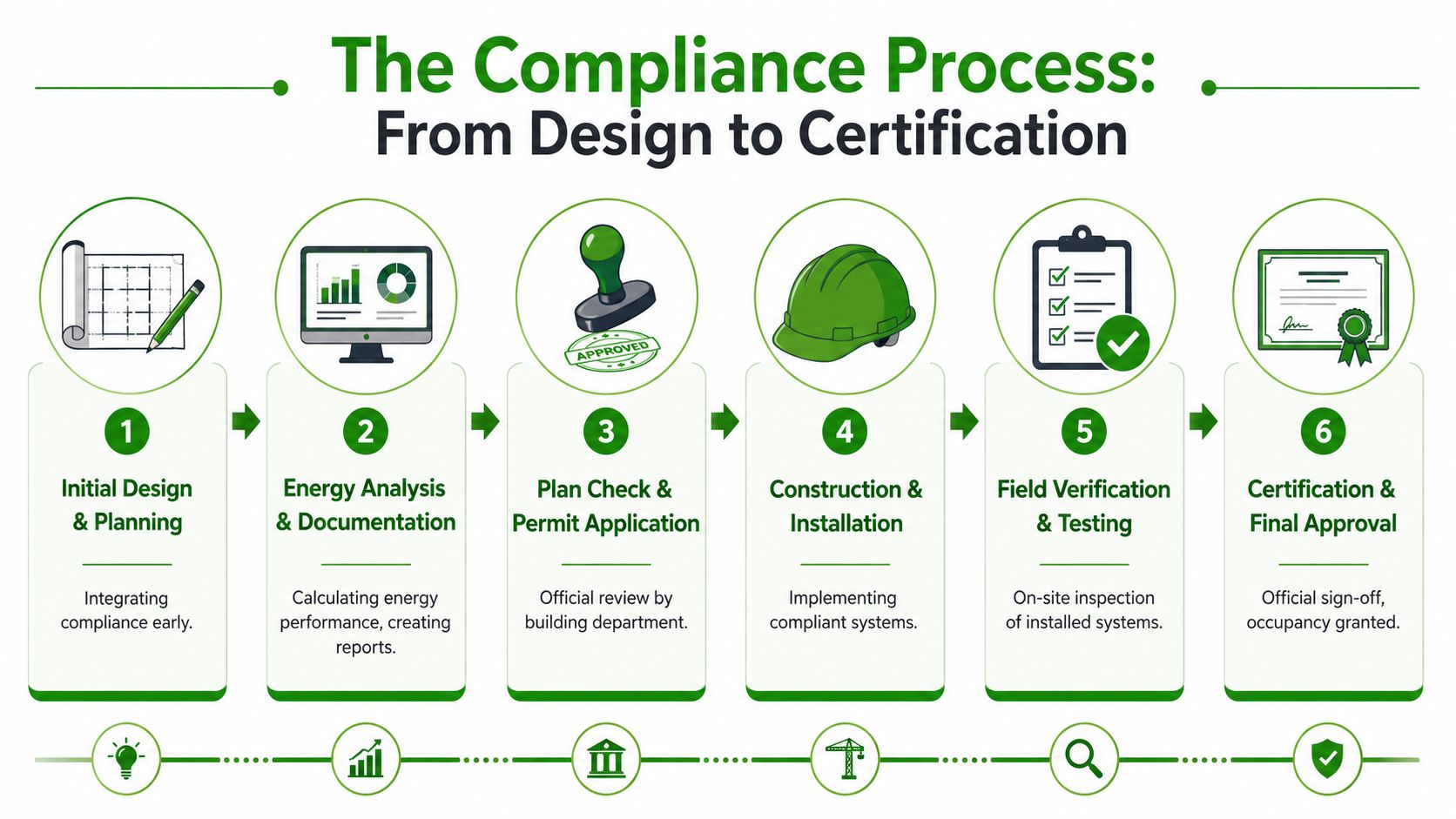
Start with the trigger, then choose the path
For tenant improvements, the first question is not which fixture package looks good. It is whether the proposed alteration triggers Title 24 requirements for the affected space. If it does, the team needs to decide early how the project will comply.
That decision drives the rest of the job. The compliance documents set the rules the field will be judged against. If the plans, the installed equipment, and the final testing package do not match, the project can stall at the end when everyone expects to be done.
The report sets the job up
Required Title 24 forms, often called CF1R or PRF documents, are prepared from the approved design and submitted with the permit package. Those forms are not clerical filler. They identify the control strategy, the fixture assumptions, and the compliance path tied to the permit.
I have seen this go wrong on otherwise clean projects. The lighting rep substitutes a fixture. The controls sub swaps a device series. The electrician installs what was released for procurement. If no one checks those changes against the approved compliance documents, the project inherits a closeout problem before rough inspection is even finished.
Installation discipline matters more on alteration work
Ground-up construction gives teams more room to coordinate systems from scratch. Alteration work does not. Existing ceilings, legacy controls, occupied areas, and phased schedules all increase the chance of field changes that break compliance.
That is why the field needs a tight match to the approved design. Sensor locations, shutoff methods, daylighting zones, panel connections, and control sequences need to line up with the permit set. A neat installation does not help if the sequence of operations fails testing.
Testing is where schedule risk becomes real
Acceptance testing confirms that the installed controls perform as required. On commercial lighting projects, that usually means proving occupancy response, scheduling, shutoff, and other control functions in the field.
This step exposes jobs that were coordinated late. If testing is booked after punch, there may be no time left to correct programming, relocate devices, replace incompatible parts, or update paperwork. For property managers, that usually means one thing. The space is physically ready but not ready to turn over.
A practical sequence looks like this:
- Confirm whether the alteration triggers Title 24 for the affected scope.
- Choose the compliance path before equipment is locked in.
- Generate permit documents that match the actual design intent.
- Control substitutions in the field and review them before installation.
- Schedule acceptance testing early enough to allow corrections.
- Close out with final records that match what was installed and tested.
Book testing while the job still has float. Once the tenant move-in date is fixed, every failed control sequence turns into an expensive conversation.
Early coordination also helps on related electrical scopes that carry similar permit and capacity risks, such as commercial EV charger installation requirements. The pattern is the same. Decide the code path early, document it correctly, and keep the field installation aligned with the approved design.
Strategic Compliance Prescriptive vs Performance Paths
A common tenant improvement problem looks like this. The lease is signed, the new layout is approved, and everyone assumes the lighting scope is minor. Then the alteration triggers Title 24 for the affected area, and the team has to pick a compliance path fast. That choice can change fixture selections, control strategy, consultant fees, permit review time, and how much rework shows up late in the job.
Prescriptive is usually the safer path for straightforward TI work
The prescriptive path follows a defined set of code measures. The team meets the required lighting power limits, installs the required controls, documents the design correctly, and builds what was approved.
For property managers, the advantage is predictability. Plan review is usually cleaner. Pricing is easier to compare. Field crews have fewer gray areas. On a basic office refresh, retail suite turnover, or other conventional TI, that often matters more than squeezing out a little extra design freedom.
The trade-off is rigidity. If the altered space requires a certain control setup, that requirement stays with the project even if other parts of the building are efficient.
Performance can make sense when the building has strengths elsewhere
The performance path uses CBECC-Com modeling to show the project meets the energy standard based on total energy performance. In some cases, efficient HVAC, envelope upgrades, or other building features can support trade-offs that the prescriptive path would not allow, as explained in this overview of the Title 24 performance approach.
That flexibility can be valuable on a TI in an existing building where the lighting design is awkward under a strict checklist approach. It can also help when the owner wants to avoid adding control layers that tenants may find confusing or difficult to operate.
But performance is not the cheap path by default. It usually adds modeling work, more coordination, and another point where the design can drift away from what gets installed. If the job is small, those soft costs can wipe out the savings.
How to choose without guessing
Start with the alteration scope. If Title 24 is triggered only for the tenant improvement area and the space is fairly standard, prescriptive is often the cleaner business decision.
If the project already includes strong mechanical or envelope performance, or the lighting design keeps running into prescriptive limits, performance is worth pricing early. The key is to compare total cost, not just fixture cost. That means permit time, consultant involvement, control complexity, tenant usability, and the risk of redesign if the first approach does not hold up in review.
| Decision factor | Prescriptive path | Performance path |
|---|---|---|
| Permit review | Usually more direct | Usually needs more analysis |
| Design flexibility | Limited | Greater |
| Upfront soft costs | Lower | Higher |
| Field risk | Lower if documents are clear | Higher if design and installation drift |
| Best fit | Standard TI scopes | Projects with building-wide efficiency advantages |
A practical rule I give clients is simple. If the tenant improvement is ordinary, keep it simple. If the building gives you legitimate trade-off options, run the numbers early and decide before equipment is locked in.
Title 24 compliance is not just a code exercise at this stage. It is a budget and schedule decision tied directly to the alteration trigger, and the wrong path can cost more than the lighting package itself.
Next Steps How a Specialist Simplifies Title 24 Compliance
By the time a project reaches permit review, the expensive mistakes are usually already in motion. The fixture package is selected. The budget is tight. The tenant expects a date. If nobody sorted out the alteration trigger, the control strategy, and the testing plan early, the property team is now reacting instead of managing.
That's why specialized commercial electrical support matters. A capable contractor doesn't just install fixtures and sensors. The right team coordinates lighting controls with the approved compliance path, understands where tenant improvements trigger code requirements, and builds the project so testing and documentation don't become an end-of-job crisis.

For property managers, the main win is predictability. You want clear answers before materials are ordered. You want control systems that pass testing and still make sense to occupants. You want documentation that closes out cleanly instead of lingering in email threads after substantial completion.
A specialist also helps with the strategic side. Some jobs should stay simple and follow the prescriptive route. Others justify a performance-based conversation because the building has strengths elsewhere. Either way, the earlier that call gets made, the easier it is to protect budget and schedule.
If you're asking what is Title 24 compliance because a tenant improvement, lighting retrofit, or common-area upgrade is suddenly under scrutiny, the next step isn't more guesswork. It's getting the project reviewed by a team that understands both the field installation and the compliance process from start to finish.
If you're planning a tenant improvement, lighting retrofit, or commercial remodel in Southern California, Access Electrical and Lighting can help you sort out Title 24 requirements before they turn into delays, failed inspections, or change orders. Their team handles commercial lighting controls, Title 24 testing, certification, and documentation, so your project has a cleaner path from design through final approval.