Your phone rings before 7 a.m. A tenant has half a floor without lighting. The parking lot has dark rows again. An electrical room smells hot, but nobody can say exactly where the problem started. By noon, you're juggling complaints, vendor calls, temporary fixes, and a budget line that just got blown up by work nobody planned for.
That's where a lot of commercial properties live. Not because managers are careless, but because the building's electrical and lighting systems only get attention when something fails in public.
In practice, machine maintenance services for commercial properties aren't just about machines in the factory sense. They're about the systems that keep a property usable and defensible: switchgear, panels, lighting controls, emergency lighting, exit signs, site lighting, low-voltage control infrastructure, and the diagnostic work that catches risk before it turns into an outage or a claim. When those systems are maintained on purpose, you get fewer surprises, cleaner documentation, better uptime, and a property that runs like someone is in charge of it.
Beyond the Break-Fix Cycle
A property manager usually sees the same pattern repeat.
A breaker trips, so someone resets it. A pole light goes out, so a lamp gets changed. A bank of fixtures starts flickering, so a tech swaps drivers and moves on. None of that is wrong. The problem is that break-fix work treats the symptom that showed up today, not the condition that's building across the rest of the system.
Electrical infrastructure almost never fails at a convenient time. It fails during tenant hours, after a rain event, on a hot day when loads are high, or right before an inspection. That's why reactive maintenance feels expensive even before you see the invoice. It burns staff time, creates tenant friction, and forces rushed decisions.
The broader market is moving away from that model. The Grand View Research industrial maintenance services market report states that the global industrial maintenance services market was valued at USD 141.55 billion in 2024 and is projected to reach USD 199.45 billion by 2033, which reflects a wider shift toward planned work that protects uptime.
Practical rule: If a system is critical to safety, access, tenant operations, or inspections, it shouldn't live on an “if it breaks, call someone” plan.
For commercial buildings, the issue isn't just reliability. It's liability. A dark parking area becomes a security problem. Failed emergency lights become a life-safety problem. An overheating lug inside a panel becomes a fire and insurance problem.
The properties that run better usually don't have fewer assets. They have a better maintenance posture. They treat lighting, electrical distribution, controls, and life-safety systems as managed assets instead of recurring surprises.
The Four Levels of Machine Maintenance
Most maintenance programs sit somewhere on a ladder. The easiest way to explain it is with a car. You can wait until it dies on the freeway, you can change the oil on schedule, you can watch warning indicators and service it based on condition, or you can redesign recurring problem points so the same failure doesn't keep coming back.
That same progression applies to commercial electrical and lighting systems.
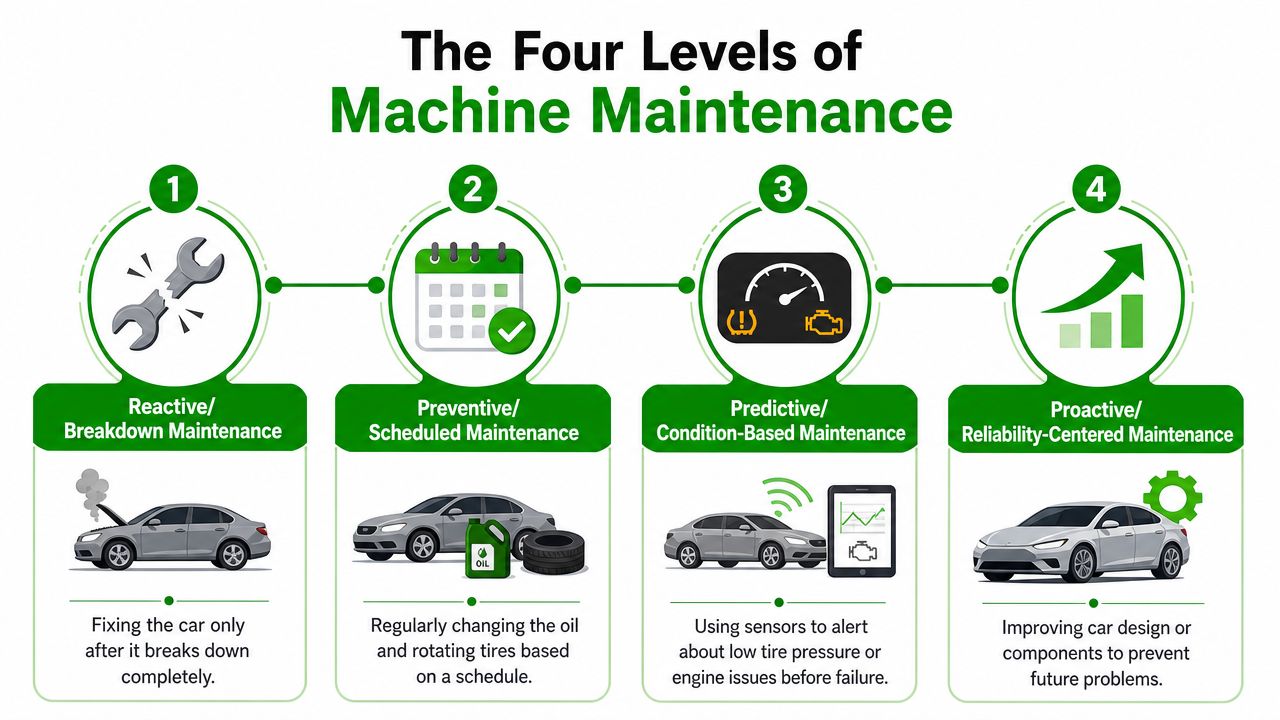
Reactive maintenance
This is the classic call-after-failure model.
A tenant reports dark offices. A contactor fails. An exterior lighting circuit drops. You dispatch a technician, isolate the fault, replace what's failed, and restore service. Every property needs some reactive capacity because things do break unexpectedly.
The problem is volume. When reactive work dominates, the site never gets ahead. Staff spends time reporting the same categories of problems, technicians work under pressure, and purchasing gets driven by urgency instead of planning.
Preventive maintenance
Preventive maintenance uses a schedule.
Panels get opened and inspected at planned intervals. Emergency lights get tested. Exit signs are verified. Lighting controls are checked for function. Pole bases, photocells, battery backups, and time schedules get reviewed before they trigger complaints.
It is the means by which many properties first gain control, because it replaces surprise with routine. It also creates records. In commercial work, documentation matters almost as much as the task itself.
Predictive maintenance
Predictive maintenance is condition-based.
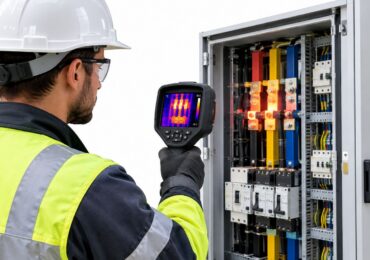
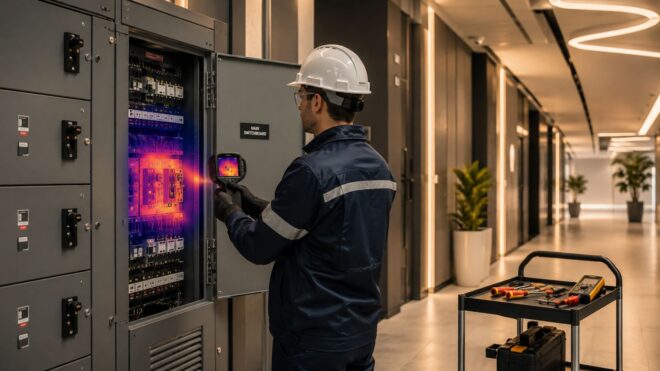
Instead of relying only on a calendar, you use tools like infrared thermography, load observation, and trend review to catch developing issues. A loose connection may still be working, but a thermal camera can show heat before that connection turns into an outage. A control fault may look random to occupants, but diagnostics can show a pattern.
The maintenance benchmark that matters here is the balance between planned and reactive work. The Oxmaint maintenance benchmarking article notes that mature programs target a Planned vs. Reactive Maintenance Ratio exceeding 65%, and reaching that level correlates with a 30-50% reduction in total maintenance costs and a 20-25% increase in equipment uptime.
A good maintenance program doesn't eliminate emergency calls. It makes emergency calls the exception instead of the operating model.
Proactive and reliability-centered maintenance
This is the level many buildings skip, even though it solves the most frustration.
Here, the contractor and property team stop asking only, “What failed?” They ask, “Why does this keep failing?” The answer might be water intrusion, poor circuit segregation, obsolete controls, inaccessible fixtures, overloaded panels, or a mismatch between occupancy patterns and control settings.
Typical reliability-centered actions include:
- Upgrading recurring failure points: Replace problem fixtures, failing drivers, brittle contactors, or weak battery units with better-suited components.
- Fixing root causes in distribution: Correct heat issues, terminations, and load imbalances before they create another outage.
- Improving maintainability: Add access, labeling, scheduling logic, and cleaner documentation so the next service event is faster and safer.
That's where machine maintenance services stop being a repair expense and start functioning like asset management.
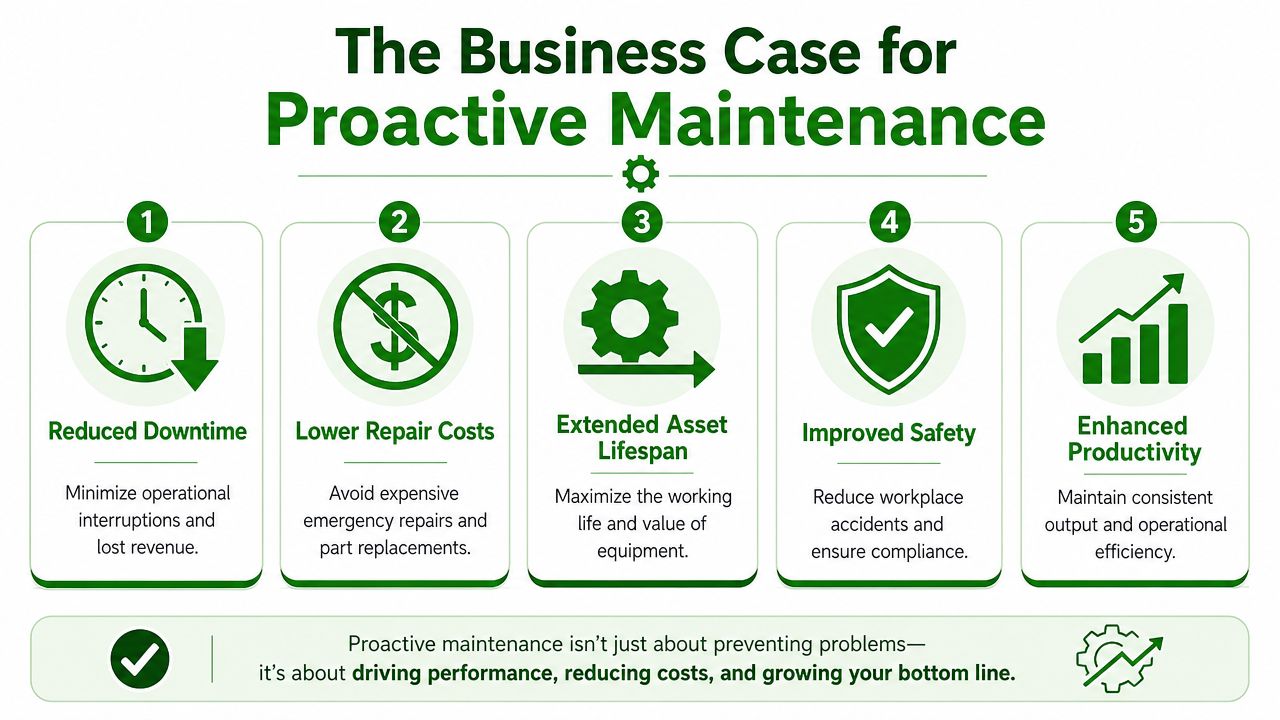
The Business Case for Proactive Maintenance
A maintenance plan has to survive budget review. For that, it needs to make business sense in plain terms. Not theory. Not buzzwords. It needs to reduce disruption, control exposure, and keep avoidable costs off the property.
The financial case gets strong very quickly when you compare planned work to failure response. The GoCodes maintenance statistics summary states that unplanned equipment downtime costs manufacturers up to $50 billion annually, with an average hour of downtime costing approximately $260,000. The same source states that repairing equipment after a breakdown is 3 to 10 times more expensive than regular preventive maintenance.
Those figures come from manufacturing, but the lesson carries over cleanly to commercial property operations. Once a building system fails, you're no longer paying only for repair labor. You're paying for urgency, disruption, complaints, access coordination, after-hours work, and the cost of operating without the system.
Where the money actually goes
Property managers often focus on the repair line item because that's what lands on the invoice. The larger costs usually sit elsewhere.
- Tenant disruption: Occupants remember recurring outages and dark common areas.
- Staff time: Your team spends hours coordinating access, complaints, and follow-up.
- After-hours premium work: Electrical failures rarely happen during the easiest service window.
- Deferred upgrades: The same weak components keep getting patched instead of corrected.
A strong maintenance plan smooths those spikes. It doesn't make the property maintenance-free. It makes failures less chaotic and spending more predictable.
Liability and inspection exposure
Electrical and lighting systems affect more than comfort. They affect defensibility.
Emergency lighting that doesn't test properly, exit signs that fail, parking lot lighting that stays dark, and electrical panels with hidden heat all create exposure. If there's an incident, one of the first questions asked is simple: what was inspected, when, and by whom?
That's why the best maintenance programs are built around documented routine work, test records, and corrective action logs. If you want a practical overview of how preventive service reduces both downtime and surprise costs, this piece on commercial electrical maintenance and preventative service savings lays out the logic well.
Preventive maintenance protects more than equipment. It protects your position when a tenant, insurer, or inspector asks for proof that the property was being managed responsibly.
Uptime is a leasing issue too
Reliable lighting and electrical systems don't show up on a glossy brochure, but tenants notice them immediately when they fail.
A property with stable common-area lighting, functioning controls, dependable emergency systems, and fewer service interruptions operates better. In commercial real estate, that matters. It supports tenant experience, reduces complaint volume, and keeps operations from being driven by repeated minor failures that never seem minor when they happen on a live property.
Key Maintenance Scopes for Commercial Properties
When a contractor says they provide machine maintenance services, a property manager should ask a direct question: what exactly is in scope?
For commercial properties, the answer should go beyond replacing lamps and answering emergency calls. Electrical maintenance has to cover the infrastructure that distributes power, the lighting systems people interact with every day, the life-safety equipment inspectors care about, and the control layer that increasingly runs all of it.
Electrical distribution equipment
This is the backbone. If it's neglected, everything downstream inherits the risk.
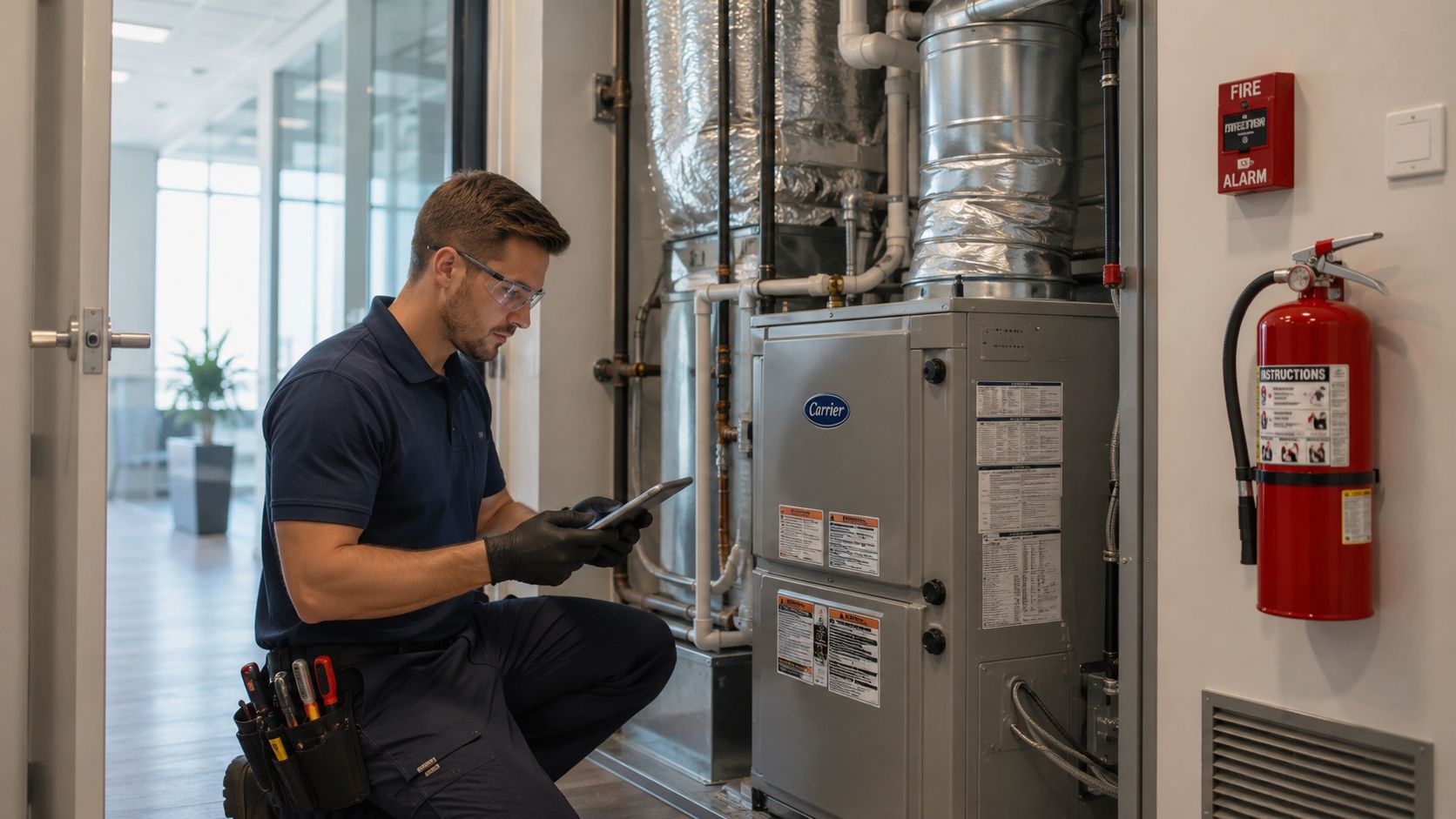
A proper maintenance scope for electrical distribution usually includes switchgear, distribution boards, panelboards, transformers, disconnects, breakers, terminations, and the supporting labeling and identification that make safe service possible. On a real property, this work often involves cleaning, torque verification where appropriate, visual inspection for heat damage, checking for corrosion or moisture intrusion, confirming circuit identification, and investigating nuisance tripping or unexplained load issues.
For older properties, this part of the program often tells you whether you have a maintenance problem, an aging-equipment problem, or both.
Lighting and lighting controls
Lighting maintenance needs to be divided into two categories because they fail differently.
The first is the fixture side: lamps, LED boards, drivers, ballasts on legacy systems, photocells, contactors, pole lights, wall packs, garage fixtures, stairwell lighting, and tenant-area fixtures. The second is the control side: occupancy sensors, time scheduling, relay panels, dimming interfaces, networked lighting controls, and the testing and documentation needed for Southern California energy code compliance.
In Southern California, Title 24 isn't a side note. It affects how lighting controls are installed, tested, documented, and kept operating as intended. A system can be electrically energized and still be out of compliance if the control sequence, scheduling, or documentation is wrong.
Life-safety systems
This scope is final.
Emergency lights, exit signs, battery backups, inverter-supported fixtures, and transfer behavior tied to emergency egress all need regular attention. These devices tend to be ignored because they spend most of their time waiting. That's exactly why they need scheduled testing. If they only get checked after a failure or before an inspection, the property is gambling.
A practical maintenance plan should include:
- Functional checks: Verify the unit operates when normal power is interrupted.
- Battery and component review: Identify weak packs, damaged housings, and failed indicators before inspection day.
- Documentation: Keep service dates, findings, and corrective actions organized and easy to retrieve.
Infrared thermography and electrical diagnostics
This is one of the most overlooked scopes in commercial electrical maintenance, and it's one of the most useful.
The IBT industrial maintenance services page notes that the 2023 update to NFPA 70B changed thermography from a best practice to a mandated requirement for electrical systems, and that ignoring it can create liability and insurance compliance issues. In plain language, infrared scanning is no longer something serious facilities do only when they have extra budget. It belongs in a real maintenance program.
Thermography helps identify loose connections, overloaded conductors, failing breakers, unbalanced loads, and developing hotspots without tearing the system apart first. If you want a clearer picture of what that process looks like in the field, this overview of infrared electrical testing for commercial properties is worth reviewing.
The most dangerous electrical fault is often the one no one can see from the front of the panel.
Low-voltage controls and integrated systems
A lot of maintenance plans still split electrical work from controls work as if they have nothing to do with each other. On modern commercial properties, that's a mistake.
Lighting systems now depend on sensors, communication paths, programmed schedules, relays, gateways, and control devices that sit in the low-voltage layer. When that layer drifts out of spec, occupants experience it as an electrical problem even when the branch circuit is fine. Good maintenance programs account for both sides.
Building Your Facility Maintenance Plan
A workable plan starts with reality, not a template pulled from another building. Two office properties can have similar square footage and completely different risk profiles based on age, tenant mix, operating hours, lighting inventory, emergency systems, and the condition of the electrical distribution.
The first step is to build a usable asset list. Not a perfect spreadsheet. A usable one. Start with the systems that can create the most operational trouble or liability if they fail.
Start with criticality
Put each asset into one of three buckets.
- Critical assets: Main electrical gear, life-safety lighting, exit signage, major site lighting, control panels serving occupied common areas.
- Important assets: Tenant-area lighting, garage lighting zones, noncritical distribution equipment, convenience receptacle panels, local control devices.
- Deferred or run-to-failure candidates: Low-impact fixtures in noncritical spaces, redundant decorative lighting, equipment with minimal business impact.
This simple ranking prevents a common mistake. Teams often spread maintenance effort evenly when the building's actual risk isn't evenly distributed.
Pick a contract model that matches the property
Service agreements usually fall into three practical models, and each has trade-offs.
| Contract model | Best fit | What to watch |
|---|---|---|
| Fixed-fee preventive plan | Properties that want routine inspections, testing, and predictable budgeting | Make sure the scope is specific, not vague |
| Time-and-materials | Sites with irregular needs or frequent capital changes | Costs can swing if the building has unresolved recurring problems |
| Hybrid plan | Properties that want scheduled maintenance plus a defined path for repairs | Clarify what's included versus billable extra work |
A fixed-fee plan works well when the asset base is understood and the property wants budgeting discipline. Time-and-materials can work for smaller or changing sites, but it often masks the actual cost of recurring failures. Hybrid plans tend to work best for larger commercial properties because they cover routine tasks while leaving room for repair work discovered during inspections.
If the proposal doesn't define what gets inspected, tested, documented, and excluded, it's not a maintenance plan. It's a placeholder.
Build the calendar around risk
Frequency should reflect criticality, environment, occupancy, and known history. A dusty parking structure, a coastal site, and a high-turnover retail center won't age the same way as a quiet suburban office building.
Below is a practical example of how a commercial office building might schedule core electrical and lighting work.
Sample annual maintenance schedule for a commercial office building
| Asset / System | Maintenance Task | Frequency | Purpose |
|---|---|---|---|
| Main switchgear and distribution panels | Visual inspection, housekeeping, label verification, condition review | Annual | Identify deterioration, heat signs, moisture issues, and access problems |
| Electrical panels serving common areas | Circuit review, cover inspection, issue log update | Semi-annual | Catch nuisance issues before they become outages |
| Infrared scan of electrical equipment | Thermographic inspection with report | Annual | Detect hotspots and hidden failure points |
| Emergency lighting units | Functional testing and deficiency log | Quarterly | Confirm units operate when normal power is lost |
| Exit signs | Illumination and power status check | Quarterly | Maintain egress visibility and inspection readiness |
| Site and parking lot lighting | Night audit, fixture outage review, pole and control check | Monthly or as needed by site conditions | Maintain safety, visibility, and curb appeal |
| Lighting controls | Schedule review, sensor check, relay/control function test | Semi-annual | Keep control sequences operating properly |
| Pole lights and elevated exterior fixtures | Structural and operational review using proper access equipment | Annual | Address outages, damage, and mounting issues |
| Tenant complaint repeat locations | Root-cause review and corrective planning | Ongoing | Eliminate recurring service calls |
The schedule should stay flexible. If a site has repeated failures in one lighting zone or a panel keeps showing heat, adjust the frequency and scope. A maintenance plan is supposed to evolve as the property tells you where its weak spots are.
Selecting Your Maintenance Partner in Southern California
A maintenance plan can look solid on paper and still fail in the field if the contractor isn't built for commercial property work.
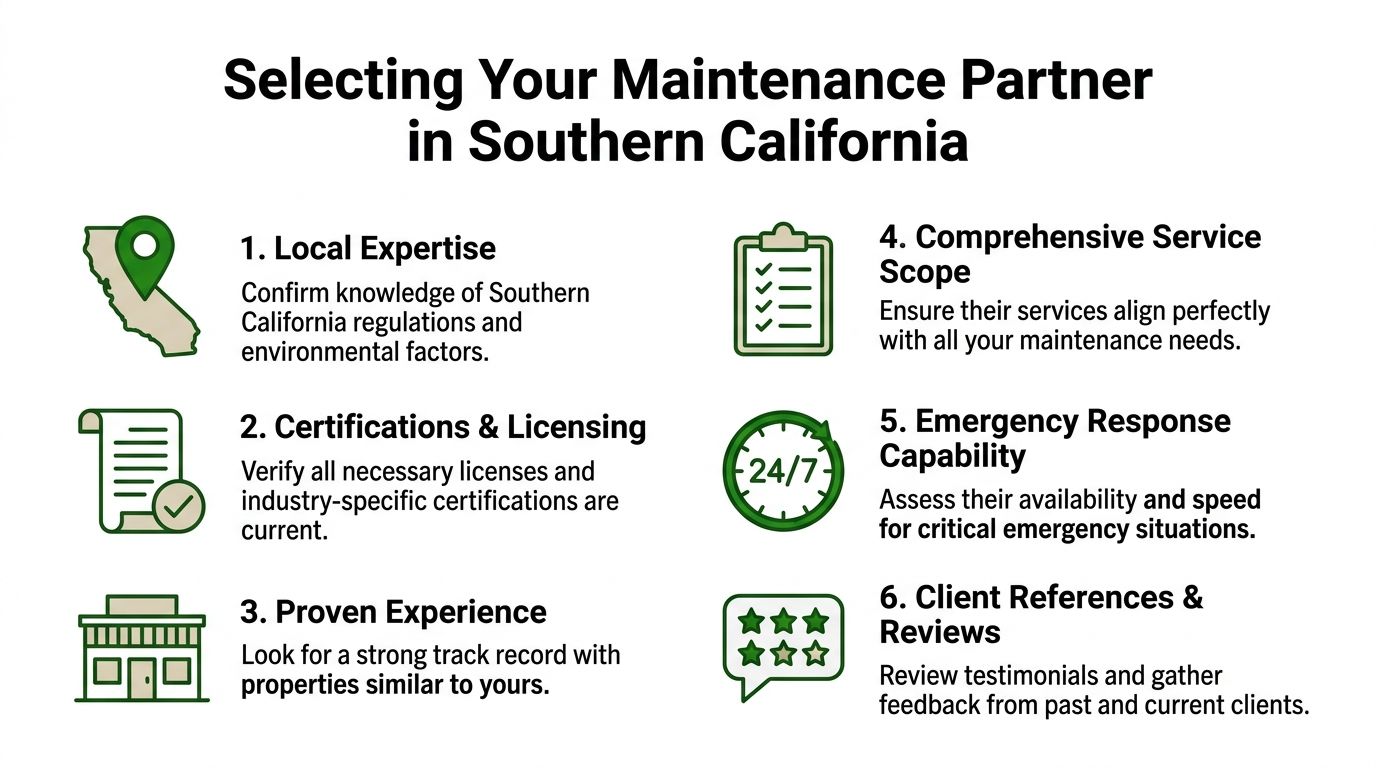
Southern California adds a few practical filters. You need a partner who understands local operating conditions, code expectations, occupied-site logistics, and the difference between a contractor who can do repairs and one who can manage risk across a portfolio.
Verify the basics first
Start with the requirements that shouldn't be negotiable.
For commercial electrical maintenance in California, that means confirming the contractor holds a current California C-10 electrical license, carries appropriate insurance, and is properly bonded for the type of work you're assigning. If the property includes high-level site lighting, garage fixtures, or pole lights, ask whether they own or reliably provide high-reach access equipment. If they rely on rentals for routine service, response time can suffer.
A good shortlist should also include contractors with documented experience in occupied office, retail, multifamily, and common-area environments. Commercial maintenance is not the same as one-off construction work.
Look for unified electrical and low-voltage capability
At this point, many properties lose efficiency.
The Burroughs article on machine maintenance service gaps states that 58% of commercial equipment failures correlate with low-voltage control system faults, while 80% of maintenance guides focus only on mechanical and electrical parts. That gap matters in buildings where lighting and equipment behavior depend on sensors, controls, communication paths, and programmed logic.
If your contractor only handles line-voltage electrical work, and a separate vendor has to diagnose the low-voltage control side, small problems turn into long service chains. One vendor says the power is fine. The other says the controls need review. Meanwhile the property still has dark areas, erratic schedules, or nonresponsive devices.
A unified contractor can usually narrow the fault faster because they can check both the power path and the control path in one service cycle.
Southern California requirements aren't optional
In this market, a maintenance partner should understand more than repairs.
They should be able to work within Title 24 lighting control expectations, support testing and documentation where required, and understand how code compliance affects routine maintenance decisions. They should also understand the practical implications of NFPA 70B for electrical maintenance and thermographic inspection programs.
Ask direct questions such as:
- How do you document testing and deficiencies?
- What's your process for infrared reporting and corrective recommendations?
- Can your team service both lighting controls and line-voltage electrical equipment?
- What does after-hours emergency response look like?
- How do you handle recurring failures instead of just restoring service?
Judge the proposal by clarity, not promises
A maintenance proposal should read like an operations document, not a sales sheet.
Look for scope detail, exclusions, response expectations, documentation standards, and a clear description of how deficiencies are reported and prioritized. If you're comparing providers, this guide on finding a reliable commercial electrician in Orange County is a useful framework for vetting commercial electrical partners locally.
The right contractor doesn't just tell you they handle emergencies. They show you how they prevent avoidable ones.
The best maintenance partner is the one who helps you reduce noise. Fewer repeated complaints. Fewer blind spots in documentation. Fewer handoffs between trades. Fewer “temporary” fixes that somehow become permanent.
The Facility Manager's Action Checklist
If the property has been running on service calls and work orders alone, don't try to fix everything at once. Start by getting control of the assets that create the most risk and disruption.
Use this checklist as a working plan.
List the critical systems first. Identify main electrical gear, common-area panels, site lighting, emergency lighting, exit signs, and lighting controls. If a failure would create a safety issue, tenant issue, or inspection issue, it belongs at the top.
Flag recurring problems. Pull the last stretch of service history and look for repeats. The same dark parking zone, the same tripping panel, the same emergency units failing tests, the same control complaints. Repeats tell you where reactive work is hiding a root problem.
Separate assets by business impact. Decide what must be maintained on a fixed schedule, what should be inspected periodically, and what can be repaired as needed. Not every fixture deserves the same attention.
Add life-safety and compliance tasks to the calendar. Emergency lighting, exit signs, and electrical diagnostics shouldn't depend on memory. Put them on a schedule with documentation requirements attached.
Include thermography in the plan. Hidden heat in electrical equipment is too important to leave to chance, especially where liability and insurance exposure are involved.
Bring controls into the same conversation. If your lighting performance depends on sensors, scheduling, relays, or networked controls, those systems belong in the maintenance scope. Don't split the control problem from the electrical problem.
Define what good service looks like. Decide how fast you need emergency response, what reporting format you expect, who receives deficiency reports, and how corrective work should be prioritized.
Request a real maintenance proposal. Ask for asset-specific scope, frequencies, reporting examples, exclusions, and a path for handling deficiencies discovered during inspections.
A property usually gets more stable once maintenance stops being a loose collection of calls and starts operating like a program. That shift is what turns machine maintenance services into lower risk, better uptime, and fewer expensive surprises.
If you need a commercial contractor that can handle electrical distribution, lighting systems, emergency lighting, infrared testing, low-voltage infrastructure, and Title 24 support under one roof, Access Electrical and Lighting serves Southern California property managers with maintenance, testing, repair, and emergency response built for real commercial facilities.