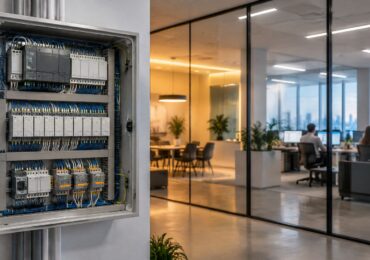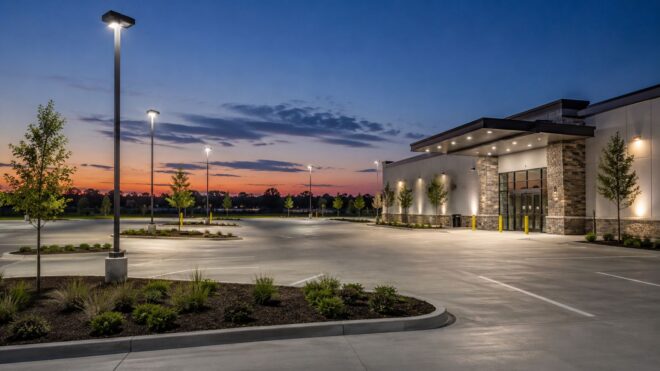
You're usually not looking at your parking lot lights because you love lighting. You're looking because tenants are complaining, someone said the lot feels unsafe, a few fixtures are cycling on and off, and the replacement quote in your inbox looks cheaper than the others for reasons you don't fully trust.
That's the point where a lot of properties make the wrong call.
They replace failed heads one for one, buy the brightest fixture in the bid set, or focus only on wattage and utility savings. The lot gets “more light” on paper, but drivers still hit dark pockets between poles, pedestrians step from glare into shadow, and cameras record washed-out footage under hot spots while missing detail where it matters most.
Commercial parking lot lighting fixtures affect more than visibility. They influence how safe the property feels, how well cameras perform, how often your maintenance team gets called out, and how exposed you are when someone trips, gets hit, or claims the lot was inadequately lit. Good lighting lowers friction. Bad lighting creates it every night.
A serious lighting project isn't just about swapping old fixtures for new ones. It's about matching fixture type to the site, designing around uniform coverage, using the pole layout you have, and choosing hardware that won't become a maintenance problem two years after install.
Why Your Parking Lot Lighting Matters More Than You Think
A parking lot problem usually shows up as a complaint, but the root issue is broader. One tenant says the back row feels dark. A customer mentions glare near the storefront. Security says the cameras lose detail in parts of the lot. Maintenance says they're changing lamps again. None of those problems live in isolation.
Poor lot lighting changes behavior. People park closer to entrances even when space is available farther out. Staff avoid certain paths after dark. Visitors notice the property feels dated or neglected before they ever walk inside. That perception matters, especially in retail centers, office campuses, and multifamily properties where the lot is the first and last impression.
What property managers usually see first
The first signs are rarely technical.
- Repeated complaints: Different people describe the same issue in different words. “Dark,” “uneven,” “harsh,” and “unsafe” often point to the same design problem.
- Patchwork maintenance: One fixture is out, then another ballast fails, then a pole base starts showing age. The system becomes reactive instead of reliable.
- Inconsistent camera footage: Security video may look bright overall but still miss faces, vehicle color, or movement in shadowed areas.
- Budget pressure: A low quote for replacement heads looks attractive when the immediate goal is just getting the lights back on.
That last point causes a lot of expensive mistakes. Cheap fixture replacements can lock you into the same bad pole spacing, the same glare issues, and the same dark edges you already have.
Good parking lot lighting doesn't just make a site brighter. It makes the entire property easier to use, easier to monitor, and harder to claim was neglected.
The real cost of getting it wrong
A badly lit lot creates a chain of avoidable problems. Drivers strain to see pedestrians at crossings. Pedestrians misjudge curbs, wheel stops, and grade changes. Security staff spend more time responding to “suspicious area” calls in places where the actual issue is poor visibility.
There's also the liability angle. If a property owner knew the lot had recurring outages, severe shadows, or deteriorating poles and did nothing meaningful about it, that becomes a serious conversation after an incident.
The fixture itself is only one part of the answer. The bigger question is whether the lighting system supports the way the property is used at night. If it doesn't, you're not dealing with a simple maintenance item. You're dealing with a safety and asset-management issue.
LED vs HID and Key Lighting Metrics Explained
A property manager approves a fixture swap because the new heads show higher lumen output on the cut sheet. Six months later, the lot still has bright spots under the poles, dark gaps between stalls, and camera footage that falls apart at the edges. That is a design failure, not a brightness problem.
If you still have metal-halide or other HID fixtures, LED is usually the right direction for commercial parking lots. The reason is not just lower energy use. LED gives better optical control, faster recovery after power interruptions, more stable color, and a lower service burden than lamp-and-ballast systems that fade as they age.
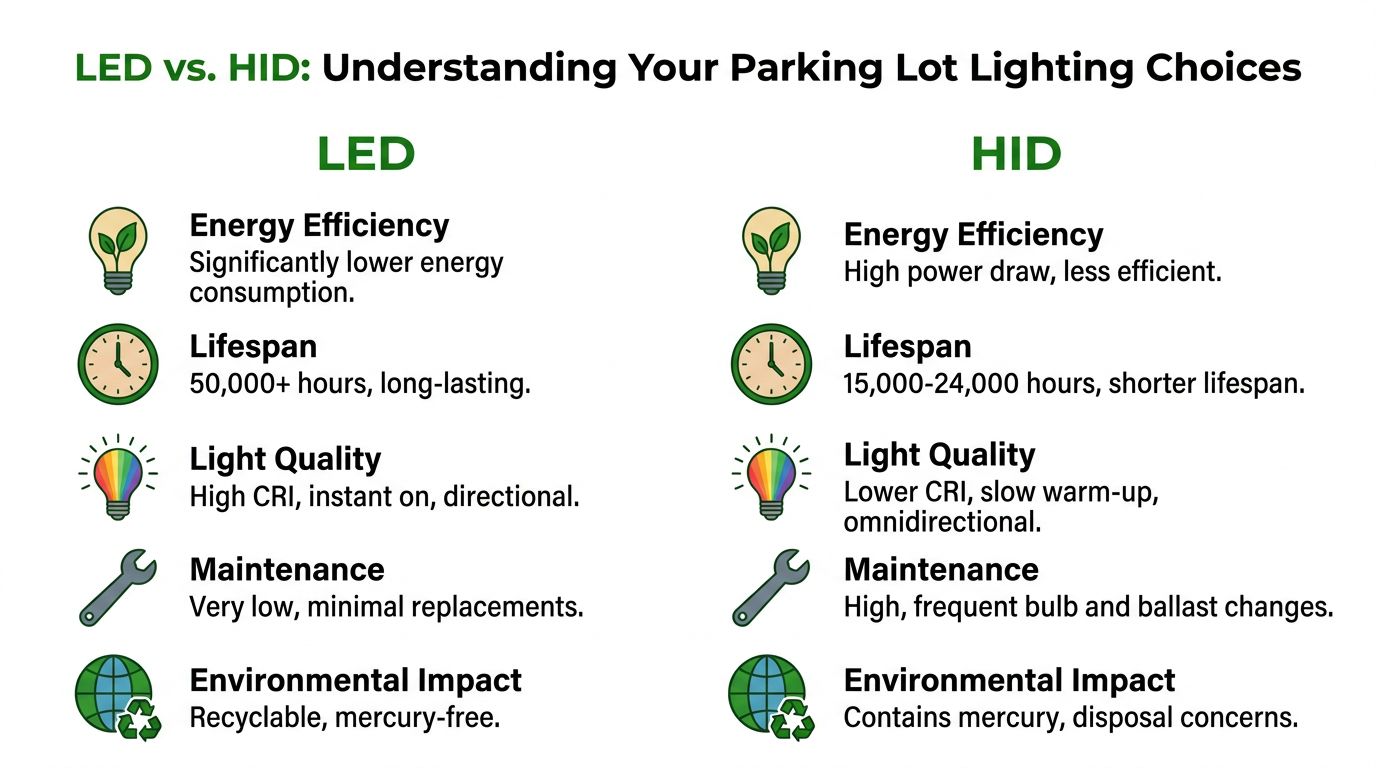
As noted earlier, the U.S. Department of Energy parking lot guidance points to a common range of LED parking lot fixtures replacing much higher-wattage HID systems while cutting energy use significantly. It also notes typical LED color temperatures used in parking applications and the moderate CRI range common for site lighting. Those details matter, but they are still secondary to one question: how evenly the light lands on the pavement.
That is the mistake I see most often. Owners compare watts and lumens, then miss the metric that affects safety the most.
Why LED usually wins in the field
HID systems lose ground fast in real service conditions. Lamp output drops, color shifts, restrike is slow after an outage, and ballast failures turn into night calls, lift rentals, and scheduling headaches. On a busy retail site or apartment property, that means more dark time and more exposure.
LED fixes several of those problems at once.
| Factor | LED | HID |
|---|---|---|
| Startup | Instant on | Warm-up and restrike delay |
| Maintenance profile | Fewer routine replacements | More frequent lamp and ballast service |
| Light direction | Better optical control | More spill and less precise distribution |
| Visual quality | Better color distinction | Lower clarity as lamps age |
There is still a real trade-off. A low-grade LED fixture can fail early if the driver, surge protection, or thermal management is weak. I would rather keep a decent existing fixture a little longer than install a cheap LED head that creates glare, uneven coverage, and repeat service calls.
The metrics that matter on a parking lot job
Spec sheets can make a weak fixture look impressive. For parking lots, four numbers matter. One matters more than the rest.
Foot-candles
Foot-candles measure how much light reaches the ground. This is the number many buyers chase first, and it is only part of the story. A high average foot-candle reading can still produce a poor parking lot if the site has hot spots and deep shadows.
Uniformity ratio
Uniformity is the spread between the brightest and darkest areas. For many commercial parking applications, the target people should understand is the IES 4:1 uniformity ratio. That is a practical benchmark for reducing harsh contrast, helping drivers see pedestrians sooner, and giving cameras a better chance of capturing usable detail across the lot.
If the lot is bright at the pole base and weak between poles, people feel that immediately. Eyes keep adjusting. Hazards disappear in transition areas. Security teams end up watching a property that looks bright in person but performs poorly where incidents happen.
Lumens
Lumens measure total fixture output. Useful, but incomplete. A fixture can produce a lot of lumens and still waste them in the wrong places if the optic does not match the pole height, setback, and layout.
CCT and CRI
Correlated Color Temperature (CCT) affects how the site looks and how comfortable it feels at night. Color Rendering Index (CRI) affects how well colors appear under the fixture. Both influence visibility and security, especially when someone needs to identify a person, vehicle color, or clothing description after an incident.
On most sites, I would choose the fixture with better uniformity and controlled glare over the one with the cooler color and the bigger lumen number.
Practical rule: Judge parking lot fixtures by delivered light on the pavement, uniformity across the site, glare control, and component quality. Wattage alone tells you almost nothing about whether the lot will feel safe.
What to ask before approving fixtures
Good fixture selection starts with sharper questions:
- What does the photometric plan show for average foot-candles and max-to-min uniformity? If the answer skips uniformity, the review is incomplete.
- What distribution type is being used? Open parking fields, drive aisles, and perimeter edges usually need different optics.
- What driver, surge protection, and warranty terms are included? Parking lot fixtures live through heat, weather, voltage issues, and long run hours.
- Will the fixture work with the existing pole height, arm, and spacing? Reusing bad geometry often locks in bad results.
- What is the glare control strategy? More output near eye level can make a lot less usable, not more.
Commercial parking lot lighting fixtures should earn approval based on site performance. The goal is a lot that reads clearly from curb to curb, holds up over time, and reduces the chance that a lighting problem turns into a safety claim.
Choosing the Right Commercial Parking Lot Fixture Types
Different areas of a property need different fixture types. One of the most common mistakes in lot upgrades is treating every exterior lighting need as a pole-light problem. It isn't.
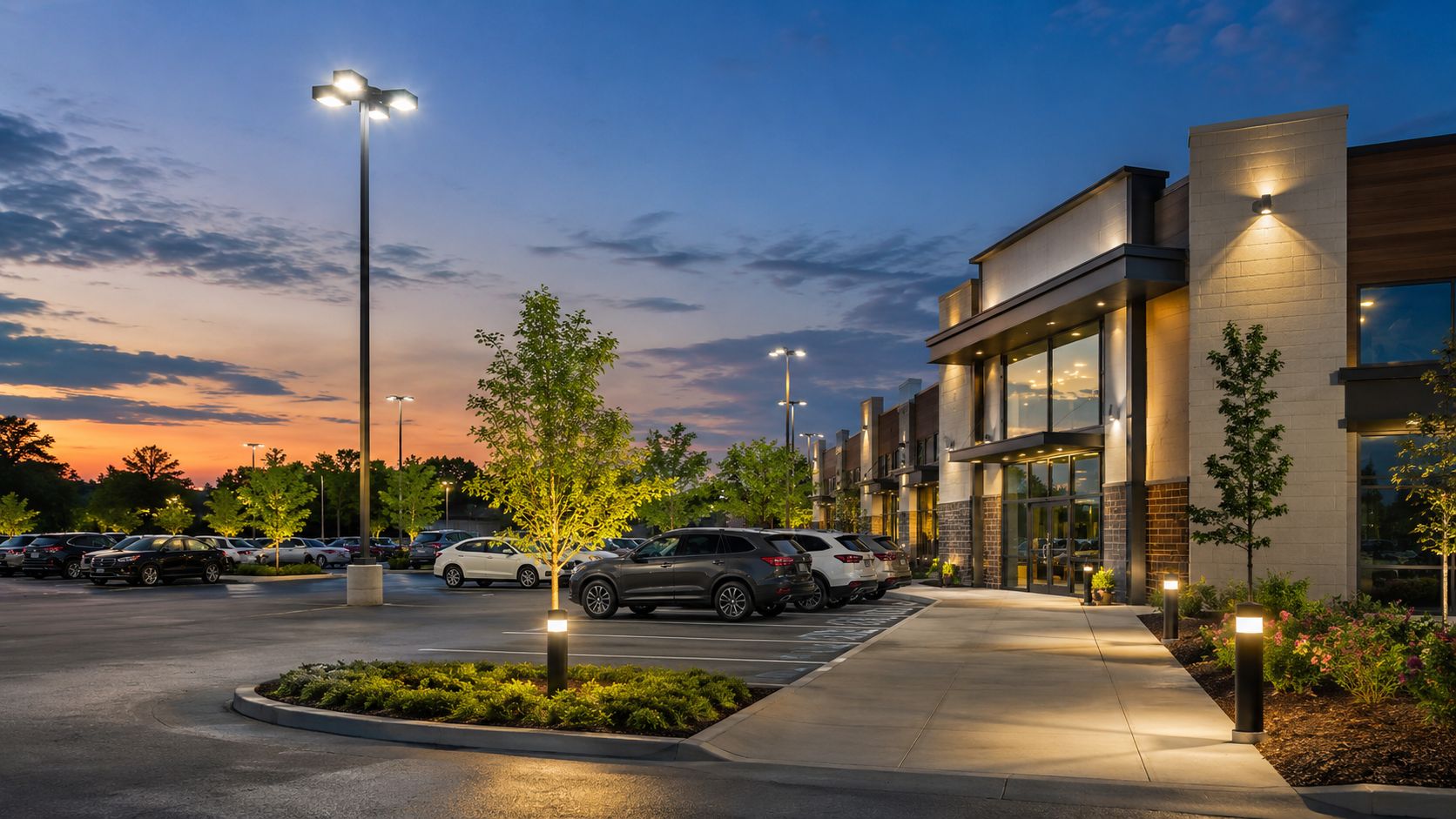
Shoebox fixtures for open parking areas
If you picture standard commercial parking lot lighting fixtures, you're probably thinking of shoebox lights. They're the workhorse for open lots because the flat rectangular housing supports broad area coverage and controlled distribution.
Shoebox fixtures are best for:
- Main parking fields: Rows of stalls, drive aisles, and larger open areas
- Retail and office sites: Lots that need consistent light over broad paved surfaces
- Retrofits on existing poles: Many sites already have pole layouts designed around area lighting heads
The right shoebox fixture can light a lot efficiently. The wrong one can create harsh glare at the pole and dead space between poles.
Wall packs for perimeter and building edges
A wall pack isn't a substitute for pole lighting. It has a different job. Wall packs support building perimeter security, service corridors, side yards, and areas near doors where pole coverage falls off.
They make sense when you need light at:
- rear exits
- loading side doors
- trash enclosures
- narrow side setbacks
- storefront or service-wall transitions
Wall packs often get overused. If someone tries to light an entire parking field from the building wall, the result is usually bright spill at the wall and weak light farther out.
Canopy fixtures for covered zones
Covered parking, entry canopies, drive-through structures, and garage ceiling applications need canopy lights. These fixtures are built for mounting overhead in flat or semi-enclosed conditions where a pole-mounted area light would be wrong.
Use them where people transition from vehicle to walkway under a structure. That includes leasing-office drop-offs, hotel porte-cochères, and parking garage levels.
A simple job-to-be-done view
| Area of property | Best-fit fixture type | Main goal |
|---|---|---|
| Open lot | Shoebox or area light | Broad, even coverage |
| Building perimeter | Wall pack | Security and path visibility |
| Covered parking or entrance canopy | Canopy light | Overhead illumination in enclosed areas |
If every fixture on a plan is the same type, someone may be designing around inventory instead of the site.
Where properties go off track
The hardware selection goes wrong when teams prioritize convenience over application. A fixture may be perfectly good and still be wrong for that location. I've seen lots where a strong shoebox fixture was installed too low and created glare, and others where wall packs were expected to do the work of pole lights they could never replace.
The right approach is to walk the site by zone. Identify open pavement, pedestrian transitions, building edges, covered areas, and camera-sensitive points. Then match fixture type to each job. That's how commercial parking lot lighting fixtures stop being a catalog purchase and start working like a system.
The Science of Safe Lighting Design and Photometrics
A lot can look bright from the driveway and still be unsafe where claims happen. The trouble spots are usually the walk from the car to the storefront, the crosswalk at the end of an aisle, and the gap between poles where faces, curbs, and pavement changes get harder to read.
That is a photometric problem, not a fixture catalog problem.
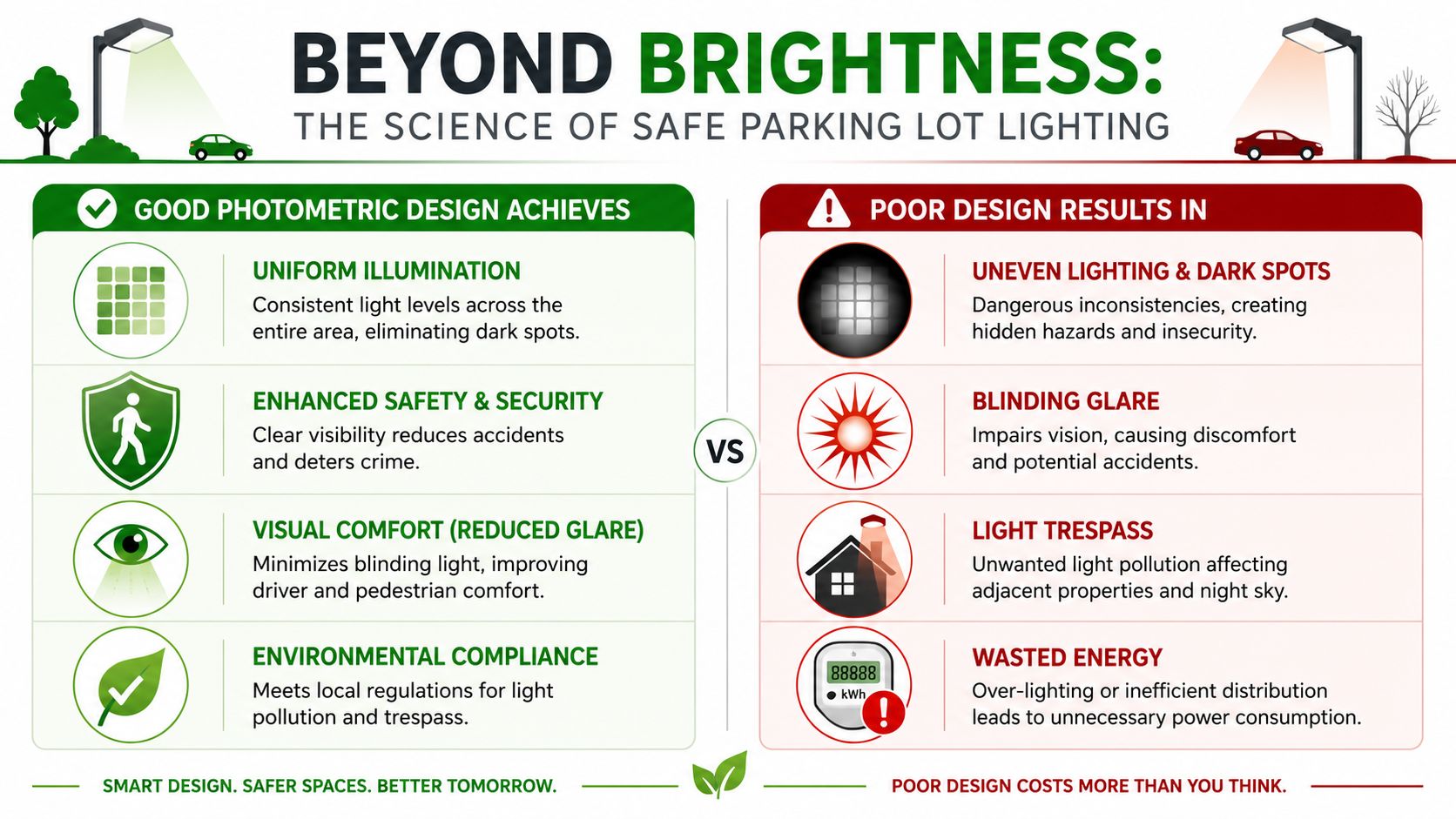
Property managers often ask for more foot-candles. I usually ask for better uniformity first. A parking lot with strong average light and poor distribution creates hot spots under the poles and dark pockets between them. That hurts pedestrian comfort, weakens camera performance, and raises the chance of trips, vehicle conflicts, and security complaints.
Foot-candles matter, but uniformity decides whether the lot feels safe
A foot-candle measures how much light reaches the pavement. It is useful for setting a target, comparing layouts, and checking whether a retrofit improved light levels at all.
It does not tell the full story.
Two lots can show a similar average and perform very differently at night. One gives drivers and pedestrians a consistent field of view across stalls, drive aisles, and walkways. The other forces constant eye adjustment because the contrast is too sharp. That second lot is where people miss a curb edge, lose depth perception in a crossing area, or walk past a camera zone that looks washed out in one frame and muddy in the next.
The 4:1 ratio is where safety and security show up on paper
The IES uniformity benchmark that deserves the most attention is the 4:1 average-to-minimum ratio. That number gets ignored because it is less exciting than lumen output, but in the field it often matters more.
Here is the practical reason. If the average light level is acceptable but the minimum points fall too low, the lot develops valleys between poles. Those valleys are where people feel uneasy, where cameras lose useful detail, and where a property owner ends up hearing that the lot is "bright, except for that one area." I hear that phrase on troubled sites all the time.
One bright pole in a dark section does not reduce risk. It increases contrast.
What a photometric plan should actually show
A real lighting plan should answer site questions before anyone orders fixtures. It should show whether light reaches the full width of parking stalls, whether pedestrian paths stay readable from end to end, and whether the edges of the property fall off too sharply.
It also needs to show how the design handles:
- Minimum light levels, not just average output
- Uniformity across the site, especially between poles
- Glare at driver and pedestrian eye level
- Coverage at crossings, entrances, and payment or access points
- Camera-sensitive zones where overlighting can be as damaging as underlighting
If a contractor cannot show a photometric layout, you are being asked to approve guesswork.
Pole layout and mounting height control the result
Fixture output matters, but pole spacing and mounting height usually determine whether the lot ends up even or patchy. A stronger fixture on a bad layout often makes the bright spots brighter and leaves the weak areas weak. That is why one-for-one swaps disappoint so many property owners.
This is also where structure and photometrics meet. A site may need different pole heights, revised spacing, or new locations to correct poor uniformity, not just new heads. For that reason, commercial light pole installation and safety planning should be reviewed as part of the lighting design, not after fixture selection.
Good photometrics protect the budget too
Uniformity is not only a safety issue. It is a cost-control issue.
Chasing raw brightness often leads to over-lighting under the pole, higher wattage than the site needs, more glare complaints, and disappointing camera footage. A balanced plan usually gives a better result with fewer corrections after installation. That means fewer tenant complaints, fewer calls to re-aim fixtures, and a lower chance that the project has to be partially redone because the lot still feels unsafe.
The best parking lot lighting plans are built around usable visibility. That starts with photometrics, and it shows up most clearly in uniformity.
Beyond the Bulb Poles Mounts and Smart Controls
A parking lot lighting system is only as strong as the structure supporting it and the controls managing it. Property managers often focus on the head itself because that's the visible component, but the pole, mount, wiring path, and control strategy usually determine whether the upgrade performs well over time.
Pole height and spacing shape the whole result
Pole height changes everything. It affects spread, glare, fixture choice, and how many poles the lot needs. Taller poles can cover more area, but if the optics are wrong, they also throw more stray light and flatten visibility near pedestrian zones.
Spacing matters just as much. If poles are too far apart, the lot develops valleys of low light between fixtures. If they're too close, you can end up paying for overlap that doesn't improve real visibility.
For teams evaluating structural issues, this guide to commercial light pole installation and safety planning is useful because it frames the pole as part of the safety system, not just a piece of steel holding a light.
Mounts and retrofit constraints
Not every property gets a clean-slate project. A lot of parking lot jobs are retrofits, which means the new fixture has to work with existing poles, tenons, drill patterns, and arm configurations.
Common field constraints include:
- Bullhorn assemblies: Useful when multiple heads need to serve different directions from one pole
- Slip fitter or arm mounts: Often selected to adapt to existing site conditions
- Aged poles: Even if the fixture is new, the pole may have corrosion, anchor issues, or structural fatigue
- Old wiring compartments: Tight handholes and degraded conductors can slow otherwise simple upgrades
The right fixture is the one that fits the electrical and structural reality of the site, not just the one with the nicest cut sheet.
Controls are no longer optional extras
A parking lot that runs at full output all night, every night, is usually wasting energy and reducing fixture life unnecessarily. Modern controls let owners tune performance to actual site use.
Here's where controls earn their keep:
- Photocells: Turn lights on based on ambient light, which keeps operation automatic and consistent
- Time scheduling: Useful when different site zones have different business hours
- Occupancy or motion response: Helps in lower-traffic areas where full output isn't needed continuously
- Networked controls: Give larger properties better visibility into runtimes, outages, and dimming strategies
A fixture upgrade without a control strategy often leaves savings and service life on the table.
For many commercial sites, controls also help with energy-code compliance. More important in practice, they help the property behave differently at 6 p.m. than it does at 3 a.m., which is how the site is used.
Calculating the True ROI of Your Lighting Upgrade
At 10 p.m., a property manager usually does not get a call because the site average is 1.8 foot-candles instead of 2.0. The call comes when a tenant trips near a curb cut, a camera loses detail in a hot spot and shadow transition, or half a row goes dark and someone wants to know how fast it can be fixed.
That is why ROI has to be measured in operating results, not fixture price alone.
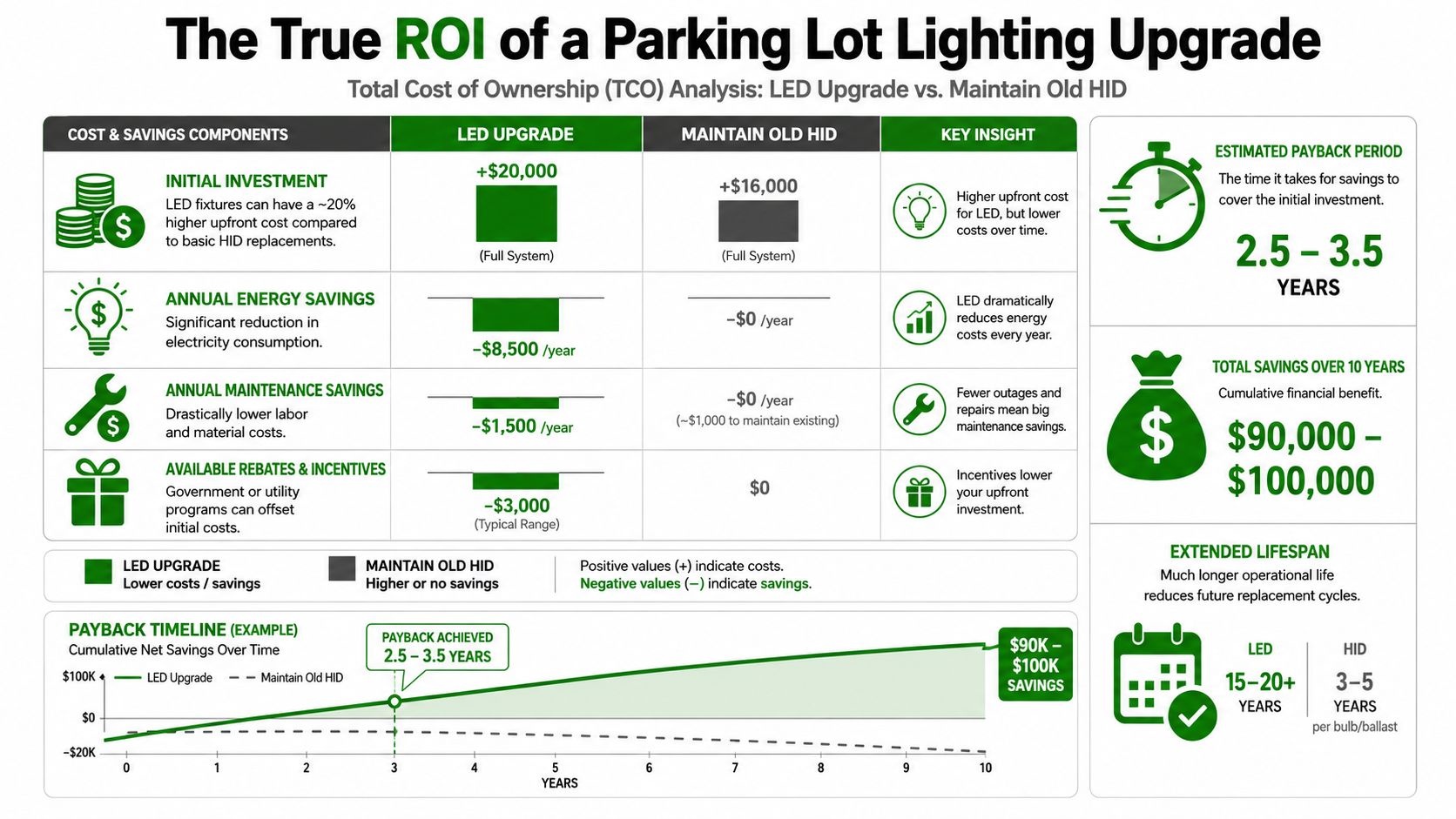
A parking lot lighting upgrade can return value through lower energy use, fewer lift-truck service calls, better nighttime visibility, and fewer complaints from tenants, staff, and visitors. On the best projects, it also reduces liability exposure because the lot becomes easier to read and move through after dark.
The numbers most owners miss
If you are replacing older HID equipment, the energy case is usually strong on its own. As noted earlier, LED parking lot fixtures commonly cut power consumption substantially compared with older HID systems.
But energy is only one line item. Owners also need to price in:
- Maintenance access costs: Every lamp, ballast, or driver issue on a tall pole means labor, equipment, traffic control, and coordination
- After-hours failure response: Parking lot outages have a habit of showing up at the worst time
- Complaint management: Repeated lighting issues consume staff time long before they become a formal safety claim
- Site perception: A property that looks patchy or poorly lit feels less controlled, even when average light levels look acceptable on paper
I see this mistake on bid comparisons all the time. One proposal saves watts. Another saves watts and fixes the dark-to-bright transitions that create visibility problems, camera trouble, and pedestrian discomfort. Those are not equal outcomes.
Security ROI is tied to uniformity
A lot of lighting budgets still focus too heavily on average foot-candles. That number matters, but it does not tell you whether the lot is predictable and readable from one area to the next.
Uniformity does.
For most commercial parking lots, the design target should keep the max-to-min uniformity ratio under control, often around the IES 4:1 benchmark depending on the site and use. That matters because the most dangerous areas are often not the darkest overall. They are the places where lighting changes too sharply between one zone and the next.
That trade-off is missed in many low-cost retrofits. A brighter fixture with poor distribution can raise average light levels while creating glare, harsher contrasts, and weaker visibility at grade. On paper, the lot looks improved. In the field, pedestrians, drivers, and cameras still struggle in the transition zones.
If you are presenting the project to ownership or leadership, build the ROI case around outcomes the property will live with for years:
- safer pedestrian movement between stalls, walks, and entrances
- better facial and vehicle recognition on security cameras
- fewer outage-driven complaints and emergency service calls
- lower maintenance burden over the life of the system
- better control of site conditions after business hours
For teams planning scope, phasing, and installation logistics, this guide to commercial lighting installation and LED retrofits in Orange County is a useful operational reference.
A better ROI conversation
The right questions are straightforward:
- Will this layout reduce maintenance and service disruption over time?
- Will it fix weak zones and improve uniformity, not just raise average brightness?
- Will controls match how the property is used at 6 p.m., midnight, and 4 a.m.?
- Will the system still perform well after years of weather, dirt, and normal component aging?
A parking lot lighting upgrade earns its keep when it lowers operating cost and makes the site safer, more consistent, and easier to manage. That is a stronger return than a cheap fixture package that only looks good on the day it is installed.
Compliance Maintenance and Long-Term Safety
A new installation doesn't stay compliant or safe by default. Exterior lighting systems drift over time. Drivers age, lenses get dirty, poles corrode, controls fail, and one damaged fixture can alter how an entire section of lot performs at night.
Property managers who treat parking lot lighting as a one-time project usually end up back in reactive mode.
Compliance is an operating issue, not a paperwork issue
Energy-code requirements, local ordinances, and property safety standards don't matter only at install. They matter when a site is modified, when controls are bypassed, and when maintenance teams start swapping parts without checking whether the original design intent still holds.
That's especially relevant in California, where controls, acceptance requirements, and lighting performance standards often shape what can be installed and how it must operate. For a practical compliance baseline, this guide on parking lot lighting standards and code expectations is a useful reference.
What proactive maintenance actually looks like
A proper maintenance program is more than replacing failed fixtures.
It should include:
- Night inspections: Someone needs to observe the lot under actual operating conditions
- Pole condition review: Base corrosion, anchor problems, and structural wear need periodic attention
- Lens and fixture condition checks: Dirt, moisture intrusion, and impact damage all change light output
- Control verification: Photocells, scheduling, and dimming responses should be tested, not assumed
- Electrical inspection: Feed issues, handhole damage, and degraded connections can create intermittent outages
Deferred maintenance doesn't stay a lighting issue. It becomes a safety issue and then a liability issue.
Why pole integrity belongs in the same conversation
A lot of owners separate lighting performance from structural safety. On parking lot sites, that's a mistake. The fixture may still operate while the pole itself is deteriorating. Rust at the base, water intrusion, and anchor bolt problems can sit unnoticed until the risk becomes severe.
That's why thorough asset inspection matters just as much as photometric performance. A bright fixture on an unsafe pole is not a successful lighting system.
Keep the original design intent alive
The strongest projects include a maintenance record with fixture model information, control settings, mounting details, and service history. Without that, every future repair becomes improvisation. One mismatched replacement head, one bypassed control, or one quick fix can start undoing the design.
Long-term safety comes from discipline. The lot should be checked, documented, and maintained as a system. When that happens, lighting performs better, complaints drop, and the property stays easier to defend operationally.
How to Choose the Right Commercial Lighting Contractor
The contractor you hire will shape the result as much as the fixture you buy. Parking lot lighting is one of those scopes where a low number on a proposal can hide expensive omissions. If the bidder can install fixtures but can't design, document, test, troubleshoot controls, or evaluate pole condition, you may end up coordinating multiple vendors to finish one job.
That usually costs more in the end.
What to verify before you sign
Start with the basics, but don't stop there.
- Licensing and insurance: For California work, verify the contractor holds the appropriate electrical license and carries coverage suited to commercial site work.
- Commercial project experience: Exterior site lighting for a retail center or office campus is different from small-scale tenant work.
- Photometric capability: If they can't provide a photometric plan, they're asking you to accept guesswork on the most important design question.
- Controls experience: The team should understand photocells, scheduling, dimming, and code-related control requirements.
- High-reach equipment access: Parking lot work on tall poles often requires boom trucks or other high-reach access equipment.
A contractor who only talks about fixture brand and rebate paperwork is giving you a partial solution.
Questions that reveal real capability
Ask specific questions and listen for specifics back.
| Ask this | Strong answer sounds like |
|---|---|
| How will you validate the design? | They mention photometrics, site layout, pole conditions, and fixture optics |
| Can you support compliance testing and documentation? | They describe acceptance testing, controls verification, and closeout records |
| What happens after install if a zone underperforms? | They discuss aiming, control adjustment, troubleshooting, and warranty service |
| Can you inspect poles and elevated infrastructure too? | They treat poles, fixtures, wiring, and controls as one system |
Warning signs in a proposal
Some red flags show up immediately:
- One-for-one replacement language only: That often means no one evaluated whether the current layout is good.
- No mention of controls: A modern commercial lot should have a clear operating strategy.
- No site-specific notes: Generic bids usually lead to change orders and missed scope.
- No maintenance pathway: If they install it and disappear, you'll be rebuilding site knowledge later.
The best contractor doesn't just replace fixtures. They reduce unknowns.
Choose the team that can own the whole problem
The right contractor should be able to evaluate the lot at night, review existing poles and circuitry, recommend fixture types by zone, provide a photometric plan, handle code and control requirements, and support ongoing maintenance after turnover.
That kind of partner helps you avoid the two outcomes property managers hate most: spending real money and still hearing that the lot feels unsafe, or inheriting a system that nobody wants to service a year later.
If you're planning a parking lot lighting upgrade in Southern California, Access Electrical and Lighting can help you evaluate fixture options, photometric performance, pole conditions, controls, and long-term maintenance requirements. Their team handles commercial lighting design, LED retrofits, Title 24 support, high-reach service, and ongoing electrical and lighting maintenance for retail, office, multifamily, and commercial properties.