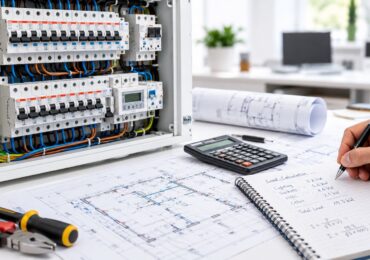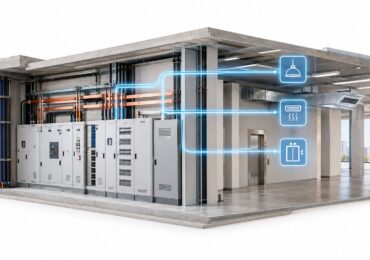
219,000 of 10.09 million inspected electrical installations failed formal review in 2023, a 2.2% failure rate, or roughly 1 in 45. Most of those failures trace back to just five fixable issues.
That's the part property managers need to hear first. A commercial electrical inspection isn't a paperwork chore, it's how you catch the defects that turn into outages, tenant complaints, failed finals, emergency-light problems, and liability when the building is under real load.
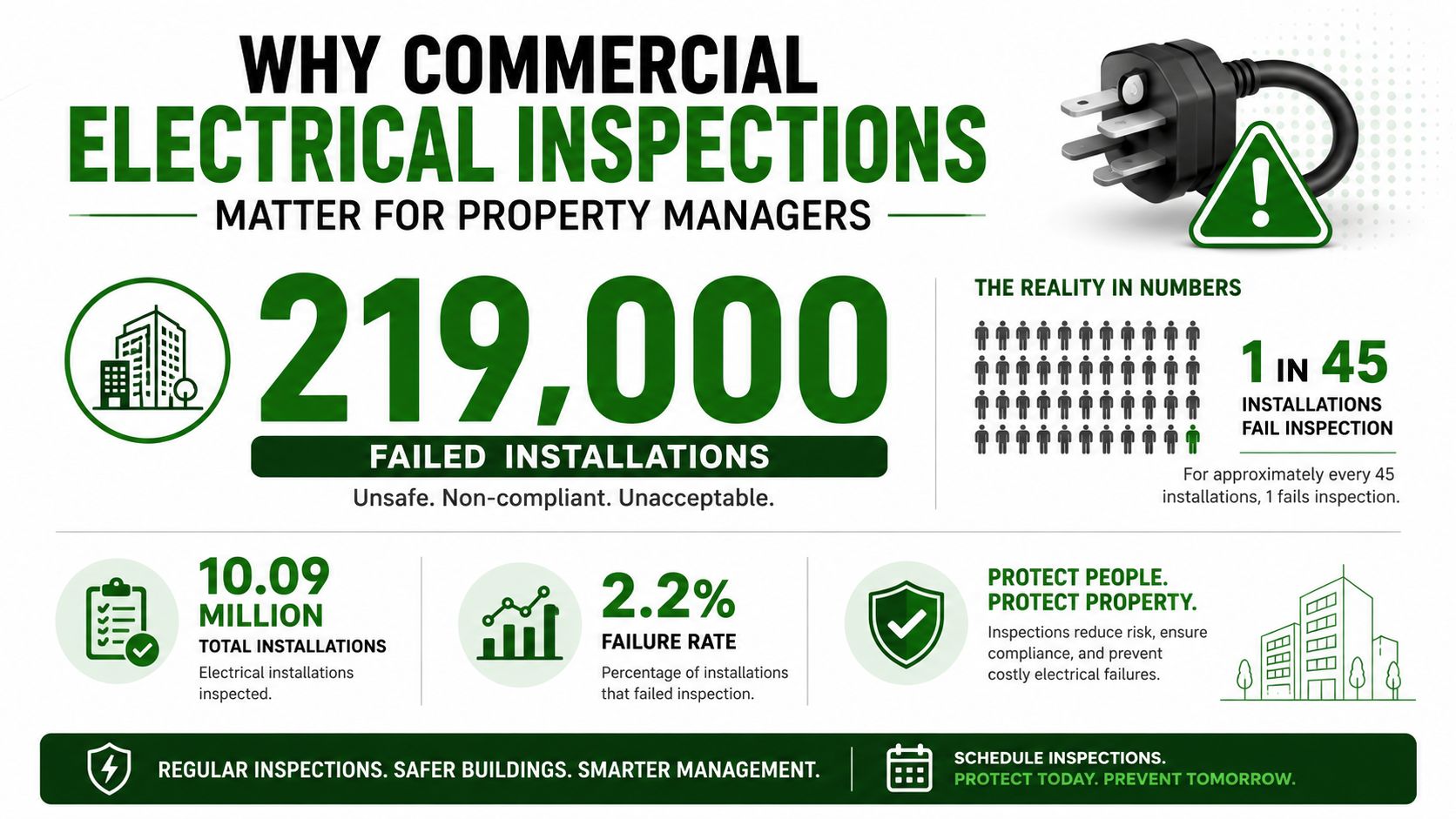
In practice, the numbers line up with what field crews see every week. South Korea's 2023 inspection data also shows 27.31 million total electrical installations, up 1.1% year over year, while business-use installations rose 13.7% to 131,900 units as renewable-energy systems expanded Korea Electrical Safety data. More equipment doesn't mean fewer problems. It usually means more chances to miss a bad connection, a mislabeled panel, or a load added to old gear that was never designed for it.
Why Commercial Electrical Inspections Matter for Property Managers
A building can look calm and still be hiding electrical defects that matter under real load. Commercial properties rarely fail all at once. They usually start with one loose termination, one mislabeled emergency circuit, one blocked electrical room, or one EV charger added without the same documentation and review as the original distribution gear.
I've seen that pattern across Southern California. The issues that create the biggest headaches for property managers are usually the ones nobody notices during normal occupancy, because the building is still running until the day a tenant calls about a dead circuit, an inspector flags the panel schedule, or an emergency light fails when someone needs it.
Practical rule: if a tenant, maintenance tech, or first responder cannot identify the right disconnect quickly, the building already has a risk problem.
Why the failure rate matters
Field crews see the same thing across occupied properties. New loads get added, old gear stays in place, and documentation drifts out of date after tenant improvements, equipment swaps, or a change in use. That gap shows up most clearly in buildings that have both line-voltage and low-voltage systems, because many routine electrical checks cover the main power gear but leave EV circuits, digital signage, mass notification, and fiber cabling outside the normal walkthrough.
That matters because a commercial electrical inspection works like a liability screen. It catches conditions that lead to downtime, heat damage, nuisance trips, and emergency-light failures before they turn into a call from the fire marshal, a tenant complaint, or a claim file. Property managers usually spend more to clean up a missed defect than they would have spent on the inspection itself.
The buildings that stay out of trouble usually have one thing in common. Their teams treat inspection as part of routine risk control, not a last-minute scramble before a permit closeout, insurance review, or tenant turnover. That mindset keeps the lights on, the exits visible, and the record clean when someone asks what was checked and when.
What a Commercial Electrical Inspection Covers
A commercial electrical inspection starts with the parts that keep the building energized, not the parts that look tidy. Service-entry locations, meter sockets, disconnecting means, panel ratings, label accuracy, and clear working space all need review because overloaded or mismatched service equipment can create heat buildup and fault-clearing problems. If the gear is buried behind storage, mislabeled, or undersized for the installed load, every downstream system inherits that risk.
A clean panel room does not prove compliance. It only shows someone cleaned the panel room.
The systems that should be on the list
A real inspection reaches past the main service equipment. Emergency lighting and exit signs, grounding and bonding, protective devices, and the low-voltage infrastructure tied to daily operations all belong on the list. That includes distributed audio, automated controls, digital signage, video walls, mass notification, and copper or fiber cabling when those systems support tenant use or building operations.
Exterior equipment needs the same attention. Light poles have to be checked for structural integrity, grounding, and weatherproofing, because outdoor failures usually start with damage that is easy to miss from the ground. EV charging circuits also need dedicated overcurrent protection, correct conduit fill, and ground-fault protection. Property owners often assume “electrical” means the same thing across every system, but the inspection scope changes fast once low-voltage and specialized loads enter the picture.
What standard scope usually leaves out
A standard commercial inspection does not cover every system in the building. As noted in CCPIA's electrical room guidance, elevator equipment, photovoltaic systems, and low-voltage electrical systems sit outside the scope of a standard commercial inspection, and telecommunication wiring is treated as low-voltage CCPIA electrical room inspection. That boundary is where many owners get caught off guard.
If a property includes access control, digital signage, EV charging, or fiber runs feeding modern tenant systems, those assets need their own inspection plan. A general walkthrough may pass through the area, but that does not mean the system has been tested, documented, or checked for the failure points that create liability. The safer approach is to treat line-voltage and low-voltage as connected systems with different inspection requirements.
Mixed-use and retrofit-heavy properties need coordination, not assumptions. A building can pass a narrow electrical review and still hide gaps in the systems tenants rely on every day.
For a closer look at why thermal issues show up early in panel rooms and service gear, see this guide on infrared testing for electrical safety and efficiency in Southern California.
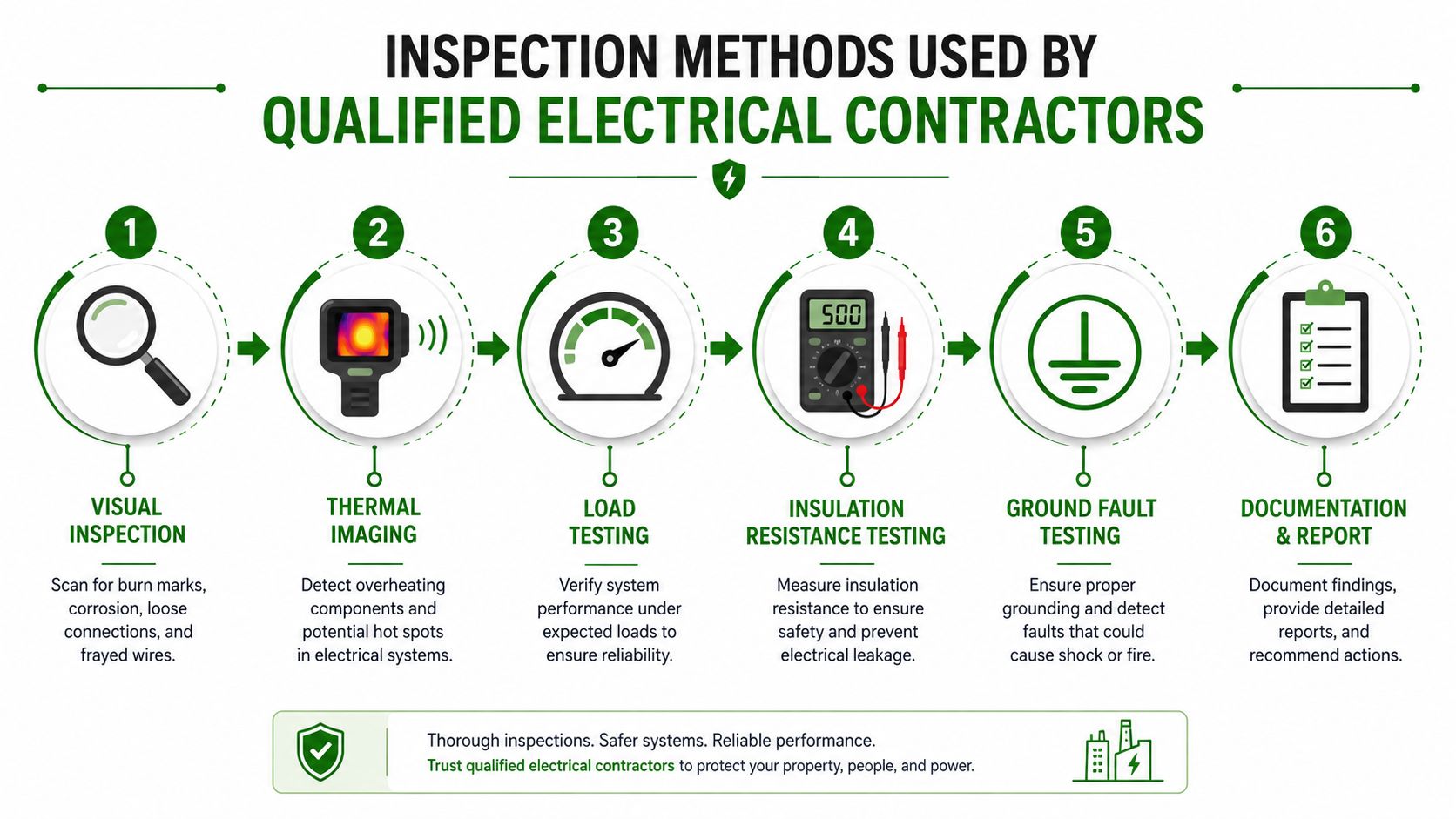
Inspection Methods Used by Qualified Electrical Contractors
A qualified contractor does not inspect by guesswork. The work usually comes down to three methods, visual inspection, functional testing, and infrared thermography. Each one catches a different class of problem, and each one misses something the others can see.
Visual inspection finds the obvious defects
The visual walkthrough is the base layer. The inspector checks electrical rooms, panels, light poles, disconnects, and equipment locations for burn marks, corrosion, loose covers, exposed conductors, damaged labels, and blocked access. Documentation matters here too, service-entry points, meter socket conditions, disconnect ratings, and whether the disconnect rating exceeds the panel's maximum rating are part of the review because a mismatch can create equipment stress and poor fault clearing.
That is the first place a property manager can help before the contractor arrives. Clear the room, identify the gear, and make sure the labels match the field conditions. If the site has EV chargers, digital signage, mass notification hardware, or fiber cabling tied into tenant systems, those items need separate attention because a standard visual pass over line-voltage gear does not verify the low-voltage side.
Functional testing shows whether devices really work
Visual condition alone does not prove performance. Emergency lights can look fine and still fail to hold charge. Exit signs can be lit but not properly powered from backup. Ground-fault devices can appear installed correctly and still not trip the way they should.
Inspection standards for low-voltage installations emphasize earthing, conductor identification, protective devices, and equipment selection and erection, while maintenance guidance for commercial and industrial switches covers equipment rated up to 600 V AC or AC/DC IET wiring and regulations discussion. In the field, that means checking the devices under load and confirming that the right circuits transfer, trip, or hold as intended.
Good functional testing also exposes lazy repairs. A breaker that resets by hand but fails under load is not fixed. A transfer device that looks normal in a cabinet can still misoperate when the building shifts to backup power. Property managers should expect the contractor to test the equipment, not just confirm that it is present.
Infrared thermography catches what the eye can't
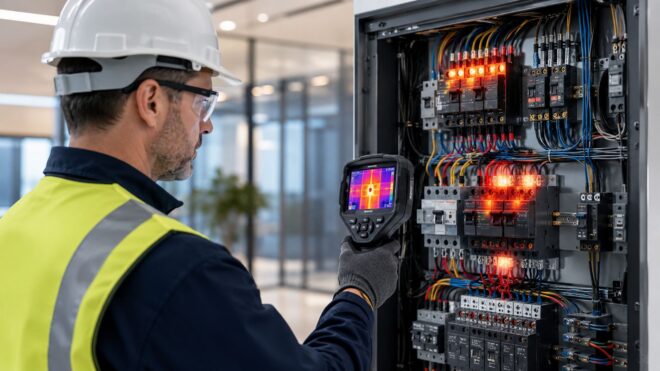
Thermal scanning is where hidden problems usually show up. Loose terminations, overloaded circuits, and weak connections can run hot long before they fail outright. A normal scan should look for abnormal temperature rise, and anything around 20°C above surrounding components deserves a closer look before the equipment is left in service. For a practical field breakdown, see why infrared testing is essential for electrical safety and efficiency.
The useful part of infrared work is timing. It needs load. A panel that looks cool with light demand may show a hot main lug, a failing breaker, or a bad splice once the building is working. That gives the owner a chance to fix the problem before it turns into an outage, an insurance claim, or a fire condition.
The Five Most Common Commercial Electrical Inspection Failures
A lot of commercial inspections fail for the same reason. One industry source says 73% of failures trace back to five recurring problems, working clearance issues, grounding and bonding deficiencies, overcurrent protection problems, emergency-system separation failures, and missing or inadequate labeling Deltawye commercial electrical installation. That is useful because it tells property managers where the first trouble usually sits.
Why the same defects keep showing up
Those five violations keep repeating because they are easy to miss during day-to-day operations. Storage creeps into electrical rooms. Labels fade, get covered, or get changed without the panel schedule being updated. A tenant improvement adds a new circuit and nobody corrects the directory. Emergency loads get tied into the wrong space, or a grounding connection is installed but never verified in the field.
The same pattern shows up in broader inspection results. In 2022, 9.88 million electrical installations were inspected and 242,000 failed, a 2.5% failure rate, after improvement from 2.7% in 2021. The point is simple. These failures are common, and they are preventable.
Sample Commercial Electrical Inspection Checklist
| Inspection Item | What Is Checked | Common Failure | Consequence |
|---|---|---|---|
| Panel ratings and labeling | Correct size, legibility, and circuit identification | Missing or outdated labels | Wrong shutdown during an emergency |
| Emergency lighting test results | Battery hold time and illumination function | Fixtures that don't stay lit | Unsafe egress during a power loss |
| Exit sign function and battery condition | Backup operation and visible signage | Burned-out or unpowered signs | Failed life-safety compliance |
| Ground fault continuity readings | Bonding and continuity through the system | Loose or broken bonding path | Shock hazard and equipment instability |
| Low-voltage separation | Physical separation from line-voltage wiring | Shared paths or crowded raceways | Signal interference and compliance gaps |
| Light pole structural and grounding checks | Pole stability, weatherproofing, and grounding | Corrosion or loose base hardware | Exterior lighting failure and safety exposure |
| EV circuit compliance documentation | Dedicated protection and installed documentation | Missing test or permit records | Inspection delay and liability exposure |
A good report should include photos, measured values, correction priorities, and a summary page that a property manager can keep in the compliance file. If the report only says “repair needed” without showing what failed, where it failed, and why it matters, it will not help much when the owner needs to budget or defend the work.
The gap most managers miss is between line-voltage systems and low-voltage infrastructure. A standard electrical inspection may catch a bad breaker or a mislabeled panel, but it often leaves out EV circuits, digital signage, mass notification gear, and fiber cabling. Those systems carry their own compliance and liability problems, and they are often the pieces that get added last, documented poorly, or tied into the wrong pathway during tenant work.
If the property also has lighting-control upgrades or Title 24 work in play, the inspection file should line up with the permit record. For that side of the job, see what Title 24 compliance involves.
California Regulatory Requirements and Title 24 Compliance
California adds another layer that property managers can't ignore. Electrical work in the state needs to be handled by a licensed C-10 contractor, and license status should be verified through the Contractors State License Board before anyone is hired. Local permitting can also vary by jurisdiction, so the trigger for inspection work in Irvine or Newport Beach won't always mirror what Riverside or San Bernardino asks for.
Title 24 makes the lighting side even more specific. Lighting control systems, certification, testing, and documentation often come into play during remodels, tenant improvements, and compliance reviews, especially when controls or emergency systems are replaced. For a practical overview, see what Title 24 compliance involves.
What property managers need to watch
A building doesn't have to be brand new to trigger compliance work. If you replace emergency lighting, add EV charging, or change lighting controls, the inspection can become a documentation exercise as much as a safety check. That's where the gaps show up, especially when old records are missing or the current field conditions don't match the as-builts.
The best move is to confirm permit requirements with the local building department before work starts. That keeps the inspection from becoming a surprise at the end of a project, when everyone else is already trying to close out punch items.
Practical rule: if the scope includes lighting controls, emergency systems, or new charging equipment, assume documentation will matter as much as the installation itself.
For Southern California property teams, the core issue isn't just code language. It's making sure the contractor understands how Title 24, permitting, and actual field conditions interact. If those three don't line up, the inspection report becomes another delay instead of a clean record.
Inspection Costs, Timelines, and Property Manager Preparation
A commercial electrical inspection can be a short visit or a full-day field job, depending on what is on the property. A single-panel retail suite may take an hour or two. A larger building with emergency lighting, exit signs, distribution gear, EV circuits, and low-voltage systems usually takes much longer because there is more equipment to document and more conditions to verify.
What changes the schedule
Property size, system age, and load complexity drive the timeline. If the scope includes infrared thermography, low-voltage asset documentation, or a permit-linked review, the contractor needs more time on site and more time afterward to finish the report. The same is true for properties with tenant turnover, mixed occupancies, or old plans that no longer match the field conditions.
Routine inspections often land in the 2 to 4 hour range, and report delivery is often within 5 business days when the findings are straightforward. More complicated sites take longer because the report has to include photos, findings, and corrective recommendations that can stand up in front of a building department or insurer.
A lot of property managers miss one gap here. A standard electrical inspection may cover the line-voltage side well enough, yet still leave out EV circuits, digital signage, mass notification, or fiber cabling. Those systems can carry compliance issues and liability exposure even when the main panel check looks clean.
How to prep the property
- Ensure access to electrical panels. Clear storage, open rooms, and make sure no one has stacked materials in front of gear.
- Document previous inspections. Old reports help the contractor see repeat issues and check whether prior corrections held.
- Compile maintenance records. Service tickets, breaker replacements, and lighting repairs often explain what the inspector finds.
- Note known issues. Tell the contractor about nuisance trips, flickering lights, failed exit signs, or recent tenant changes.
- Prepare staff for questions. Someone on site should know where disconnects are, who controls access, and what areas are occupied.
A clean inspection day starts before the contractor arrives. If the electrical rooms are open, the paperwork is ready, and the site contact knows the building, the job moves faster and the report tends to be cleaner. That saves time for everybody.
For property managers who want a tighter pre-inspection process, choosing the right commercial electrical contractor in Orange County helps set the right expectations before anyone shows up on site.
How to Choose a Qualified C-10 Contractor for Commercial Inspections
The first filter is licensing. If the contractor can't verify a C-10 license, move on. After that, look at insurance, property type experience, infrared capability, low-voltage scope, emergency response, and report quality in that order.
What separates a real field contractor from a paper company
A contractor who works commercial properties should be able to show a sample inspection report, not just talk about one. They should also be able to inspect systems that overlap with the building's operations, including low-voltage infrastructure, EV charging, digital signage, and mass notification. That matters because modern properties don't fit neatly into old silos.
If you want a practical hiring framework, this guide on choosing the right commercial electrical contractor in Orange County is worth a look. It lines up well with the field reality that the contractor's tools and documentation process matter as much as the labor rate.
Red flags to avoid
- No sample report. If they won't show you what the final paperwork looks like, you're guessing.
- Visual-only mentality. That's weak on older gear and high-load sites.
- No infrared equipment. Thermal documentation matters when hidden heat is part of the risk.
- No low-voltage capability. You'll end up splitting scopes between multiple vendors.
- License status can't be verified. That's not a minor issue, it's a stop sign.
The right contractor doesn't just help you pass an inspection. They help you build a repeatable maintenance program that reduces failures between inspections. That's the true win for a property manager, because the building stays safer and the surprises get smaller.
If your property needs a commercial electrical inspection, infrared thermography, emergency lighting testing, or help sorting out low-voltage scope boundaries, Access Electrical and Lighting handles those commercial systems under one contractor. Visit Access Electrical and Lighting to review their inspection, testing, and documentation services, then schedule a site review that fits your building's actual load and compliance needs.