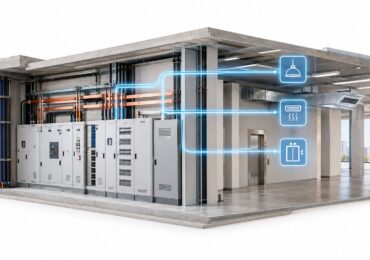
A switchgear failure rarely arrives at a convenient time. It might occur during a retail center's busiest operating period, interrupt tenant access in a multifamily property, or shut down pumps, elevators, refrigeration, lighting, and life-safety systems in the same event. The panel may have looked serviceable during the last walk-through, yet a loose connection, contaminated insulation surface, worn mechanism, or overloaded circuit can turn a routine electrical problem into an outage and a serious exposure for the people working nearby.
That's why switchgear maintenance has to move beyond “nothing has failed yet.” The practical question is whether your team can identify deterioration early, document the equipment's condition, and schedule corrective work before the system forces the schedule for you. Traditional inspections still matter, but permanent monitoring now deserves a place in the discussion, particularly for facilities where an unexpected shutdown would disrupt critical operations.
Why Switchgear Maintenance Prevents Costly Outages
A property manager usually sees the consequence first. Tenants call because power is out. Security gates stop responding. A retail tenant loses refrigeration or point-of-sale capability. Residents report dark corridors, disabled elevators, or alarms that have transferred to backup power. The electrical room may show only a failed breaker or damaged connection, but the operational impact spreads across the property.
Switchgear acts as the control, protection, and isolation point for electrical distribution. It directs power to downstream equipment, interrupts fault current, and allows electricians to isolate sections of the system for safe work. When a connection heats, a breaker mechanism sticks, or insulation deteriorates, the equipment may fail to perform one or more of those functions. A local defect can therefore become a building-wide reliability problem.
What run-to-failure misses
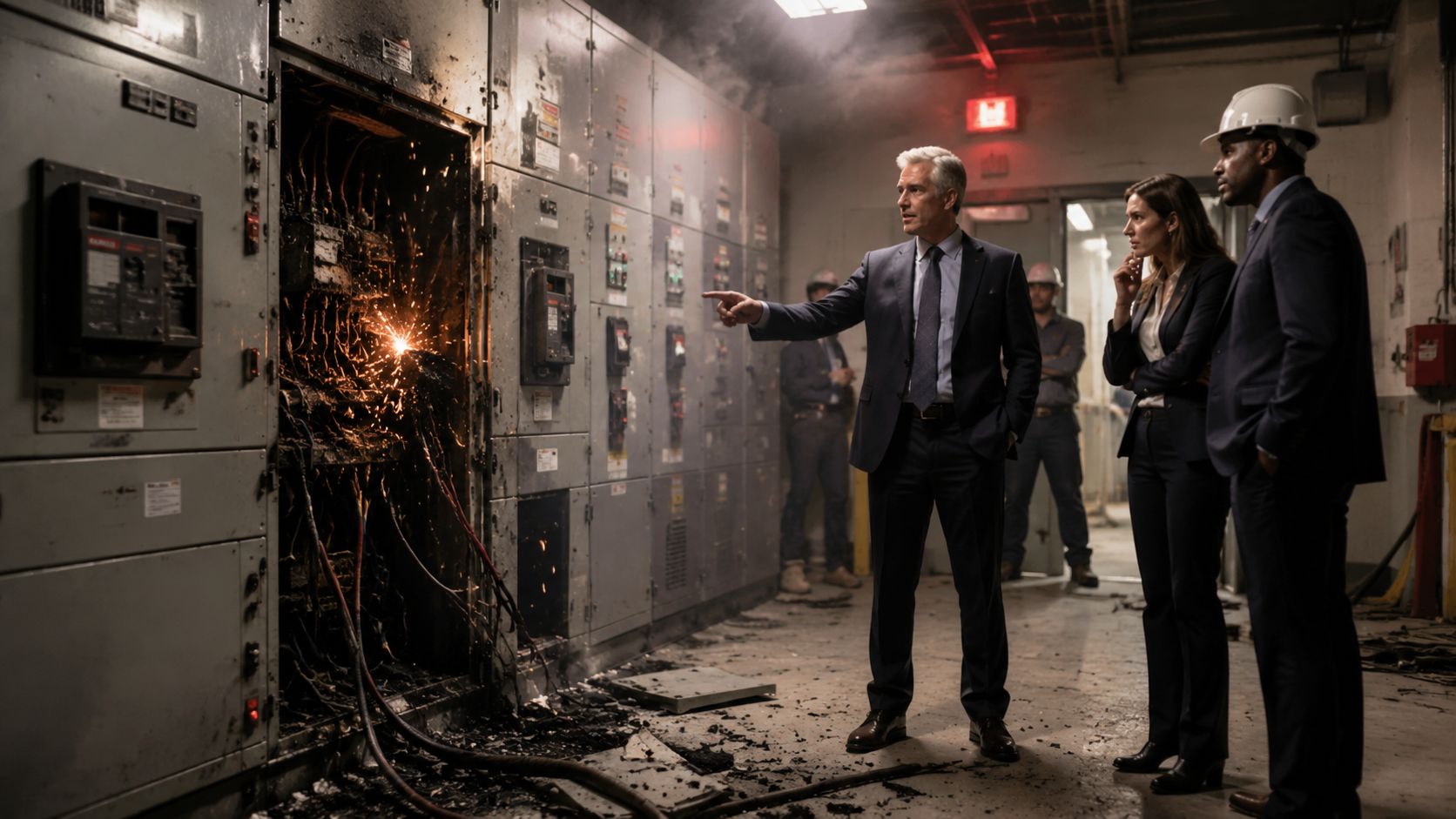
Run-to-failure maintenance feels economical because it avoids planned shutdowns and service invoices. In practice, it gives the equipment no opportunity to reveal gradual changes under controlled conditions. By the time a breaker trips repeatedly, insulation shows tracking, or an enclosure contains visible heat damage, the repair may require emergency access, replacement parts, tenant coordination, and an outage window that nobody planned.
Common warning signs include:
- Repeated breaker operation: A breaker that trips or refuses to reset deserves investigation, not repeated resets.
- Uneven heating: A connection that runs hotter than comparable connections can indicate resistance, loading, or termination problems.
- Mechanical stiffness: Difficult racking, sluggish operating handles, unusual noise, or incomplete travel can point to mechanism wear.
- Environmental intrusion: Dust, moisture, salt residue, and corrosion change the condition of insulation and metalwork.
- Missing records: If nobody can show when the gear was inspected, tested, or corrected, the team lacks a defensible baseline.
Field rule: A clean enclosure is not proof of healthy switchgear. The mechanism, terminations, insulation, loading, and maintenance history all matter.
Modern maintenance standards reinforce that switchgear is a periodic-care asset. The NFPA 70B maintenance interval documentation organizes inspections and related work around service conditions instead of informal run-to-failure habits. That framework gives facility teams a way to budget labor, coordinate shutdowns, and rank defects before they become emergency work.
For commercial, retail, and multifamily properties, the business case is straightforward. Planned maintenance can be aligned with tenant schedules and operating priorities. Unplanned failures cannot. A credible program also gives owners better documentation for safety reviews, capital planning, contractor coordination, and conversations with insurers or stakeholders who need evidence that critical electrical assets receive appropriate care.
NFPA 70B Maintenance Intervals and Inspection Schedules
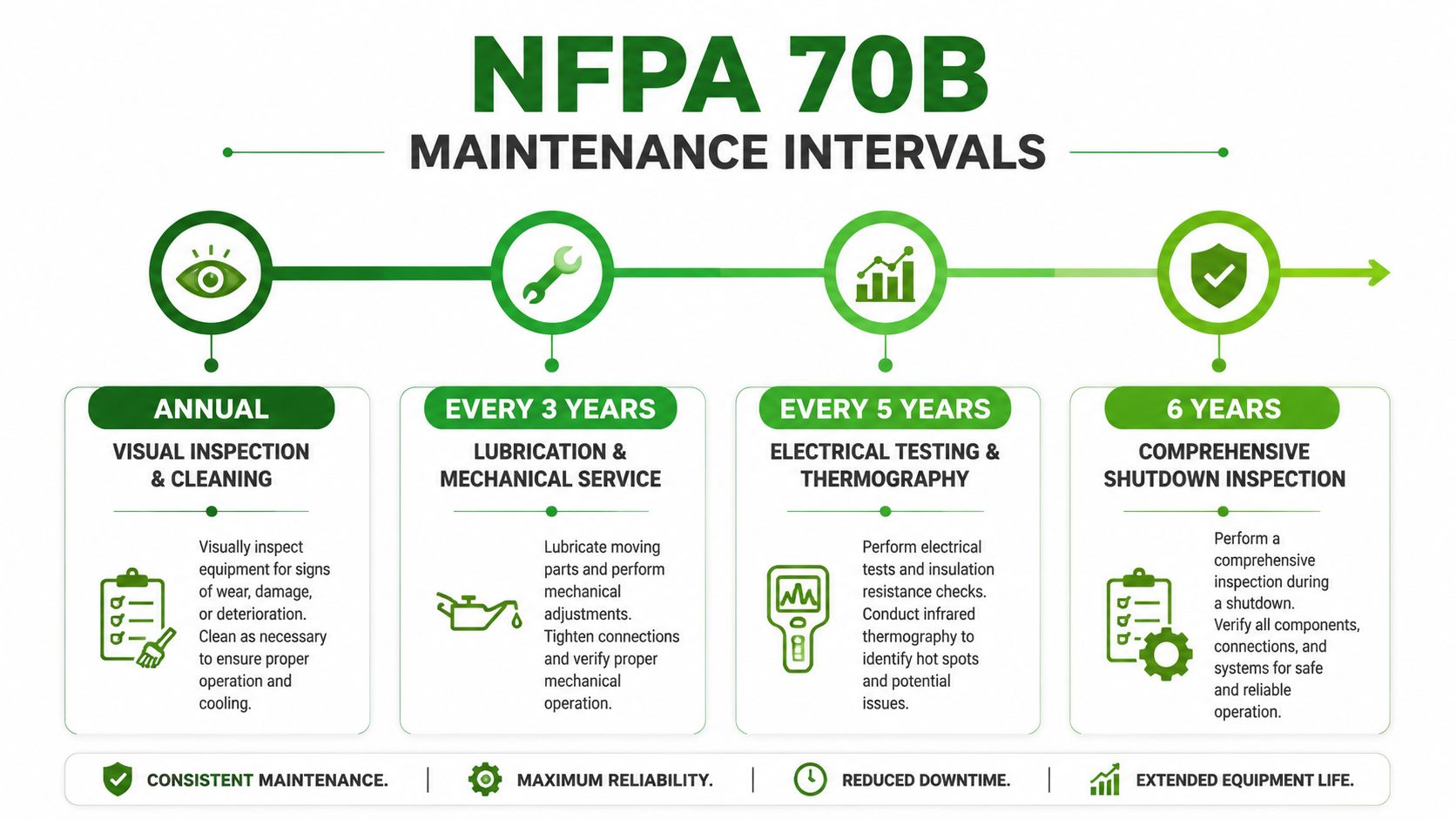
A useful maintenance calendar starts with the equipment's environment and service conditions, not with a generic annual reminder. The 2024 revision of NFPA 70B lists switchgear visual inspection at 12 months for one maintenance category, 12 months for another, and 6 months for the most frequent category. It also assigns related cleaning, lubrication, mechanical servicing, and electrical testing at 60, 36, or 12 months, depending on the applicable conditions, as documented in the NFPA 70B revision material.
Build the calendar around condition
Use the interval structure as a starting point, then document why a particular category applies. A clean, controlled commercial electrical room may support a less frequent schedule for some tasks than equipment exposed to contamination, heat, moisture, corrosive air, or demanding load patterns. The standard's central principle is practical: harsher conditions require tighter attention because contamination and wear accumulate faster.
A working calendar can separate activities like this:
| Activity | Interval framework | Practical purpose |
|---|---|---|
| Visual inspection | 6 or 12 months | Identify contamination, corrosion, damage, heat evidence, labeling issues, and mechanical abnormalities |
| Cleaning and related care | 12, 36, or 60 months | Remove deposits and preserve operating surfaces according to equipment condition |
| Lubrication and mechanical service | 12 or 36 months | Keep operating mechanisms moving correctly and reveal wear before a switching problem |
| Electrical testing | 12, 36, or 60 months | Evaluate electrical integrity and confirm that protective equipment remains serviceable |
These intervals aren't permission to wait when the gear shows a new symptom. A coastal Southern California property may need more frequent visual attention when salt-laden air reaches the electrical room. Industrial dust, construction debris, humidity, heat, and recurring heavy loading can also justify moving from an annual inspection to the more frequent category.
Decide when six months makes sense
Escalate the visual inspection schedule when the environment or operating history changes. A remodel can introduce dust. A new tenant can alter loading. A ventilation problem can raise room temperature. Water intrusion, corrosion, recurring alarms, or a prior thermal anomaly should also influence the decision.
The person responsible for the program should record the equipment location, voltage class, enclosure condition, operating environment, known load profile, previous defects, and manufacturer guidance. A contractor can then map each piece of gear to an interval and identify which work requires an outage, specialized test equipment, or qualified electrical personnel.
An annual calendar is useful, but a calendar without condition data becomes a ritual. The schedule should tell the team when to look, while inspection findings determine what happens next.
Core Preventive Maintenance Tasks and Field Techniques
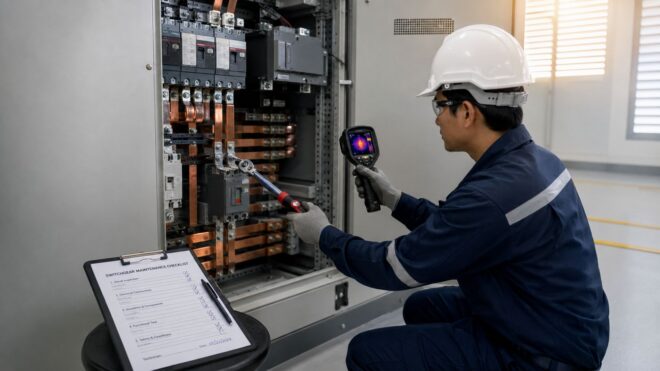
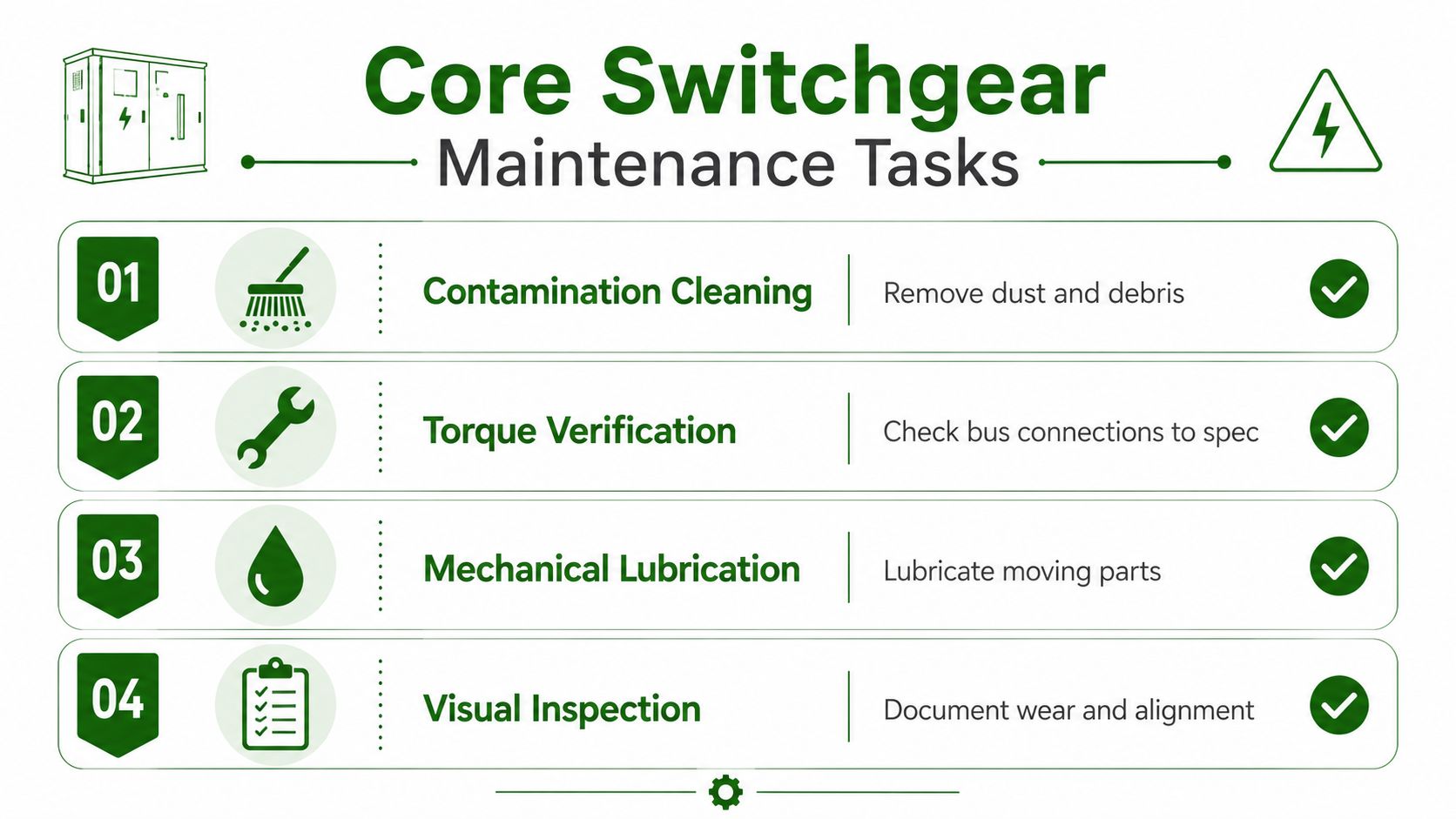
Good switchgear maintenance is careful, methodical work. The objective isn't to make a panel look presentable for a report. It's to remove contamination without damaging components, confirm that connections remain sound, keep mechanisms operating properly, and capture evidence that lets the next inspection identify change.
Start with preparation and isolation
Before opening equipment, review drawings, labels, previous reports, known faults, and the intended outage boundary. Confirm all sources, including utility feeds, generators, automatic transfer equipment, backfeeds, and stored mechanical or electrical energy. Lockout and tagout, absence-of-voltage verification, and the required PPE are not administrative details. They control whether the crew can work safely.
Cleaning technique should match the contamination. A qualified technician may use lint-free materials, suitable brushes, and controlled vacuuming for dry dust and debris. The wrong solvent, excessive compressed air, or aggressive scrubbing can spread contamination, damage insulation surfaces, or drive particles into mechanisms. Manufacturer instructions should govern any solvent or lubricant selection.
Inspect what the enclosure hides
Torque verification needs the correct tool, the equipment manufacturer's specification, and a controlled process. A technician shouldn't tighten every connection by feel. Over-tightening can damage threads or components, while under-tightening leaves resistance and heating risks unresolved.
Mechanical servicing includes inspecting breaker operation, interlocks, racking components, linkages, springs, shafts, and lubrication points. Look for uneven wear, metal filings, hardened lubricant, misalignment, cracked insulation, discoloration, tracking, moisture marks, corrosion, and damaged bushings. A mechanism that operates inconsistently is a reliability issue even when the electrical readings appear acceptable.
A maintenance report should make the next decision easier. It should show what was inspected, what was measured, what changed, and what the owner should do next.
Photographs, component identifiers, torque records, test results, and defect priorities turn a visit into an asset history. The commercial electrical maintenance guidance from Access Electrical and Lighting also reflects the practical value of cleaning, torque verification, visual heat-damage checks, corrosion review, moisture investigation, and load-related troubleshooting.
When time or budget is limited, prioritize energized connections, signs of heat or arcing, insulation damage, impaired switching, corrosion, and any defect affecting protection or isolation. Coordinate the shutdown with property operations, tenants, security, elevators, fire systems, and backup power controls. A technically correct inspection can still create unnecessary disruption if the outage plan is careless.
Infrared Thermography and Electrical Testing Protocols
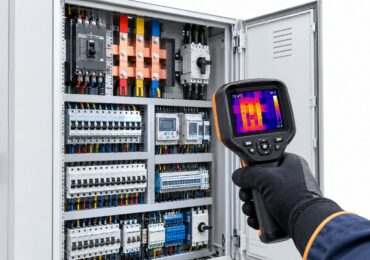
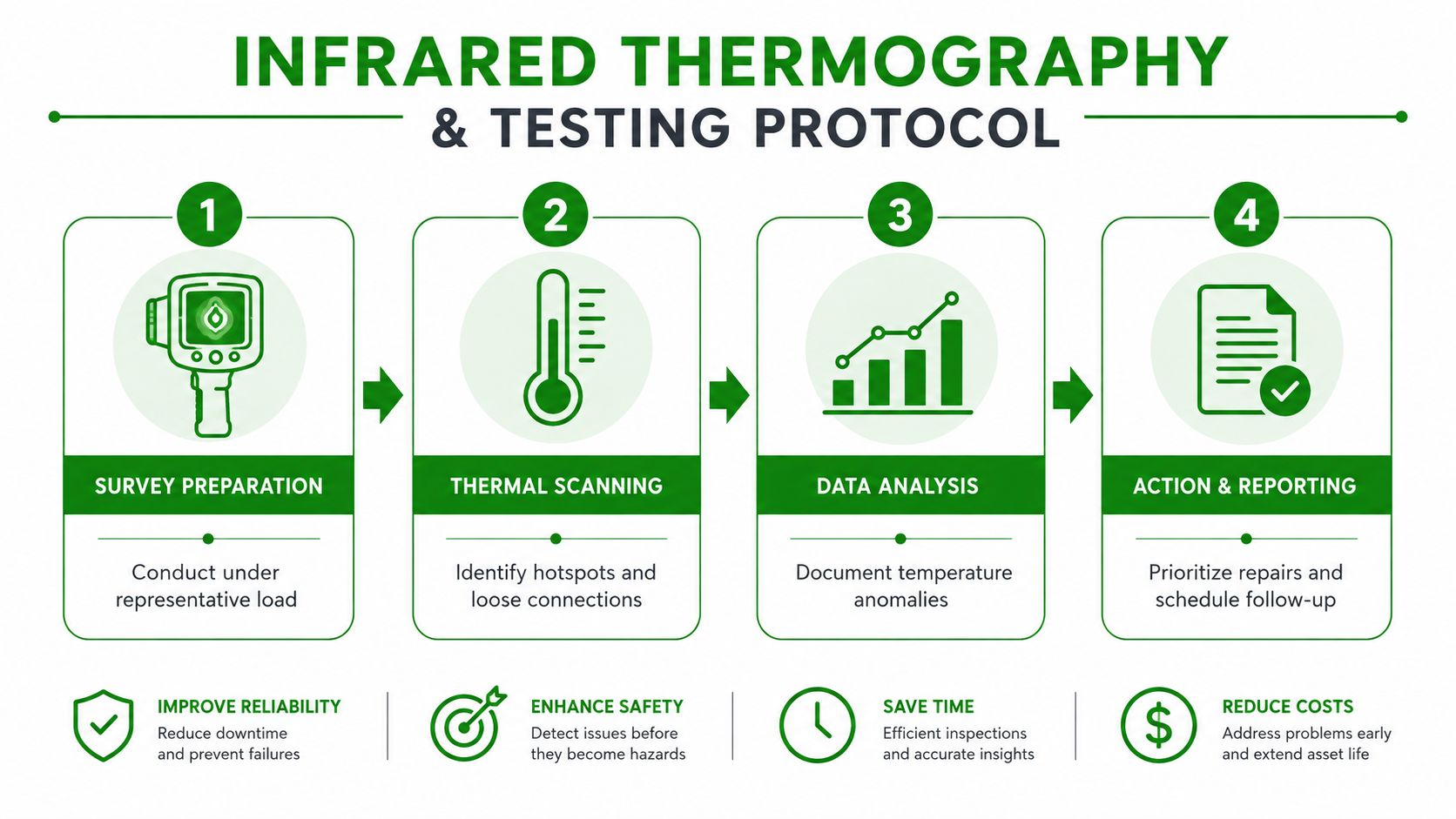
Infrared thermography is valuable because it can reveal abnormal heating without requiring a technician to touch an energized connection. It's also easy to misuse. An unloaded panel can look normal while a connection develops a problem only during representative operation, and a single image without comparison data can lead to either false reassurance or misplaced urgency.
The practical workflow begins with a baseline under normal load. The technician then performs an annual infrared survey of connections and bushings, compares like components under similar loading, and records images in a repeatable route. The NETA-related maintenance frequency guidance identifies a temperature difference exceeding 15°C, or 27°F, between similar components as a threshold for immediate corrective attention.
Read the pattern, not just the color
A hot spot matters in context. Compare phases, parallel connections, similar feeders, and components carrying comparable loads. Record load conditions, ambient conditions, equipment identity, image location, and any visible evidence that supports the interpretation.
A useful report separates findings into action levels:
- Immediate repair: A like-for-like temperature difference over the 15°C threshold requires prompt corrective work under the cited guidance.
- Planned correction: A developing difference, visible discoloration, or recurring trend may justify an outage plan before the condition becomes urgent.
- Continue monitoring: Stable readings with no supporting defect can remain in the baseline record, provided the operating conditions are comparable.
Thermography doesn't replace electrical testing. Depending on the equipment and scope, testing may include insulation resistance, contact resistance, circuit breaker timing, and functional verification of protective devices. Each test answers a different question. A thermal image may reveal connection resistance, while contact resistance testing evaluates the electrical path and breaker timing checks whether the mechanism performs within the required operating behavior.
Turn findings into budget decisions
The best report links each anomaly to a component, risk, photograph, measured condition, recommended action, and follow-up date. It should also state whether the scan occurred under representative load. Without that detail, managers can't compare this year's result with the previous survey or defend a repair request.
For more background on the diagnostic method, see this explanation of the purpose of electrical infrared testing. The practical value comes from repeatability. A trend across documented surveys helps the facility team schedule a shutdown around operations instead of waiting for a failed connection to dictate the timing.
Traditional Maintenance Versus Condition-Based Monitoring
Scheduled inspections and continuous monitoring solve different problems. A traditional program sends qualified personnel to inspect, clean, test, and document equipment at defined intervals. A condition-based program adds sensors and communications so the team can observe selected conditions between visits and respond when the data changes.
Neither approach is automatically cheaper. Permanent instrumentation requires equipment selection, installation planning, communications, data ownership, alarm management, and ongoing review. Periodic inspections require labor, access, shutdown coordination, and exposure to energized equipment when the survey or visual review occurs. The right choice depends on the consequence of failure, the accessibility of the gear, the stability of the load, and the quality of the existing maintenance records.
Compare the operating trade-offs
| Consideration | Scheduled maintenance | Condition-based monitoring |
|---|---|---|
| Initial commitment | Lower instrumentation burden, planned service labor | Sensor, installation, integration, and commissioning work |
| Data | Periodic snapshots and test records | Ongoing data from selected monitored points |
| Worker exposure | Repeated site access and inspections | Can reduce some intrusive inspections when data is reliable |
| Best fit | Accessible equipment with manageable outage windows | Critical, difficult-to-access, heavily loaded, or failure-sensitive equipment |
| Main weakness | Problems can develop between visits | Poor alarms, weak cybersecurity, or bad data can create noise |
Recent coverage identifies digital sensors, continuous thermal monitoring, AI, and machine learning as increasingly important to switchgear reliability, while the 2026 NFPA 70B update discussion highlights continuous thermal monitoring and OT cybersecurity risk assessment. That changes the facility manager's question. It's no longer just whether to inspect. It's whether the site can use live information responsibly.
Choose a hybrid where it earns its keep
Permanent monitoring deserves serious consideration when a failed bay would interrupt critical operations, when equipment is difficult to shut down, when access exposes workers to unnecessary risk, or when recurring thermal issues need observation between planned visits. It may be less sensible for lightly loaded, accessible gear with a strong inspection history and a practical outage window.
A retrofit review should cover sensor placement, enclosure compatibility, power availability, communications, alarm routing, data retention, cybersecurity controls, and who responds to an alert. Vendor demonstrations should show actual alarm logic and reporting, not just a dashboard. Ask what condition triggers a work order, how the system distinguishes a real anomaly from a changing load, and what maintenance still remains mandatory.
A sound program usually keeps scheduled inspections, testing, and documentation while adding continuous monitoring to the assets where it provides decision value. More maintenance isn't always better. Better information can support fewer intrusive inspections and more targeted interventions, but only when the facility has trained people and a clear response process.
Safety Protocols and Recognizing Upgrade Needs
Switchgear work begins with controlling energy. The responsible electrical team should identify every source, review one-line diagrams, coordinate with utilities and generator operators, establish the switching sequence, and apply lockout and tagout procedures. Workers must verify the absence of voltage with properly rated instruments and account for possible backfeed, stored energy, and automatic transfer operation.
Arc flash risk also needs a current assessment and a work plan that matches the equipment and task. PPE selection, approach boundaries, barricades, qualified-person requirements, and communication with occupants should be handled before the enclosure is opened. This arc flash study resource explains why the analysis belongs in the broader electrical safety program rather than being treated as a label-only exercise.
Know when repairs are no longer the answer
Maintenance can preserve serviceable equipment, but it can't reverse every form of aging or solve obsolete design limitations. Escalate the conversation toward refurbishment or replacement when parts are difficult to obtain, failures continue after competent corrective work, the equipment can't support the current load, or the enclosure and protective system no longer fit the facility's operating needs.
For gas-insulated switchgear, international CIGRE reliability data reported in a 2026 technical paper identifies inability to perform required switching operations as 63% of the reported dominant failure modes and insulation dielectric breakdown as 23%, as described in the CIGRE failure investigation paper. The same paper states that operational failures rise sharply after 15 to 20 years because mechanical parts age and corrode, while manufacturers commonly recommend major repairs every 12 to 20 years.
Those figures don't establish an automatic replacement date for every installation. They do establish a reason to inspect mechanisms, insulation, corrosion, repair history, and parts support more critically as equipment ages. A phased capital plan can replace the highest-risk lineup first, maintain temporary capacity where appropriate, and schedule remaining work around tenant and production requirements.
Document the reason for each recommendation. “Old” is a weak capital request. A record showing repeated switching defects, declining insulation condition, unavailable parts, changing load requirements, and increasing operational risk gives owners a defensible basis for replacement.
Building Your Switchgear Maintenance Program
Start with an asset register that identifies each lineup, panel, breaker, location, age, environment, load role, manufacturer, maintenance history, and known defect. Assign the NFPA 70B interval category based on service conditions, then create a calendar for visual inspection, cleaning, mechanical work, electrical testing, thermography, and planned shutdowns.
Use a simple priority matrix:
- High priority: Critical equipment, active thermal or mechanical defects, insulation concerns, or repeated failures.
- Medium priority: Aging equipment, harsh environments, incomplete records, or adverse trends without an active failure.
- Routine priority: Accessible equipment with stable documented results and no significant condition change.
Decide between scheduled work, permanent monitoring, or a hybrid program based on failure consequence, access, load behavior, outage difficulty, and the quality of available data. Select contractors who can provide qualified personnel, calibrated test equipment, clear reports, documented corrective recommendations, and safe outage coordination. Build internal competency around recordkeeping and response, while outsourcing specialized testing or high-risk work when the site lacks the tools or qualified staff.
Track completed inspections, open defects, repeat findings, thermal trends, testing results, and corrective-work closure. That record connects electrical reliability with safety management, insurance documentation, operating continuity, and property planning.
Access Electrical and Lighting provides commercial electrical maintenance, switchgear and panel troubleshooting, infrared inspections with documented reports, testing, repairs, and upgrades for commercial, retail, office, and multifamily properties. Visit Access Electrical and Lighting to discuss a condition-based or scheduled switchgear maintenance program for your Southern California facility.