A standard U.S. electrical safety inspection usually runs about $150, with most basic checks landing in the $100–$200 range. Add infrared thermography and you're usually looking at $150–$350, while a more complete commercial facility inspection can land at $250–$450 per panel or $1,000–$2,500 for a full site audit.
That's the number a property manager wants first, because the quote on the inbox often arrives right when a renewal, tenant improvement, or insurance request is already on the table. In Orange County, the question usually isn't whether an inspection is needed, it's whether the proposal is a normal scope, a stripped-down walk-through, or a quote that assumes more labor than the building really needs.
What Most Property Managers Pay for an Inspection
A property manager rarely gets a quote in a vacuum. The call usually comes after a tenant complaint, a panel room concern, a broker question, or an insurer asking for current documentation. The first thing that matters is whether the quote sits in a realistic band for the job, because electrical safety inspection cost is driven by scope, not just by someone coming out and checking the system.
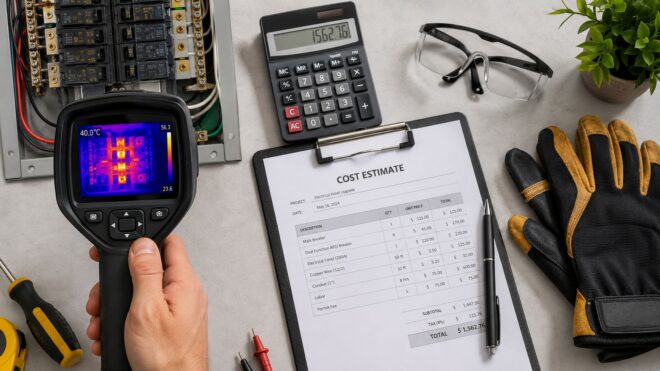
For a standard residential or light commercial safety check in the U.S., $100–$200 is the practical baseline, with a commonly cited average around $150. If infrared diagnostics are added, the typical range moves to $150–$350 because the contractor is no longer only opening panels and checking devices, they are also using thermal imaging to look for heat patterns behind walls and ceilings. A broader whole-system inspection often lands at $250–$400, again depending on how much documentation and testing the contractor is responsible for.
Angi's electrical inspection cost guide lines up with those bands, but the number still needs to be read as a scope question, not a flat answer.
Practical rule: if a quote is far below those bands, it usually means the contractor is limiting the scope. That can be fine for a quick check, but it is not the same thing as a real safety inspection.
What the quote is really telling you
A low number can mean a short visit, a narrow panel review, or a report that will not satisfy insurance or a portfolio manager who needs consistency across sites. A higher number can be justified when the building has more circuits, more panels, harder access, or a request for more documentation.
For Orange County portfolios, the smart move is to decide whether the quote is meant to be a budget line item or a negotiable scope. If it is the first, compare it against the ranges above. If it is the second, ask what is missing before you accept the number as a true apples-to-apples bid.
The Four Building Blocks of Every Inspection Quote
A bid for inspection work is a lot like a restaurant check. The appetizer is the visual review, the entrée is the testing, the sides are any specialty diagnostics, and the dessert is the report you hand to an insurer, owner, or engineer. If one of those pieces is missing, the price may look good, but the deliverable won't be the same.
The visible walk-through
The first building block is the visual inspection of panels, breakers, outlets, switches, and accessible equipment. This is the part assumed to be included, but it's only the start. A qualified contractor is looking for looseness, damage, signs of overheating, labeling issues, and obvious code or safety concerns before any instruments come out.
Circuit testing and labeling
The second block is actual circuit testing. On a commercial property, pricing often shifts toward per-panel or per-circuit math because the contractor has to open, isolate, test, and document what's tied to each distribution point. That's why a retail center and a medical suite of similar size can receive very different proposals, even if the square footage looks comparable.
Thermal imaging where warranted
The third block is infrared thermography. It's not automatically needed on every job, but when it is included, it adds value because it can reveal higher temperatures that visual inspection won't catch. Access Electrical and Lighting publishes a detailed explanation of why infrared testing matters for Southern California properties in its article on infrared testing and electrical safety in Southern California, and that's exactly the kind of add-on that changes a quote from basic to preventive-maintenance grade.
Written reporting
The final block is the report. A proper quote should tell you whether the contractor is delivering photos, test notes, deficiency tracking, and a summary that can be filed. If you don't see reporting language, you're probably buying a visit, not a document package.
Five Factors That Move the Price Up or Down

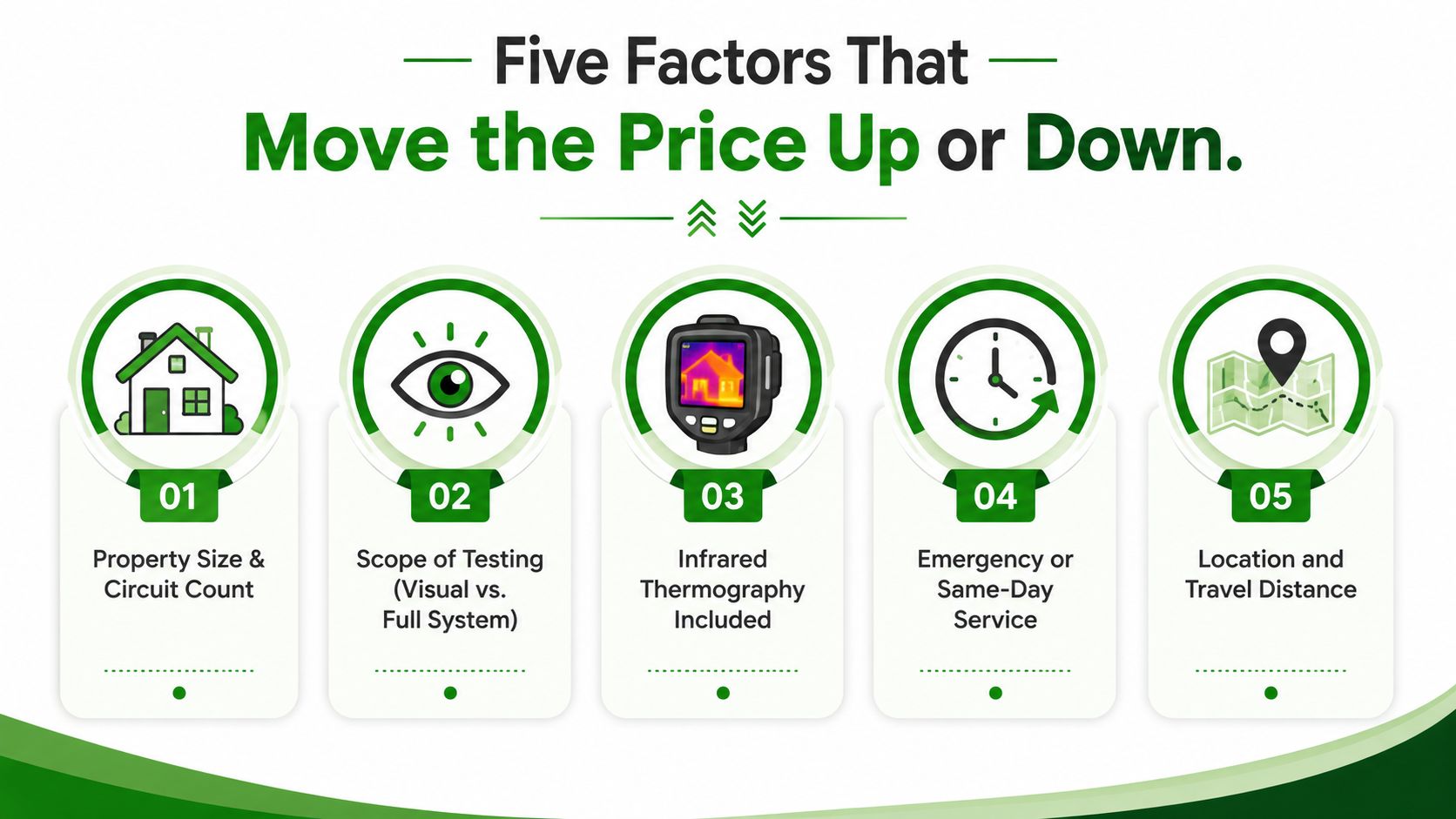
The cleanest way to understand electrical safety inspection cost is to stop thinking in terms of one price and start thinking in terms of five pressure points. Two buildings can be the same size on paper and still produce very different bids because the time on site, testing depth, and documentation requirements aren't the same.
Property size and circuit count
More panels and more circuits mean more test points, more labeling, and more time. Commercial pricing often tracks panel count rather than a flat fee, and that's one reason a full facility audit is much pricier than a single-panel check (Current Cost commercial pricing guide). In practice, size matters only after you translate it into actual electrical complexity.
Scope of testing
A visual-only visit is cheaper than a full-system test because it doesn't require the same level of shutdown coordination or instrumentation. If the proposal doesn't specify what's being tested, assume the scope is narrow. That can be acceptable for a quick screening, but not for a portfolio manager who needs dependable records across multiple assets.
Infrared thermography
Thermal imaging adds cost because it adds specialized equipment and a more detailed review process. It also changes the value of the inspection, since it can help identify hotspots before they become outage or fire issues. When an inspection quote includes infrared, the contractor should say so plainly instead of burying it in vague “detailed review” language.
Emergency lighting and exit sign testing
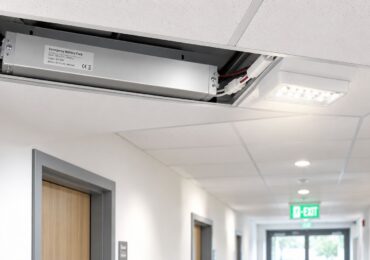
In Orange County, emergency lighting and exit signs often sit in the same compliance conversation as safety inspections, but they aren't free extras. Testing those systems means added site time and documentation. If your building's life-safety package includes them, the quote should reflect that instead of assuming they'll be handled informally.
Switchgear and panel complexity
Older gear, larger electrical rooms, and unusual system layouts push quotes up fast. I've seen bids drift when a contractor realizes the panel room is crowded, access is tight, or there's more than one distribution path to trace. That's not overcharging, it's the job becoming bigger after the site walk.
A quote that looks “too clean” often leaves out the very things that create the inspection's real value.
Realistic Sample Quotes for Orange County Properties
Orange County managers usually don't need a national average, they need a number that makes sense for the kind of building they oversee. A strip retail owner in Costa Mesa doesn't buy the same inspection scope as a multifamily operator in Anaheim, even if both are dealing with safety, documentation, and tenant coordination.
| Property Type | Typical Scope | Estimated Cost Range |
|---|---|---|
| Small retail strip in Costa Mesa or Tustin | Panel review, outlet and lighting checks, limited common-area verification, basic written findings | Standard market band, usually toward the lower end of the commercial range |
| Mid-size office or medical suite in Irvine | Multiple panels, circuit testing, lighting review, documentation for ownership or insurance, infrared if requested | Mid-range commercial pricing, often higher than a basic walk-through because of scope |
| 100-plus-unit multifamily community in Anaheim or Garden Grove | Common-area panels, exterior and garage lighting, emergency lighting, exit signs, selective unit or riser review, fuller reporting | Broader scope, often priced as a larger facility audit rather than a simple inspection |
A small retail strip should usually generate a proposal that names exactly what's included, because the main cost driver is whether the contractor is checking one or two panels or a larger common-area system. If the bid is unusually low, the red flag isn't just price, it's missing language about the number of circuits, any testing method, and whether a written report is included.
A mid-size office or medical suite in Irvine needs more careful scoping. These spaces often have more sensitive operations, which means shutdown coordination matters and the contractor has to plan around tenants, reception areas, and equipment that can't just be powered down casually.
A large multifamily community is where pricing often stops looking like a simple inspection and starts looking like a portfolio event. The best bids will break out common-area systems, emergency lighting, and other repeatable elements so the owner can compare proposals across multiple buildings without guessing what each contractor assumed.
What a Good Inspection Report Actually Delivers
A proper report is the product, not the paperwork attached to it. If a contractor hands over a thin summary with no photos, no clear findings, and no usable action list, the inspection probably stayed thin from the start.
A solid package should show what was checked, what was found, and what needs attention next. At minimum, I expect a panel inventory, clear photos of the equipment, a list of deficiencies ranked by seriousness, and any thermal images that support the findings. If the job included compliance-related work, the report should also contain the documentation needed for insurance, ownership records, or Title 24-related file keeping.
The report from a routine inspection should also make it easy to hand off work. That means the owner, facilities lead, or property manager can tell which issues are urgent, which can wait, and which should be folded into planned maintenance. A report that doesn't separate those items creates confusion and usually creates a second phone call.
For a practical example of what a contractor may bundle into the deliverable, review the company's own overview of electrical safety inspection services. It's a useful reminder that the value isn't only in the testing itself, but in the structure of the documentation that comes after it.
Before you sign off, check for these items:
- Clear asset list: panels, major devices, and areas covered.
- Photos or thermal images: enough detail to understand the issue without revisiting the site.
- Severity ranking: so the most important items don't get buried.
- Recommended corrective actions: not just observations.
- File-ready output: something your insurer or owner can use.
A thin report usually means a thin inspection. The better the report, the easier it is to control repairs and defend the spend.
Title 24 and California Compliance Considerations
California adds a second layer to the budgeting conversation because some electrical work isn't just about safety, it's about documentation. Title 24 matters most when lighting controls, occupancy-related systems, and acceptance testing come into play, and a competent contractor should already be thinking about those requirements before the site visit is finished.
For non-residential projects, Title 24 acceptance testing can overlap with a routine inspection, but they are not the same thing. A safety inspection looks for hazards and system condition, while acceptance testing is about proving the installed systems perform as required. That distinction matters because a manager might assume one visit solves both problems, when in reality the report package and the documentation trail may need to be handled separately.
California properties also have to think about emergency lighting and exit sign records. Those systems are often checked alongside routine electrical safety work, but the paperwork matters just as much as the physical test. If the contractor doesn't mention documentation retention or acceptance records, the proposal is probably too loose for a commercial file.
California rule of thumb: if a contractor can't explain what paperwork the building needs after the test, the scope isn't complete yet.
Insurance carriers are another pressure point. They increasingly want proof that safety issues were reviewed, and thermography reports are often part of that discussion when panels or equipment are part of the risk picture. That's one reason a California manager should ask whether the quote includes documentation that can support future audits, not just a field visit.
For a straightforward overview of the compliance layer, review What Title 24 compliance means for building projects. In practical terms, the right inspection partner should already be checking whether the report package helps the property move through occupancy, maintenance, and insurance review without repeat work.
Practical Ways to Keep Costs Under Control
The biggest savings usually come from scheduling and scope discipline, not from squeezing a contractor on line items after the quote arrives. If a property manager treats every site as a one-off emergency, the cost per building tends to drift upward because each visit starts from scratch.
The best way to control electrical safety inspection cost is to make the contractor's day easier and the bid more predictable.
- Bundle similar sites together. If you have multiple properties in Orange County, grouping them under one contractor reduces repeat mobilization and gives you a cleaner comparison across buildings.
- Standardize the inspection scope. Use the same checklist for retail, office, and multifamily sites where possible, so the bids reflect real differences instead of vague assumptions.
- Schedule in the same quarter each year. Coordinated timing helps a contractor plan labor and often keeps the work from becoming an overtime or rush job.
- Use in-house thermography where possible. If the same contractor can handle the infrared portion, you avoid a second visit just to bring in another specialist.
- Tie inspection dates to maintenance windows. A planned shutdown is usually cheaper and less disruptive than reacting after a tenant complaint or equipment failure.
I also see good results when managers ask for a portfolio-friendly reporting format up front. That keeps the contractor from producing five different styles of paperwork for five properties, which saves time later when ownership wants to compare sites.
Access Electrical and Lighting is one option in Southern California that combines infrared inspections, panel work, and documentation under one contractor, which can simplify that kind of scheduling. That matters less as a sales point than as an operational one, because fewer handoffs usually means fewer surprises.
How to Qualify the Contractor Before Signing the Quote
Start with the license. In California, a commercial electrical contractor should be operating as a C-10 shop, and the quote should make it easy to confirm who is responsible for the work. If that isn't clear, keep looking.
Then verify the basics that separate a real inspection partner from a casual service call. Ask for proof of insurance and bonding, ask who will perform the thermography if it's included, and ask for a sample report. If the contractor won't show you what the finished product looks like, that's a warning sign.
A solid bid should also come with comparable references. You want to hear from a manager who handled a similar property type, not just a random homeowner. Multifamily, retail, and office work all create different scheduling and reporting demands, so the references should match the asset class.
The lowest bid rarely wins once the report has to stand up to insurance, ownership, or a follow-up repair plan.
Look for a contractor who can also talk through a multi-year inspection plan. That tells you they're thinking in portfolio terms, not just one site, one invoice, one afternoon. In this trade, the cheapest report is often the most expensive one because it leaves out the detail you need later.

If you're budgeting inspections across one building or an entire Orange County portfolio, Access Electrical and Lighting can help scope the work, document the findings, and coordinate the testing around your operating hours. Visit Access Electrical and Lighting to review commercial electrical testing, infrared inspections, and compliance support, then line up a quote that matches the actual scope you need.