Replacing a burned-out lamp is the most popular advice for parking lot lights maintenance, and it's often the wrong place to start. A dark fixture may be caused by a failed driver, photocell, timer, breaker, wiring section, water intrusion, or control-system setting. A leaning pole with rust at grade is more than a lighting problem, it's a structural hazard that can turn a routine service call into an emergency.
A commercial lighting program should therefore treat every outage as a symptom to diagnose, not an automatic instruction to replace a fixture. The practical objective is reliable illumination, safe poles, controlled energy use, and records that help facility managers plan repairs before failures disrupt operations.
The Hidden Costs of Reactive Lighting Repairs
“Replace it when it breaks” postpones the invoice, not the cost. Across a large parking area, reactive work creates emergency labor, repeat mobilization, inefficient operation, early equipment replacement, and ongoing safety exposure. Canada's 2015 parking-lighting scan estimated up to 7.8 million parking lights nationwide, according to the LightSavers LED parking lighting primer.
Energy use adds another operating cost. The U.S. Department of Energy reports that lighting accounts for 17% of primary energy used in commercial buildings and almost 18% of their carbon dioxide emissions. Its parking-lot guidance says LED site lighting can reduce parking-lot energy use by more than 50% compared with standard code requirements. Maintenance decisions therefore affect utility spending, replacement timing, and site performance, not just housekeeping. DOE parking-lot lighting guidance

Why emergency repairs cost more
A reactive service call often produces a narrow work order. The technician restores the dark fixture, replaces a component, and leaves without checking whether the outage reflects a shared circuit, drifting control, wet handhole, deteriorating connection, or damaged pole base. If that cause remains, the property pays for another visit while the area continues operating below its intended lighting level.
The Department of Energy documented a retail parking-lot project where an LED upgrade produced a 58% reduction in energy use and a simple payback of about 3.09 years. In that case study, estimated maintenance cost fell from $8,100 to $1,250 per year. Those figures show why owners should compare equipment, labor, energy, and access costs over the system's service life rather than judge repairs by fixture price alone.
Practical rule: Every service call should leave behind more information than the technician found at arrival. Record the symptom, circuit, control condition, component replaced, pole condition, and recommended follow-up.
Build a maintenance business case
A preventive program gives facility managers a defensible way to rank work. Begin with an asset register listing each pole, fixture type, circuit, control method, installation area, and known defect. Add night-audit observations, recurring outage locations, corrosion findings, and repair history. The record separates an isolated fixture failure from a wider electrical, control, or structural problem.
The DOE's Lighting Energy Efficiency in Parking campaign reported that participants upgraded more than 540 million square feet of parking facilities and generated 137 million kWh in annual savings, equal to about $14.79 million in electricity savings. The report also said modern lighting technology could potentially eliminate up to 90% of maintenance costs. Campaign-level results do not predict every property's outcome, but they support evaluating preventive maintenance and retrofit work as capital decisions. DOE parking campaign data
The useful question is not how cheaply one light can be restored. It is which inspection, control correction, pole repair, or technology decision will prevent the next avoidable outage.
Diagnostic Electrical and Optical Inspections
A dark fixture is a symptom, not a diagnosis. Start by mapping the failure across the property. One outage points toward the fixture, driver, local connection, or branch wiring. Several dark fixtures in one area suggest a circuit, photocell, timer, contactor, or control fault. Flicker, cycling, or dim output can indicate unstable supply, loose connections, thermal stress, driver failure, or control incompatibility.
Work from the site-wide pattern toward the individual component. DOE parking-lot lighting guidance emphasizes inspecting controls, poles, handholes, and connections rather than treating every outage as a failed fixture.

A field workflow that avoids wasted replacements
Confirm the complaint at night. Determine whether the fixture is out, dim, flickering, cycling, or creating uneven illumination. Photograph the affected area and mark the pole on the site plan.
Inspect the fixture and optics. Check the lens, housing, gasket, mounting arm, aiming, dirt, debris, and signs of water entry. Cleaning cannot restore a failed driver, while a damaged or contaminated optical assembly can reduce useful light even when the fixture operates.
Check the control path. Identify photocells, timers, contactors, occupancy sensors, networked controls, or combinations of these devices. Verify schedules, sensor inputs, and photocell operation against the intended sequence. Control drift can darken an entire zone while individual fixtures remain healthy.
Test at the source and base. A qualified electrician should verify the breaker, contactor, voltage at the pole base, handhole connections, and voltage at the fixture. Test for voltage drop on long wire runs when power is unstable or insufficient.
Check environmental causes. Open handholes, wet conductors, damaged covers, failed seals, irrigation spray, and standing water can produce recurring faults. Review heat-related LED driver failures when fixtures operate in poorly ventilated housings or fail repeatedly.
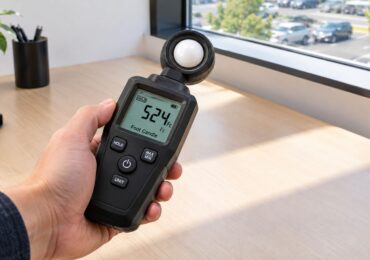
Measure optical performance. Use a light meter to compare affected locations with nearby functioning areas and the property's lighting requirements. A fixture can be energized yet provide poor coverage because of misalignment, lens damage, or output degradation.
For electrical safety, infrared testing can reveal abnormal heat patterns in panels and connections when performed by a qualified professional. A documented infrared electrical safety inspection should complement, not replace, de-energized inspection and required electrical testing.
Replace a fixture when testing identifies fixture failure. Do not replace it simply because it is the easiest component to reach.
Record test results while the work is fresh. The maintenance record should state what failed, what was tested, what was repaired, and what still needs structural, electrical, or control follow-up. That record turns reactive troubleshooting into information that supports the next maintenance decision.
Structural Pole Integrity and Corrosion Checks
A dark fixture creates a visibility problem. A weakened pole can injure people, damage vehicles, and compromise the wiring installed inside it. Treat pole condition as a separate structural workstream, even when the service request began with poor light output.
Inspection frequency should match exposure and visible condition. According to the guidance in the Light-pole inspection guidance, poles in paved areas exposed only to rain or dew should be inspected every five years, newer poles in harsher weather every two years, and poles exposed to snow, ice, or visible rust annually. A licensed electrical contractor experienced in pole inspections should perform the assessment because internal corrosion may not appear during a basic visual review.

Start where water and stress concentrate
The pole base usually deserves the closest examination. Moisture, failed coatings, soil contact, irrigation spray, and poor drainage can accelerate deterioration. Inspect the full circumference at grade, then check the base plate, anchor bolts, welds, shaft, handhole, cover, conduit entry, and fixture arm.
Escalate these findings promptly:
- Rust at grade: Bubbling paint, flaking metal, or deep corrosion may indicate deterioration inside the shaft.
- Loose anchor bolts: Movement at the base can weaken the connection between the pole and foundation.
- Cracked welds: Cracks at welds or attachments can reduce structural capacity.
- Leaning poles: A change in alignment may point to impact, foundation movement, or section loss.
- Heaving ground: Raised or displaced soil and paving can indicate foundation movement or drainage-related stress.
The Wiss, Janney, Elstner Associates light-pole primer recommends keeping pole bases dry, maintaining corrosion-inhibiting coatings, and measuring wall thickness when deterioration is suspected. Visual inspection is the screening step. It cannot confirm sound metal where corrosion may be concealed.
Escalate suspected section loss
Rust, deformation, cracking, or unusual movement warrants area isolation as appropriate and review by a qualified professional. The assessment may require non-destructive evaluation and wall-thickness measurements. Those measurements help the inspector compare remaining metal with the minimum thickness required for structural performance.
Coating over active corrosion does not complete the repair. Properly prepared coating can protect sound or repaired metal, but it cannot replace steel that has already been lost. The contractor should document the defect location, extent, likely cause, fastener and weld condition, drainage observations, and recommended corrective action.
A useful report gives facility managers more than “pass” or “fail.” It prioritizes monitoring, repair, reinforcement, replacement, or immediate access restrictions. That record supports capital planning and reduces the chance that a concealed defect remains unnoticed until a storm, vehicle impact, or equipment vibration exposes it.
Maximizing ROI with LED Retrofits and Controls
LED retrofits produce their best return when the project addresses the complete lighting system, not only the lamps. A new fixture cannot correct a mislocated photocell, an inaccurate timer, poor aiming, degraded wiring, or a pole condition that limits safe service. Start with an audit, confirm required light levels, review circuit capacity, and define commissioning requirements before selecting equipment.
The financial case depends on operating hours, fixture condition, maintenance access, and the control strategy. Compare the existing system's energy use and service history with the proposed LED load, expected driver life, replacement access, and control-related labor. A lower-wattage fixture may deliver little lifecycle value if it creates glare, leaves dark zones, or requires specialized troubleshooting. The budget should also include disposal, lift access, electrical corrections, surge protection, and post-installation verification.
| Metric | Legacy HID System | Modern LED Retrofit |
|---|---|---|
| Energy operation | Higher consumption and less flexible operation | Lower energy use potential, with controls supporting scheduled operation |
| Maintenance pattern | Frequent lamp and ballast-related service | Fewer routine relamping tasks, with driver and control diagnostics still required |
| Control capability | Often limited to photocells, timers, or contactors | Compatible designs can support photocells, dimming, sensors, and networked control |
| Failure diagnosis | Lamp, ballast, socket, wiring, or control faults | Driver, thermal, wiring, control, and configuration faults |
| Capital decision | Lower immediate scope when repaired selectively | Higher project scope, evaluated against lifecycle savings and site conditions |
Controls need commissioning
Controls only reduce operating cost when they respond correctly to actual site conditions. Verify photocell location and orientation, schedules, dimming levels, sensor coverage, override behavior, and recovery after a power interruption. A timer that drifts, a sensor zone set too broadly, or a photocell shaded by new landscaping can leave lights running at full output or switch them on at the wrong time.
Control drift is a maintenance issue, not merely an installation defect. Record each setting, label relevant equipment, and test representative zones after commissioning. Review the settings after tenant changes, electrical work, or repeated complaints about dark areas.
LED fixtures still require electrical service. Drivers fail, terminations loosen, and incompatible controls can produce flicker or cycling. Include circuit testing, grounding and surge review, thermal checks, optical aiming, and documented control settings in the retrofit scope. A parking-lot LED retrofit should be judged by operating performance, fault access, and future service requirements, not fixture wattage alone.
The right decision is not always full replacement. Selective repair can fit a property where existing equipment is sound and the fault is clearly isolated. Retrofit planning deserves priority when fixtures fail repeatedly, parts are difficult to source, controls cannot provide the required operation, or access costs make continued reactive repairs expensive. A qualified contractor should present both options with assumptions, commissioning steps, and projected maintenance implications.
Building a Preventive Maintenance Schedule
A preventive schedule should reflect how a parking lot operates, not merely repeat generic facility checks. Assign each task a time window, responsible person, and asset identifier. Night observations find outages and control drift, while technical inspections expose electrical degradation before it becomes an emergency. Structural checks should follow site exposure and pole condition.

Use the schedule as an operating record
Monthly: Walk or drive the lot after dark. Record outages, flicker, dim zones, damaged lenses, leaning poles, blocked light from landscaping, and fixtures operating outside the intended period. Check entrances, ADA stalls, stairwells, pedestrian routes, and loading areas. Clean accessible optical surfaces when appropriate, then open work orders using pole and fixture identifiers.
Quarterly: Review outages by circuit and zone. Measure illuminance at task-critical areas and compare readings with the footcandle targets in the original photometric plan. Test representative electrical points, inspect handholes and covers, and check photocells and timers. A recurring dark zone or failure pattern calls for diagnosis, not repeated lamp replacement.
Semi-annually: Check fixture aiming, mounting hardware, accessible connections, and control operation. Inspect pole bases for standing water, blocked drainage, impact damage, and new rust. Review repair history for repeat failures and confirm temporary repairs received permanent corrective work. Include irrigation, paving, landscaping, and vehicle-impact changes in the review.
Annually: Complete a documented system review. Update the asset register, inspect corrosion protection, pole bases, anchor hardware, and electrical enclosures, and compare energy or operating records with the owner's expectations. Severe weather, visible rust, snow, ice, construction, or major site changes justify a shorter interval.
Match structural frequency to exposure
Use site conditions to set pole inspection frequency. Paved areas exposed only to rain or dew can use a five-year inspection interval. Newer poles in harsher weather call for two-year inspections, while locations with snow, ice, or visible rust warrant annual inspection.
Record the inspection date, weather and site conditions, pole identifier, photographs, test results, defects, corrective action, and next due date. Keep warranty information and fixture models with the same record. This history shows what changed, what remains open, and why replacement was prioritized.
Documentation standard: If another technician can't understand the asset's condition from the record, the inspection wasn't documented well enough.
Partnering with Qualified Electrical Contractors
A dark fixture is easy to report. Reliable parking lot lights maintenance requires a contractor who can diagnose electrical, control, access, and structural problems before a minor outage becomes a safety restriction or an expensive emergency repair. Confirm that the contractor is licensed, insured, and bonded where required. The contractor should also explain how technicians will work around energized equipment, traffic, fixtures, and public access.
Compare diagnostic scopes before comparing prices. A credible proposal should state whether technicians will inspect circuits, photocells, timers, handholes, connections, driver temperatures, optical output, pole bases, anchor bolts, welds, and corrosion. It should identify which findings require non-destructive evaluation or engineering review, rather than leaving those decisions until after a failure.
Questions worth asking before award
- Access equipment: Can the contractor provide a boom truck or comparable high-reach equipment for fixtures mounted on 30-to-50-foot poles?
- Testing capability: Do technicians document voltage testing, light-meter readings, and infrared thermography where appropriate?
- Control expertise: Can the team troubleshoot line-voltage equipment as well as low-voltage or networked controls?
- Structural scope: Will the inspection address rust at grade, loose anchors, cracked welds, leaning poles, drainage, and suspected wall-thickness loss?
- Compliance records: Can the contractor provide testing, repair, commissioning, and Title 24 documentation when applicable?
- Closeout quality: Will the owner receive an updated asset list, photographs, test results, defect priorities, and recommended next actions?
Require the contractor to separate immediate safety restrictions from routine repairs and capital recommendations. That decision structure helps facility managers avoid both unnecessary replacement proposals and low-cost repairs that leave the original circuit, control, or pole problem unresolved.
If your lots rely on reactive bulb swaps, a system assessment can expose the electrical, control, and structural issues behind recurring outages. Access Electrical and Lighting's commercial electrical contractor services can support inspections, troubleshooting, repairs, retrofits, pole integrity testing, infrared diagnostics, controls, high-reach work, and applicable documentation. Compare any provider against the same requirements, especially clear records and system-level diagnosis.