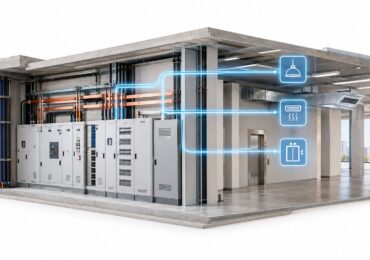
The popular answer to what does a commercial electrician do is usually too narrow: install outlets, pull wire, replace fixtures, and reset breakers. That description misses the work that determines whether a commercial property stays safe, compliant, and operational. A commercial electrician manages distribution equipment, lighting controls, emergency systems, motors, communications, and low-voltage infrastructure, often while tenants, customers, and other trades remain on site.
The role also involves diagnosis and verification. Electricians interpret drawings, coordinate with general contractors, confirm circuit capacity, isolate equipment, test installations, document findings, and plan corrective work. A quick repair may restore power, but a properly managed electrical system should also reduce the chance of another failure.
Beyond Basic Wiring and Fixture Replacements
A commercial electrician works on electrical systems that support business properties rather than individual homes. That can include service entrances, switchgear, distribution panels, branch circuits, lighting, emergency power, controls, motors, equipment connections, and low-voltage infrastructure. The electrician may install new systems during construction, modify them during a tenant improvement, or maintain aging equipment in an occupied building.
The difference becomes clear on a live project. An electrician might read an engineered plan, identify the correct feeder and overcurrent protection, coordinate conduit routes with plumbing and HVAC trades, and schedule a shutdown that limits disruption to occupants. The work demands more than knowing how to make a connection. It requires judgment about how one change affects the rest of the building.
Safety governs every decision
Electrical mistakes can produce shock, arc flash, fire, equipment damage, or an operational shutdown. Between 2011 and 2023, the United States recorded 1,940 workplace fatalities involving electricity, with 26% occurring in electrical occupations, including 212 electrician fatalities, according to the Electrical Safety Foundation International's workplace safety statistics.
That risk explains why commercial electricians follow controlled procedures rather than relying on assumptions. Typical steps include:
- Circuit isolation: Identify the correct source and disconnect the equipment before work begins.
- Lockout and tagout: Prevent another person from restoring power while the electrician is working.
- Voltage verification: Test for the absence of voltage with properly rated equipment.
- Protective equipment: Select PPE and establish safe working boundaries for the task.
- Controlled energization: Inspect the installation, remove tools and personnel from danger, then restore power through testing.
Occupied buildings make coordination especially important. A shutdown may affect elevators, access control, refrigeration, fire alarm interfaces, tenant equipment, or emergency systems. A competent electrician communicates the sequence, confirms what will lose power, and records what was tested after restoration.
Practical rule: A repair isn't complete when the breaker resets. It's complete when the cause is understood, the installation is verified, and the property team receives usable documentation.
Diagnosis is part of the trade
Commercial electricians troubleshoot abnormal loads, nuisance trips, voltage problems, failed controls, damaged conductors, and equipment connection faults. They may compare panel schedules with field conditions, trace circuits, inspect terminations, test protective devices, and review previous service records.
That diagnostic role is why property managers should expect more than a verbal explanation. A useful service report identifies the affected asset, measured findings, safety or code implications, recommended action, outage requirements, and verification after the work. Without that record, the next contractor may have to repeat the investigation, and the owner loses a clear history of the building's electrical condition.
Navigating the National Electrical Code Framework
The National Electrical Code, now designated NFPA 70, provides the central framework for safe electrical design, installation, and inspection across residential, commercial, and industrial applications. Its first edition was published in 1897, and responsibility for its development and publication moved to the National Fire Protection Association in 1911, as explained by NFPA's overview of the National Electrical Code.
That history matters because commercial electrical work isn't governed by personal preference or a contractor's usual method. The electrician applies the adopted code, local amendments, building requirements, manufacturer instructions, and project specifications together. A compliant installation must also work in the actual building, remain serviceable, and pass inspection.
What the electrician verifies
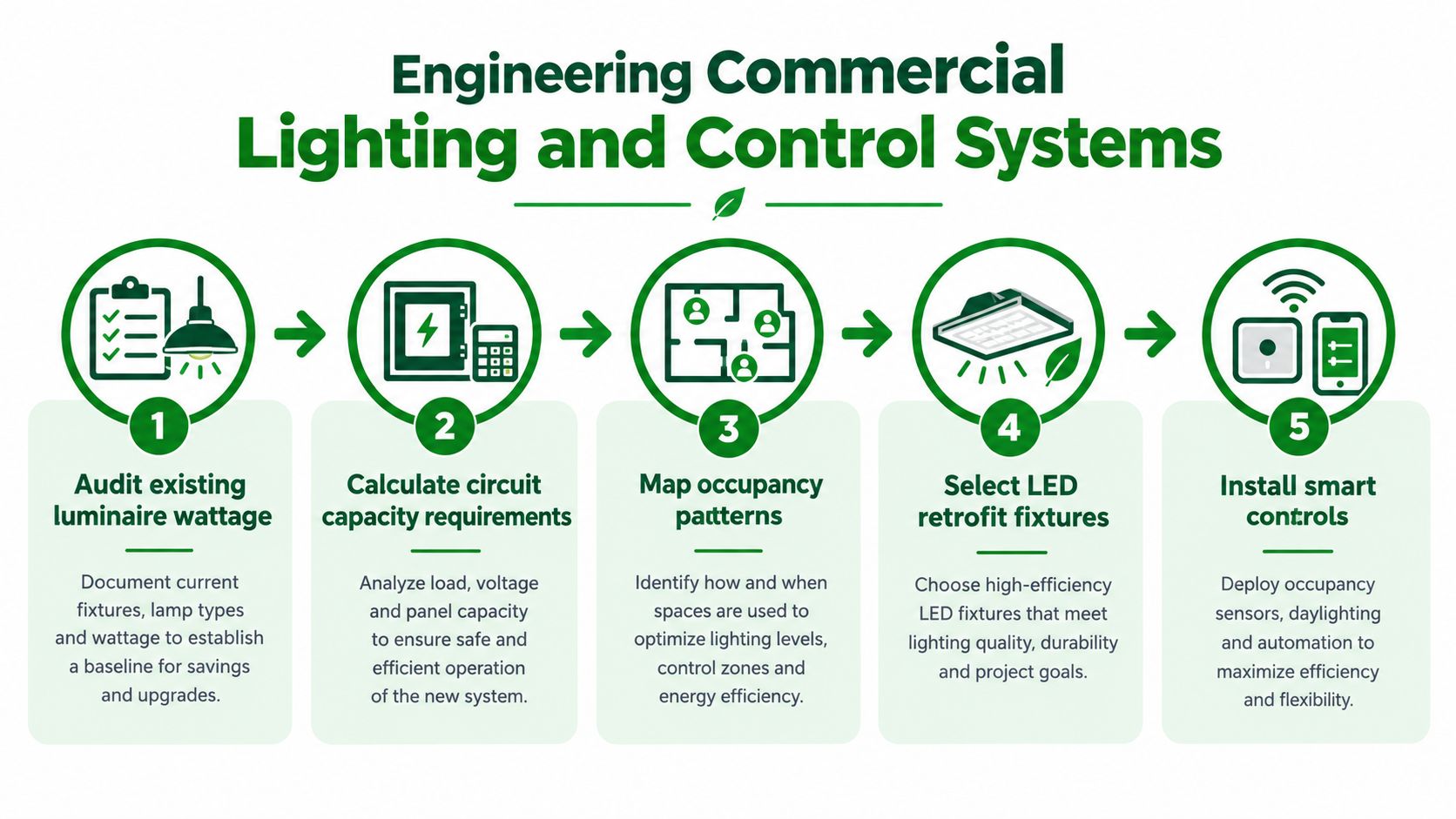
Code compliance appears in dozens of field decisions. Electricians size conductors and overcurrent protection, provide grounding and bonding, maintain working clearances, separate wiring systems, install accessible disconnects, and verify that emergency systems operate as intended.
They also need to recognize that an existing installation may not match the drawing. Renovation work often exposes undocumented circuits, abandoned conductors, crowded panels, inaccessible junction boxes, or equipment that was modified without updating schedules. The electrician must resolve those conditions safely instead of blindly following an outdated plan.
A practical review includes:
- Capacity: Can the existing service, feeder, panel, and branch circuit support the proposed load?
- Protection: Are overcurrent devices correctly selected and coordinated with the equipment?
- Grounding and bonding: Are metallic parts and system conductors connected as required?
- Access: Can workers reach disconnects, panels, and serviceable components safely?
- Documentation: Do panel schedules, test results, permits, and as-built records reflect the completed work?
For property owners, commercial electrical code compliance support becomes more than an inspection formality. Accurate records help maintenance staff understand the installation and give inspectors, future contractors, and risk managers a reliable reference.
Verification protects the asset
The NEC's purpose is practical safeguarding of people, buildings, and contents from electrical hazards. Commercial electricians apply that principle during new construction, renovations, tenant improvements, lighting upgrades, equipment connections, and corrective repairs.
The deliverable isn't just energized equipment. It includes a system that operates as designed, can be maintained without unnecessary exposure, and has evidence of testing. That may include circuit identification, panel schedules, emergency-system checks, control-system results, and as-built information.
A low bid that excludes documentation, coordination, or commissioning can create a false economy. The property may receive functioning equipment, but unresolved code questions and incomplete records can make later troubleshooting slower and future modifications riskier.
Engineering Commercial Lighting and Control Systems
An LED retrofit often looks simple from the floor. Remove an old fixture, connect a new one, and move on. In a commercial building, that approach can produce incompatible drivers, flicker, nuisance trips, poorly placed sensors, or lights that remain on when spaces are empty.
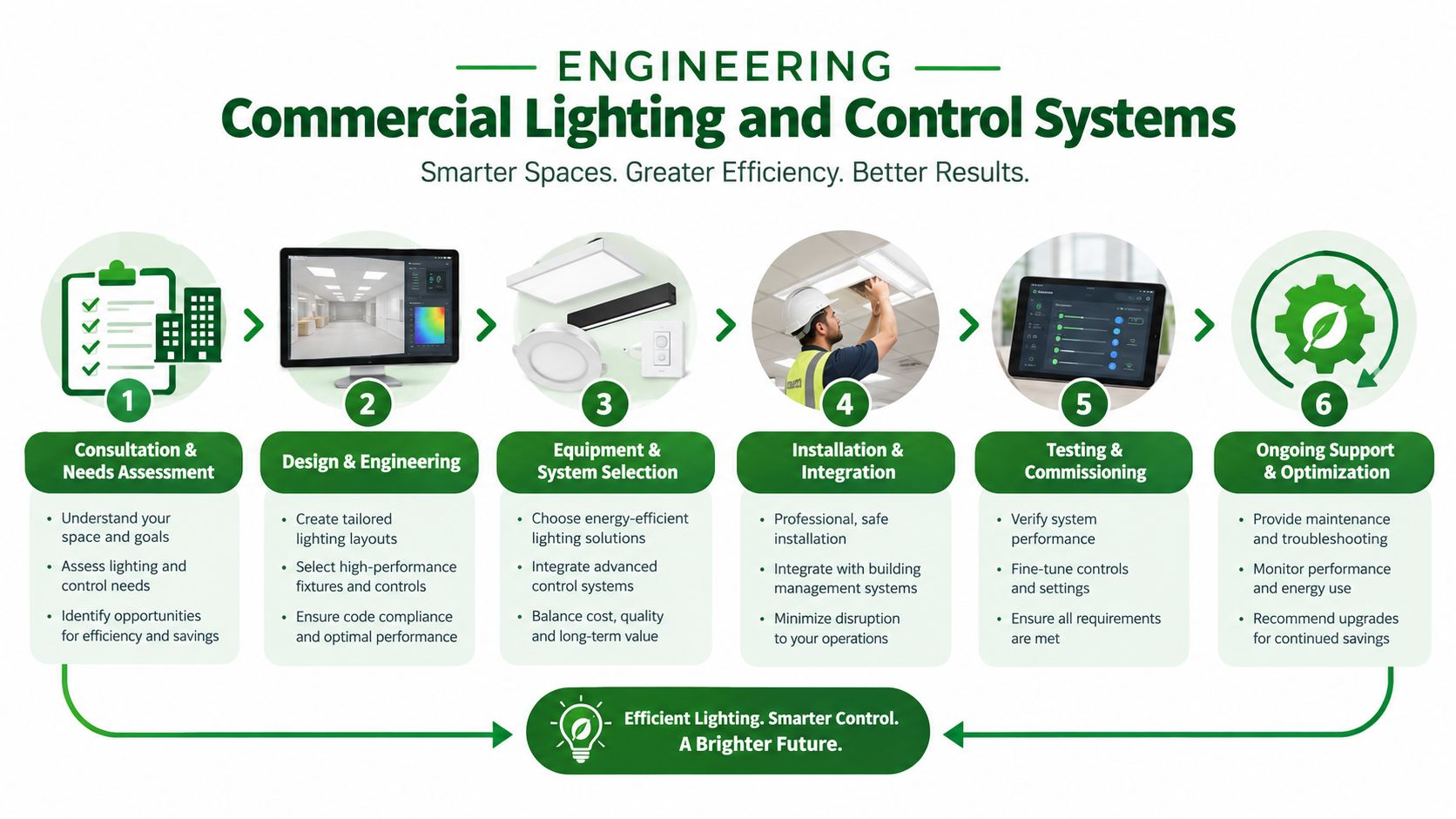
A commercial electrician evaluates the existing luminaire wattage, circuit capacity, voltage, switching, occupancy patterns, emergency-lighting requirements, and applicable energy rules before selecting equipment. The design must account for how people use the space, not only how the fixture looks on a cut sheet.
The retrofit requires engineering
The electrician first audits the existing installation. That means identifying fixtures, drivers, circuit paths, controls, emergency components, and panel schedules. The next step is to calculate connected load and confirm that the proposed equipment works with the branch circuits and protective devices.
Control selection follows the building's operating pattern. Occupancy sensors may suit intermittently used rooms, while daylight-responsive photosensors can adjust lighting near windows. Networked relays and scheduled controls may fit a larger office, retail center, parking structure, or multifamily property.
The commercial lighting control systems service should include installation and functional testing, not only equipment mounting. The technician needs to confirm zoning, time schedules, occupancy detection, daylight response, manual overrides, and fail-safe behavior.
Commissioning proves cause and effect
Commissioning asks a straightforward question: does each input produce the intended output? If a sensor detects occupancy, the correct lights should respond. If daylight increases, the assigned zone should react without affecting unrelated areas. If a control network loses communication, the system should move into its intended safe operating state.
The U.S. Department of Energy notes that occupancy-based lighting controls can reduce lighting energy use by about 24%, while institutional tuning can reduce it by roughly 36%, with results depending on the building and application, as described in its lighting systems optimization guidance. Those figures don't replace field verification. A poorly aimed sensor can keep lights on unnecessarily, and an incompatible driver can undermine the retrofit through flicker or premature failure.
A complete project produces test records, updated panel information, and, where required, jurisdictional energy-code documentation such as California Title 24 compliance materials. The useful result is a verified lighting system that provides required illumination while controlling energy use, maintenance demands, and operational risk.
Preventive Diagnostics and Life-Safety Maintenance
Reactive maintenance waits for a failure to announce itself. A breaker trips, a tenant complains, a parking area goes dark, or a panel develops a burning odor. By then, the property team is managing disruption instead of choosing the safest and most convenient time to correct the condition.
Condition-based maintenance changes that sequence. A commercial electrician examines panels, switchgear, feeders, disconnects, emergency circuits, and terminations for signs of deterioration. The purpose is to identify abnormal electrical conditions before they become outages, arc-flash events, or fire hazards.

Infrared inspection finds problems you can't see
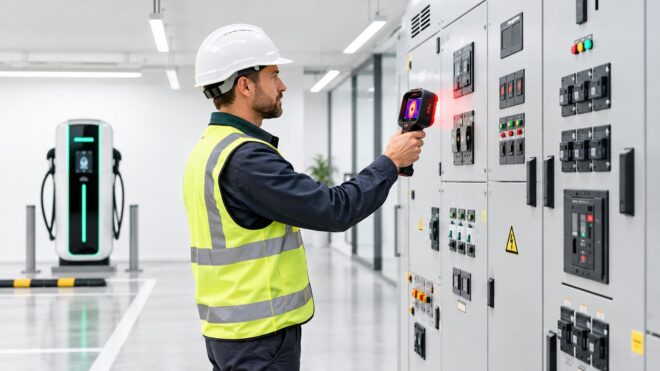
Infrared thermography provides a non-invasive way to identify temperature differences under comparable load. A breaker, cable lug, bus connection, or termination that runs significantly hotter than neighboring components may indicate looseness, overload, imbalance, corrosion, or high contact resistance.
The camera doesn't diagnose the cause by itself. A qualified electrician documents the thermal image and circuit identity, then investigates with electrical measurements, torque checks, and load evaluation. Corrective work can be scheduled during planned downtime instead of waiting for overheating to trigger an emergency shutdown.
A thermal image is evidence for investigation, not permission to guess. The electrician still has to determine why the connection is hot.
This work requires a safe process. OSHA's electrical standards guidance identifies NFPA 70, the National Electrical Code, and NFPA 70E as key electrical standards addressing shock, electrocution, arc flash, and arc blast hazards. Where feasible, the electrician establishes an electrically safe work condition, verifies the absence of voltage, uses appropriate boundaries and PPE, and restores equipment through controlled testing.
Life-safety equipment needs proof
Emergency lighting, exit signs, battery backup systems, and transfer equipment support safe building evacuation and continuity during a power interruption. Testing should confirm more than whether a fixture illuminates during a quick visual check. The electrician verifies battery operation, charging condition, emergency response, connections, and recorded results.
A maintenance report should identify the asset, test performed, observed condition, failed component, recommended correction, and post-repair verification. That record helps property teams plan replacements, demonstrate maintenance, and respond to inspection questions.
A strong program combines visual inspection, thermal diagnostics, electrical testing, and life-safety checks. It turns scattered service calls into a prioritized risk register, with urgent hazards separated from planned upgrades and routine observations.
Planning Infrastructure for EV Charging Stations
The visible pedestal gets the attention, yet the load study behind it determines whether the project will work reliably. A commercial electrician must assess the property's utility service, switchgear, distribution equipment, transformer, and parking layout before selecting a charging strategy.
That assessment starts with a site survey and electrical-load study, not an equipment order. The review should examine existing demand, available capacity, feeder routes, panel locations, conduit pathways, accessible parking, cable-run limits, load management, and the owner's plans for expansion. A charger that fits the parking plan can still exceed the building's electrical capacity.
Installed chargers are only part of the plan
Building requirements may distinguish between spaces with installed EV supply equipment and spaces prepared for future installation. Requirements vary by jurisdiction, so the project team should verify the applicable building code, zoning rules, utility conditions, and permitting requirements before design is finalized. The Australian Building Codes Board's commercial building energy-efficiency reference can provide context for commercial energy-efficiency planning, but it should not be treated as authority for a Denver requirement.
The practical issue is future capacity. Owners may need raceways, spare capacity, distribution points, and parking infrastructure even when every charger will not be installed immediately. Omitting that work from the initial design can lead to demolition, disruptive shutdowns, or an overloaded distribution system later.
Coordinate the electrical design with the property team, civil designer, parking consultant, utility, and permitting authority. Accessibility and traffic circulation affect equipment placement. Protection from vehicle impact, drainage, signage, maintenance access, and cable management also belong in the plan.
Load management changes the design
Managed charging may be more suitable than treating every charger as a simultaneous unmanaged load. The decision depends on operating schedules, available service capacity, expected vehicle demand, and expansion plans.
Before installation, the scope should address:
- Service review: Confirm the limits of the service, transformer, switchgear, and panels.
- Routing: Select conduit paths that account for distance, access, and future circuits.
- Phasing: Install infrastructure for later chargers without reopening finished surfaces.
- Permitting: Coordinate drawings, inspections, utility requirements, and accessibility obligations.
- Commissioning: Test charging, protection, communications, load management, and user access.
A commercial EV charging station installation service should begin with infrastructure planning, not a mounting location. The electrician's value is in protecting existing capacity, coordinating the site, and building a system that can expand without reducing reliability.
When to Call a Licensed Commercial Contractor
A residential electrician may be highly capable in home wiring and service work, but commercial properties introduce different operating conditions. Larger distribution systems, occupied spaces, coordinated shutdowns, controls, emergency equipment, low-voltage infrastructure, high-reach assets, and inspection requirements all affect the contractor selection.
The U.S. Bureau of Labor Statistics definition of electricians includes workers who install, maintain, and repair power, lighting, communications, and control systems. That broad scope is a useful benchmark when evaluating a commercial provider. Ask whether the contractor can manage the complete system involved in your project, not just the most visible component.
Compare capability with the building's risk
| Capability | Residential Electrician | Commercial Electrician |
|---|---|---|
| Typical environment | Individual homes and small residential systems | Offices, retail, multifamily, hospitality, and other business properties |
| Distribution work | Household panels, branch circuits, and service equipment | Service entrances, switchgear, feeders, distribution panels, and coordinated shutdowns |
| Lighting scope | Fixtures, switches, and residential controls | Site, parking, high-bay, emergency, networked controls, and energy-code documentation |
| Diagnostics | Household fault finding and repairs | Infrared inspections, panel assessments, load analysis, control troubleshooting, and documented reports |
| Life-safety support | Residential emergency equipment where applicable | Emergency lighting, exit signs, battery backup systems, transfer equipment, and inspection records |
| Low-voltage coordination | Limited or project-specific | Communications, signage, controls, cabling, mass notification, and interfaces with line-voltage systems |
| Access and equipment | Standard ladders and residential access | High-reach equipment, boom truck work, parking structures, poles, and occupied-site coordination |
| Response model | Often scheduled service | Planned maintenance, project delivery, and after-hours commercial response |
Questions worth asking before award
Start with licensing and scope. In California, a contractor handling this work may need the appropriate C-10 electrical contractor license, along with bonding, insurance, and qualified personnel for the proposed tasks. Verify the license rather than accepting a general statement of capability.
Then examine the operating model:
- Relevant experience: Has the contractor worked on your property type and equipment?
- Safety process: Can they explain isolation, lockout/tagout, testing, PPE, and shutdown coordination?
- Documentation: Will you receive inspection reports, thermal images, test results, panel schedules, and as-built information?
- Access capability: Can they service high-mounted fixtures, poles, parking structures, or hard-to-reach equipment?
- Emergency response: Do they provide after-hours support when an outage or hazard affects operations?
- Integrated delivery: Can one team coordinate line-voltage power, lighting, controls, and low-voltage scopes where appropriate?
For property managers, the right contractor is a risk-management partner as much as an installer. Choose the provider that can inspect the existing condition, explain the repair or upgrade rationale, coordinate the outage, complete the work safely, and prove the result through documentation.
Access Electrical and Lighting provides commercial electrical repairs, lighting installation and controls, infrared inspections, emergency-lighting testing, EV charging installation, low-voltage work, and Title 24 documentation for Southern California properties. Visit Access Electrical and Lighting to discuss a planned upgrade, preventive maintenance program, or urgent commercial electrical issue.