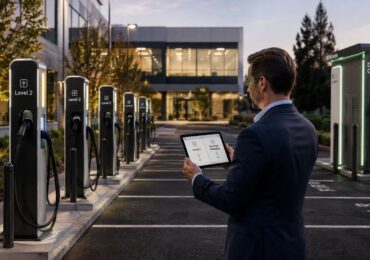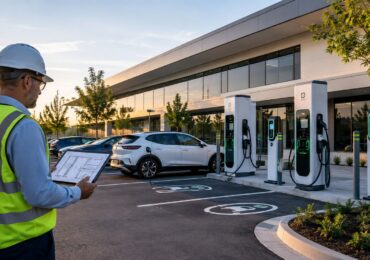
You're usually called in after somebody has already ordered the chargers, picked a parking row, and promised tenants the site will be live “soon.” Then the electrical room tells the truth. The service is tighter than anyone thought, the panel schedule is stale, the utility wants a review, and the visible equipment now has to satisfy ADA access, local permitting, and long-term maintenance all at once.
That's why EV charging station installation has stopped being a niche amenity job and become a real infrastructure project. The planning starts with load, code, and who will use the stations, not with the glossy product sheet. In Orange County, that shift matters because the same site may need Title 24 documentation, utility coordination, and a layout that still works when tenant demand changes.
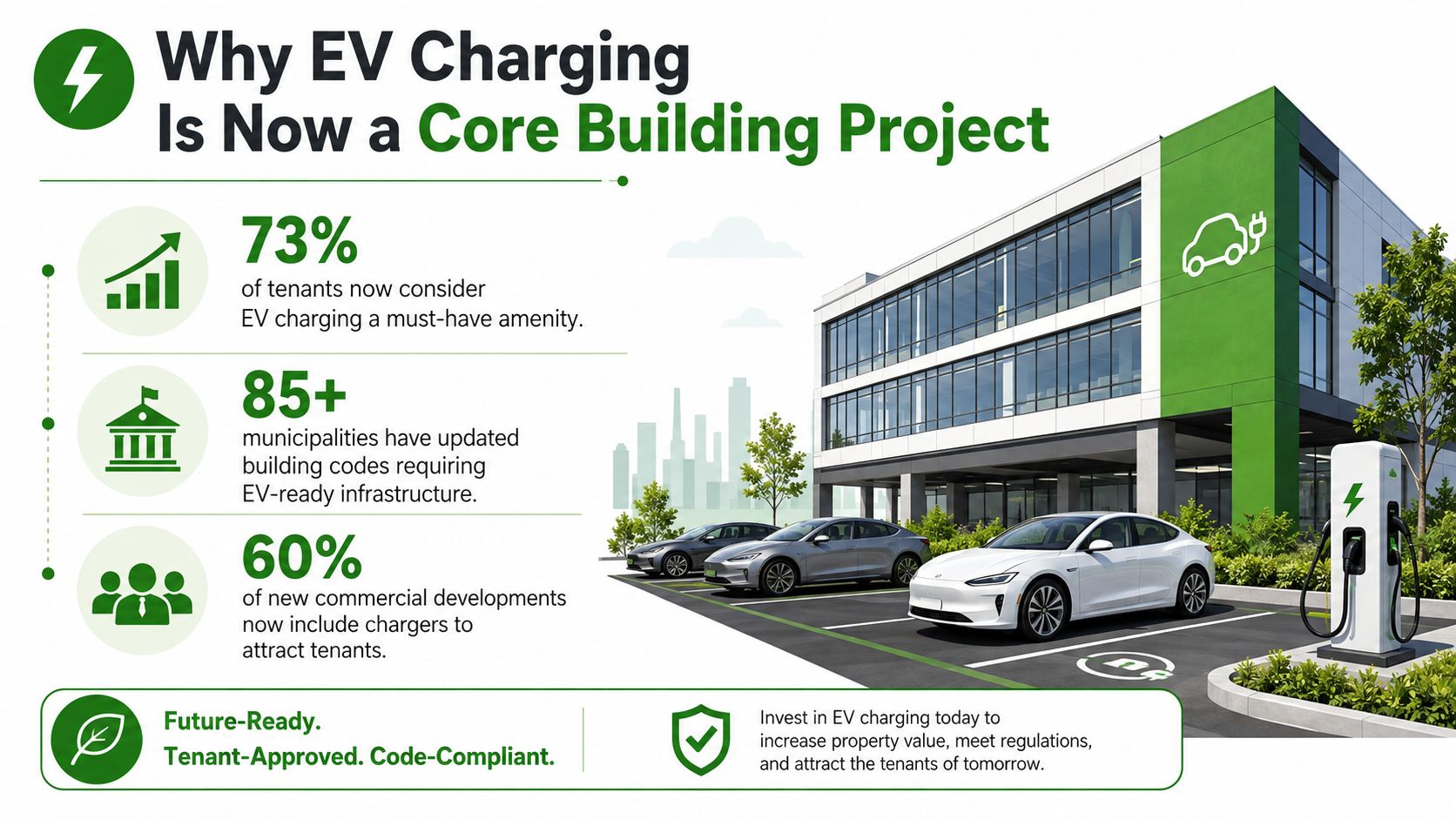
Why EV Charging Is Now a Core Building Project
A property manager usually feels the change before the spreadsheets do. One tenant asks whether chargers are planned for the next lease term, another competitor down the street adds them, and suddenly the conversation is no longer about “extras.” It's about whether the building still feels current, functional, and easy to occupy.
The market signal is hard to ignore. The International Energy Agency reported that more than 1.3 million public charging points were added globally in 2024, over 30% more than the previous year, which shows that charging has moved into mainstream infrastructure buildout rather than a pilot program IEA Global EV Outlook 2025. That expansion matters on a commercial site because the work touches the electrical service, panel capacity, site lighting, conduit pathways, parking designation, and permitting sequence all at once.
A charger isn't an appliance you bolt to a wall and forget. It's a building system with users, maintenance, and code obligations.
The practical takeaway for owners is simple. Treat charging as a capital project, not a line item add-on, and sequence it the same way you'd handle a panel upgrade or parking-lot lighting retrofit. If the site is being repositioned for new tenants or a remodel, the planning work belongs in the early design conversation, not after the slab, striping, or tenant promises are already locked. For that reason, owners who are mapping growth should start with a coordinated electrical plan like the one outlined in this Orange County infrastructure planning guide.
Site Assessment and Load Analysis Before You Buy Anything
A facility can look ready for EV charging and still have no real room for it. I've walked plenty of Orange County sites where the panel had open spaces, the tenant had urgency, and the electrical system still could not support the added load without changes. The first job is to prove what the building can carry as available continuous load, then decide whether the project fits inside that envelope or needs a service-side upgrade.
Start at the service, not the charger
A commercial evaluation starts with the service size and panel ratings, then a load calculation, then route planning. Conductor sizing, breaker selection, and utility review come after that. A 200A service may look adequate at a glance, but once the diversified building load is counted, there may still be no room for an EVSE branch circuit without additional work.
That written load study protects the budget because it shows whether the job is a simple circuit addition or a larger infrastructure project. Those are different scopes on site. One may mean a clean branch circuit and a permit. The other can trigger utility coordination, trenching, downtime planning, and more customer communication than owners expect. If the meter, transformer, or service gear is the limiting factor, the project stops being a hardware purchase and becomes a coordinated electrical upgrade.
Practical rule: if the panel schedule is old, treat it like a clue, not a finish line.
Map the physical path early
The next mistake is waiting until install day to figure out the conduit route. The shortest compliant path often saves labor, but it still has to work around structure, access, and local code. On an active property, that means looking at parking flow, trench restoration, curb and sidewalk conditions, and where the charger can be mounted without creating a maintenance problem later.
Permit and utility approval need to happen before construction, not after material is ordered. That is how you avoid paying for work that will not pass review. Connector height is one of those details that should be settled during layout, and the installation guide notes a 24 to 48 inches mounting range for accessibility and cable handling installation guide.
For owners comparing expansion options, transformer coordination should be reviewed early, especially when the site may need a service-side upgrade. A practical transformer sizing guide helps a team determine whether the existing equipment can support the added load or whether the project needs a larger utility conversation before procurement starts transformer sizing guide. That check is cheaper before the order is placed than after a vendor has already fabricated the equipment.
Choosing the Right Charger Level for Your Site
A charger should match the parking pattern first and the wish list second. If vehicles sit for hours, a moderate AC solution usually makes more sense than a high-power DC setup. If the site needs quick turnover and the electrical room can support the demand, DC charging earns its place. That's the right way to think about it, because kilowatts alone don't make a good installation.
| Charger Type | Typical Circuit | Best Fit Site | Key Trade-Off |
|---|---|---|---|
| Level 2 AC | 50A or 60A branch circuit | Offices, multifamily, hospitality, long-dwell parking | Lower electrical stress, slower turnaround |
| DC fast charging | High-capacity service and dedicated infrastructure | Retail corridors, highway-adjacent sites, fleet or high-turnover locations | Fast sessions, much heavier infrastructure demand |
| Networked AC or DC units | Dedicated power plus data connectivity | Sites that need billing, access control, or remote monitoring | Added software and subscription complexity |
| Non-networked units | Dedicated power only | Smaller private sites with simple usage rules | Less operational visibility and control |
Match dwell time to equipment
Level 2 chargers commonly use 50A or 60A branch circuits, and one installation guide notes that many units use No. 6 THHN conductors, with final sizing determined by the charger nameplate and run length Home Depot installation guide. That fits places where drivers stay parked long enough for charging to matter over the course of a shift, a meal, or an overnight stay.
DC fast charging is a different business case. It belongs where turnover is the value proposition, and where the service can carry a much heavier electrical load. On a multifamily property, it can be overkill if most residents park overnight and don't need rapid sessions. On a retail or corridor site, it may be justified if the parking pattern rewards speed and the electrical room has room for the supporting gear.
Don't let software drive the site
Networked chargers are useful when the owner needs access control, pricing logic, remote fault visibility, or reporting. They also add recurring obligations that get missed in the sales process. App-only access, hidden pricing, or a clunky login flow can make a technically sound installation feel useless to the driver.
For a facility manager, the question is not “What has the most features?” It's “What can the electrical infrastructure support, what will tenants use, and how much administrative overhead does the owner want to absorb?” That's why a connected unit can be the right answer at one site and the wrong answer at the next.
Permitting is part of the product choice
California projects move through predictable agencies, but Orange County jurisdictions layer their own sequencing on top. The permit path usually includes the building department, an electrical permit, utility interconnection review when needed, and any planning or design-review trigger if the equipment will be visible from public areas. Title 24 requirements, CALGreen EV-ready provisions for new construction, and ADA placement rules all intersect here, so the hardware choice can't be separated from the permit plan.
The agency list is less confusing when it's mapped before procurement. If the owner waits until after purchase, the permit process tends to expose mismatches in access, layout, or service capacity that should've been solved upstream. That's why the charger spec should follow the site analysis, not lead it.
Electrical Upgrades That Drive the Real Budget
The charger cabinet is rarely the expensive part. The money usually goes into the infrastructure that lets the charger work without overloading the building. On a small office with spare panel capacity, the job can stay relatively contained. On a retail center or multifamily property sharing a house panel, the scope expands fast.
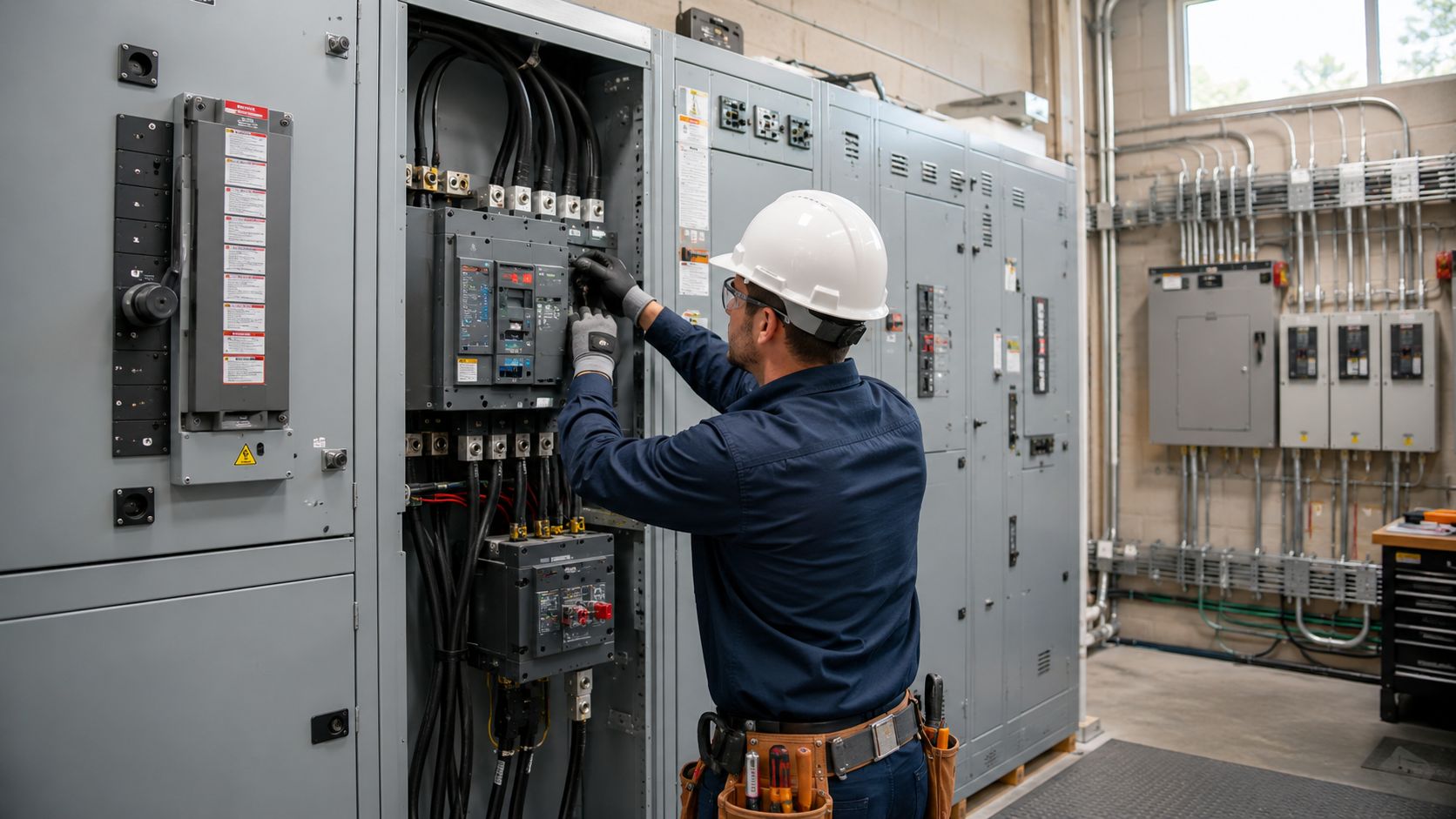
What usually gets upgraded
The common service-side changes are familiar to any commercial electrical contractor. New breakers, panel replacements, switchgear additions, transformer coordination with the utility, and trenching for new service runs are the pieces that move the budget. A site that looked straightforward on a walkthrough can turn into a coordination job once the load study lands.
If the project needs utility-side review, the schedule stretches around utility response times and inspection sequencing. If the property already has existing site work planned, the charger scope can sometimes be folded into the larger mobilization, which saves disruption even if it doesn't eliminate the upgrade itself. That's one reason owners should ask for a separate line item for equipment, labor, permitting, and utility work.
Why scope clarity matters
A clean proposal should show where the electrical infrastructure stops and the charging hardware starts. That means the contractor spells out what is being provided, what is excluded, and who owns the permit and utility coordination. If those details stay fuzzy, change orders usually show up after demolition or after the utility asks for revisions.
For Orange County owners comparing bids, budget transparency matters more than a low starting price. A proposal that hides panel work or trenching doesn't save money, it delays discovery. For context on how pricing structures vary by project scope, a commercial owner can review this EV charger installation pricing overview before putting numbers against a bid package.
Installation Day, Testing, and Commissioning
Good installation work looks calm because the hard decisions were made earlier. The crew mounts the unit to a structurally sound surface, routes conduit with minimal bends and obstructions, lands the dedicated circuit, and finishes grounding and bonding correctly. Outdoor units need weatherproofing, and cable management has to keep the lead off the ground so it does not become a trip hazard or wear issue.
The mount and the terminations matter
The work starts with the physical support. If the mounting surface flexes, the hardware will not stay aligned, and if the conduit route is sloppy, maintenance gets more expensive later. Connector placement also has to work with the surrounding clear floor space and the path a user takes to reach the charger, not just with a clean-looking wall layout.
Once the terminations are complete, the electrician tests voltage, amperage, and communication functions after energization. The charger should prove that it can talk to its controls, not just that power reaches the cabinet. If it is networked, enrollment and back-end setup need to be confirmed before anyone tells tenants it is live.
The last step is not turning it on. The last step is proving it can stay on.
Inspection gates activation
Independent inspection is the safety gate that keeps the project honest. It verifies the electrical work, the accessibility details, and the environmental conditions before the site goes public. That is the checkpoint where loose grounding, poor weatherproofing, or a missed permit condition gets caught before it becomes a tenant complaint.
A documented commissioning report is worth keeping with the closeout file. It gives the owner a baseline for future troubleshooting, warranty claims, and maintenance planning. On a commercial property, that paperwork is part of the asset, not an afterthought.
Equity, Accessibility, and Where the Chargers Actually Belong
The easy siting logic is often the wrong logic. If chargers only go where EV ownership is already high, the property can end up reinforcing the same access gaps it was supposed to solve. A more durable approach looks at proximity, affordability, visibility, reliability, and community input together, especially around multifamily housing, workplaces, and trusted neighborhood hubs.
Siting is an access decision
That point matters most where parking is limited or residents don't have a private garage. Guidance from Massachusetts on equitable siting emphasizes that barriers aren't only electrical, they're also economic, informational, and community-based equitable siting guide. If a charger is hidden, hard to reach, or too expensive to use, it isn't solving the access problem, it's just moving it.
Trusted locations work better because people already know how to get there and what to expect. That's why chargers near transit, community anchors, or dense residential buildings can outperform polished but isolated retail pads. Reliability matters here too, because a charger that's always down teaches users not to rely on it.
Accessibility is part of usability
The U.S. Access Board's EV guidance is clear that charger design needs accessible routes, reach ranges, cable management, user interfaces, and, in some cases, multiple accessible charging spaces Access Board EV guidance. Payment access is part of that same usability standard. Contactless payment and clear communication features make the station usable for more drivers, not fewer.
If the driver can't get to it, pay for it, and use it safely, the hardware doesn't count as infrastructure.
Visibility also matters because dark or poorly lit charging areas create a safety problem, not just a convenience problem. The same is true for cable placement and screen height. A site can pass inspection and still be awkward in daily use if the physical design ignores the person behind the wheel.
Incentives work, but only when the calendar is right
Southern California owners usually need to think about utility and state programs before procurement, not after. SCE and SDG&E rebates, state programs that support EV infrastructure, and federal tax credit pathways under the Inflation Reduction Act can all influence the budget, but they usually depend on having the paperwork and reservation sequence lined up before equipment is purchased. If the owner buys first and asks questions later, the incentive often becomes much harder to capture.
Landlord pass-through rules can also affect whether a multifamily or retail property can move quickly. That's where a contractor, property manager, and accounting team need to stay aligned, because rebate windows and submittal requirements don't wait for construction delays. The safest workflow is to lock the incentive plan first, then order the gear, then schedule the work.
Maintenance, Uptime, and Service Agreements
A charger usually fails in boring ways. Connector wear, ground-fault trips, network dropouts, payment module problems, and cable damage from vehicles are the patterns you plan for, not the exceptions you hope never happen. That's why the maintenance conversation belongs in the bid package, not six months after turnover.
Three warranties are not the same thing
The manufacturer's warranty covers the hardware under its own terms. The network operator may promise uptime or remote support, but that doesn't replace a labor warranty from the contractor. Those three pieces need to be read together, because a charger can be “covered” on paper while still sitting dark if nobody is clearly responsible for the repair path.
A practical maintenance cadence keeps surprises down. Quarterly visual checks catch cable abuse and obvious wear. Annual infrared thermography on the electrical feed helps spot overheating before it becomes a shutdown, and firmware updates keep the unit aligned with current functionality and communication needs. A service-level agreement should define response times so a failed charger doesn't linger indefinitely.
Pick the contractor like it's a long-term system
A weak bid often looks attractive because it mixes equipment, labor, and permitting into one vague number. That approach makes closeout messy and change orders easy. A stronger bid package asks for California C-10 license verification, proof of insurance and bonding, prior commercial EV project references, infrared thermography capability, Title 24 documentation experience, and a clear scope letter that separates equipment, labor, permitting, and service.
The questions that expose weak bids are usually simple. Who pulls the permit? Who handles utility coordination? What's excluded? How are change orders priced? Those answers tell you whether the contractor has delivered commercial electrical work before, or just priced a box and hoped the rest would sort itself out.
Access Electrical and Lighting handles commercial electrical and lighting work across Southern California, including EV charging station installation for commercial facilities, along with testing, maintenance, and Title 24 documentation support. If you're planning a site in Orange County and need the charging scope coordinated with service upgrades, lighting, and long-term maintenance, visit Access Electrical and Lighting and start the conversation with a contractor that scopes the electrical system as a whole.